
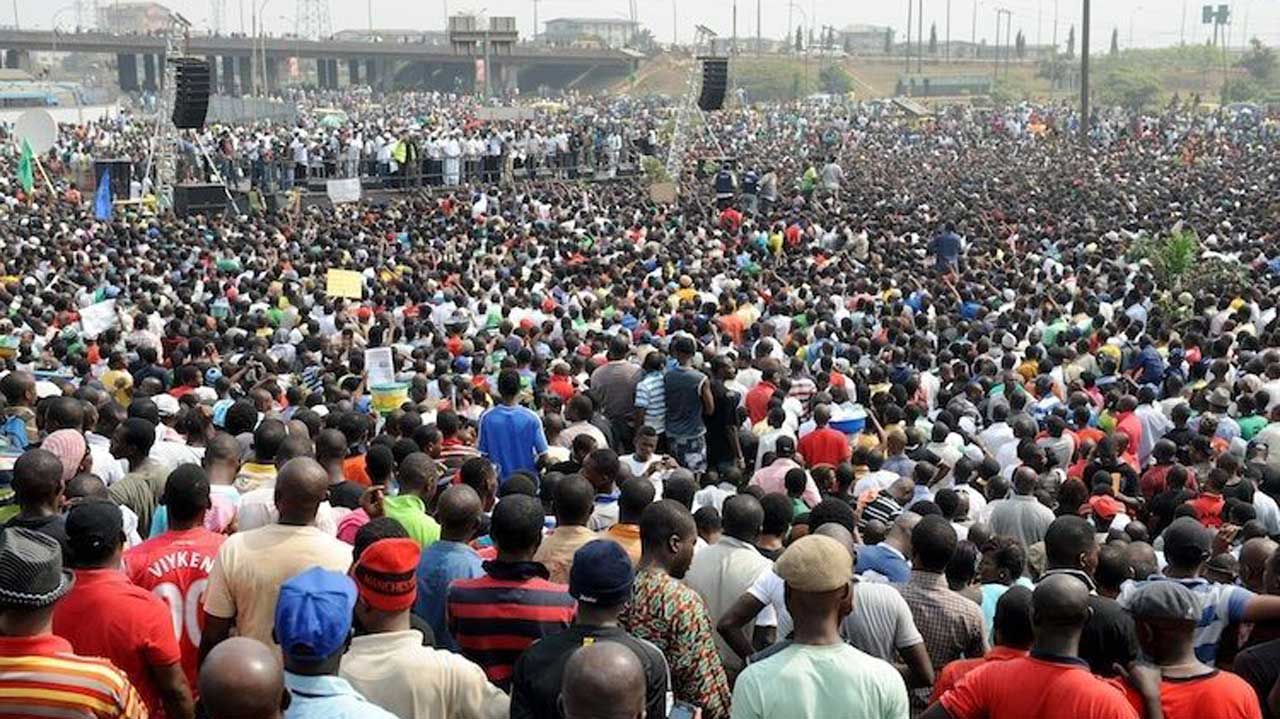
Nigeria has once again emerged as Africa’s most populous nation, with its population estimated at 242.4 million in 2026, a figure that cements its demographic dominance on the continent even as the country marks nearly two decades without an official headcount. The estimate, published by Worldometer and drawn from the United Nations Population Division’s World Population Prospects 2024 revision, places Nigeria comfortably ahead of Ethiopia and Egypt, the second and third most populous African states.
The numbers tell a story of relentless expansion. Worldometer puts the precise mid-year figure at 242,431,832, up from 237.5 million in 2025. That represents an addition of roughly 4.9 million people in a single year, the largest absolute annual increase recorded anywhere on the continent. According to the same data, Nigeria now accounts for 2.92 per cent of the global population and about 15.3 per cent of all Africans, ranking as the sixth most populous country in the world behind India, China, the United States, Indonesia and Pakistan.
Beneath the headline figure lies a profoundly young nation. Worldometer records a median age of 18.3 years and a total fertility rate of 4.2 children per woman, well above the global replacement level of 2.1. Statistics compiled from UN projections suggest Nigeria will record around 7.71 million births in 2026, the third highest of any country in the world, translating to an estimated 21,000 babies born each day. The World Bank estimated the country’s population growth rate at 2.1 per cent in 2025, a pace that continues to add the equivalent of a mid-sized nation to the population every year.
Urbanisation is advancing in step with the raw growth. Worldometer estimates that 55.8 per cent of Nigerians, about 135.3 million people, now live in urban areas, with population density averaging 266 persons per square kilometre. Lagos remains the country’s commercial nerve centre and one of Africa’s largest cities, sitting alongside Kano, Ibadan and the federal capital Abuja as magnets for internal migration.
The continental picture underscores how far ahead Nigeria sits. Ethiopia follows with an estimated 138.9 million people and an annual growth rate of 2.53 per cent, while Egypt, North Africa’s most populous country, stands at 120.1 million. The Democratic Republic of Congo ranks fourth at 116.5 million, recording one of the fastest growth rates in the top tier at 3.21 per cent. Tanzania (72.6 million), South Africa (65.5 million), Kenya (58.6 million), Sudan (53.3 million), Uganda (52.8 million) and Algeria (48 million) complete the ten most populous nations on the continent. Africa as a whole remains the world’s fastest-growing region, with its population projected to surpass 2.5 billion by 2050 on the back of youthful demographics, high fertility and steady gains in healthcare.
Yet the authority of these figures rests on an uncomfortable foundation. Every current estimate for Nigeria is a projection, because the country’s last credible census was conducted in 2006. That exercise recorded a population of 140,431,790, comprising 71,345,488 males and 69,086,302 females. Two decades later, no fresh count has been taken. A census planned for 2023 was postponed indefinitely by the administration of former President Muhammadu Buhari, and the responsibility for setting a new date has since passed to President Bola Tinubu, who has repeatedly affirmed his commitment to a credible exercise without fixing a timeline.
The consequences of that vacuum are practical and far-reaching. Nigeria allocates federal revenue, plans schools and hospitals, delineates constituencies and designs social programmes using numbers that no longer rest on a verified count. The National Population Commission has insisted for years that it is ready. Officials say roughly 760,000 digital tablets have been procured and stored, preparations for a fully digital, biometric census are largely complete, and by earlier accounts about 200 billion naira had already been spent on groundwork. In April 2025, President Tinubu inaugurated an eight-member high-level committee, chaired by the Minister of Budget and Economic Planning, Senator Atiku Bagudu, to align the census budget with current financial realities, insisting that the National Identity Management Commission be part of the process.
Momentum appeared to build again in late 2025. A new NPC chairman, Dr Aminu Yusuf, assumed office in December 2025 and has maintained that the commission is prepared to move the moment a date is proclaimed. The proposed 2026 budget carries an allocation of about 12.78 billion naira for the commission, reviving expectations of an eventual count, even as earlier estimates warned that inflation and supply shocks could push the full cost of a census as high as 942 billion naira. Under the constitution, only the president holds the authority to proclaim a census date.
Timing, however, has become its own obstacle. With the 2027 general elections approaching, analysts and lawmakers have cautioned that conducting a national headcount too close to a major electoral cycle risks administrative strain and political suspicion, given Nigeria’s long history of treating census figures as instruments of regional advantage in revenue sharing and representation.
The demographic trajectory ahead is steep regardless of when the next count occurs. The United Nations projects that Nigeria’s population will climb to around 400 million by 2050, overtaking the United States to become the third most populous country on Earth after India and China. The US Census Bureau has offered a comparable projection of roughly 402 million by mid-century, and UN median projections extend the figure toward 791 million by 2100. From an estimated 45 million people at independence in 1960, Nigeria’s population will have grown almost ninefold within a single century.
Whether that expansion becomes a demographic dividend or a demographic burden remains the defining question. A vast, youthful labour force and an enormous consumer market represent real economic potential, but only if matched by sustained investment in jobs, education, healthcare, housing and infrastructure. UNFPA and successive analysts have framed the same choice in different words: the size of Nigeria’s population is no longer in serious doubt, but its readiness to plan for that population, beginning with an accurate count, very much is.
.