
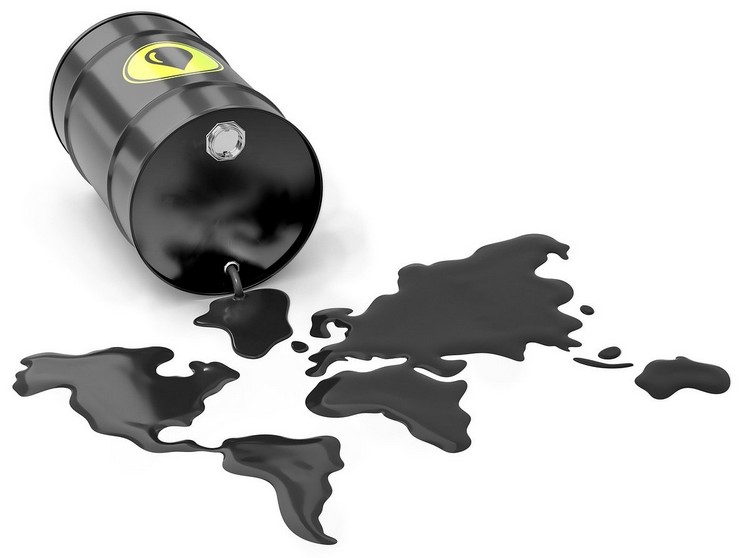
Nigeria is once again staring at the seductive side of the oil business. Brent crude has surged to about $105.21 a barrel, more than four per cent above the previous day’s $100.57, as escalating conflict involving Iran and growing uncertainty around the Strait of Hormuz threaten global energy supplies. The strategic waterway normally carries about one-fifth of the world’s oil supplies; hence, any prolonged disruption could send another shock through international energy markets.
For Nigeria, an oil-producing country whose public finances remain heavily influenced by crude exports, the development looks like an unexpected fiscal bonus. But it comes with a warning. The 2026 Federal Government budget was predicated on a benchmark crude price of $64.85 per barrel. With Brent now trading above $100, the difference is substantial. If the higher price is sustained, the government could earn considerably more from crude sales, royalties, petroleum taxes and other oil-related sources.
That prospect will naturally excite policymakers facing enormous spending demands. But Nigeria’s economic history provides a compelling reason for caution. The country has been here before.
The blessing that repeatedly became a burden
Nigeria’s experience with oil booms has rarely been a simple story of prosperity. Periods of high crude prices have often generated large government revenues, encouraged higher public spending and created expectations that the good times would continue indefinitely. The problem begins when temporary oil income becomes embedded in permanent government expenditure.
When prices subsequently fall, the revenue disappears, but the commitments remain. That is one of the fundamental vulnerabilities of an oil-dependent economy. Government can quickly increase salaries, subsidies, infrastructure spending and other recurrent obligations during a boom. But none of these commitments automatically disappears when the international oil market turns against the country.
Nigeria’s history of boom-and-bust cycles demonstrates the danger. The oil boom of the 1970s, for instance, generated unprecedented revenues and transformed the country’s fiscal possibilities. Yet the subsequent decline in oil prices exposed the weaknesses created by excessive dependence on petroleum revenues. More recently, the oil-price collapse of 2014–2016 contributed to severe fiscal and foreign-exchange pressures, while the 2020 oil-price shock demonstrated again how vulnerable Nigeria remains to external energy-market disruptions.
The lesson is straightforward: Nigeria should treat the current oil-price surge as exceptional income, not normal income.
The $40-a-barrel temptation
The temptation will be to spend the difference between the budget benchmark and the market price. At $105.21 a barrel, the headline difference with the $64.85 budget benchmark is more than $40 per barrel. Multiplied across Nigeria’s crude exports, that can produce a substantial additional flow of money.
But the size of the potential windfall should not obscure another important fact: higher prices alone do not guarantee higher Nigerian revenues. The gains depend substantially on Nigeria maintaining crude production and export volumes. If production declines, higher international prices may not compensate for lower volumes.
This is particularly important for Nigeria. The country cannot afford an oil strategy based solely on waiting for international prices to rise. What matters is the combination of price, production, investment and fiscal discipline. If Nigeria produces fewer barrels while the international price rises, the country could find itself celebrating a boom that is much smaller than the headline price suggests.
The consumer is paying for the boom
Another paradox is at the heart of the current situation. Higher oil prices can make the government richer while making ordinary Nigerians poorer. In January 2026, the average price of petrol sat at ₦1,034.76 per litre and by Mid-2026, pump prices at various stations fluctuated between ₦1,290 and ₦1,365 per litre. If international crude prices remain elevated, further pressure on petrol prices is inevitable. This creates an uncomfortable economic contradiction.
Nigeria is an oil producer, yet higher international oil prices can increase domestic energy costs. Transport operators face higher costs. Manufacturers face higher logistics expenses. Farmers encounter more expensive transportation and distribution. Small businesses absorb higher operating costs. Ultimately, consumers pay through increased prices.
The report therefore captures the central paradox: higher crude prices can strengthen government revenue and foreign-exchange earnings while simultaneously increasing petroleum costs and inflationary pressure. The government must therefore resist the simplistic conclusion that $100-plus oil automatically means good economic news.
What should government do?
The priority should be fiscal discipline. The additional revenue should not become an excuse for expanding recurrent expenditure. Government should resist the familiar cycle in which temporary oil income produces permanent spending. Any revenue above the budget benchmark should be identified and accounted for. A significant proportion should go towards strengthening fiscal buffers, reducing expensive borrowing and investing in productive infrastructure.
Second, Nigeria should accelerate oil production and investment. If the country is to benefit from high prices, it must have barrels available to sell. The authorities should address the regulatory, security, infrastructure and investment obstacles that constrain production. The objective should not simply be to enjoy today’s high prices but to increase the number of barrels Nigeria can profitably produce tomorrow.
Third, the windfall should be utilised to strengthen foreign-exchange resilience.
Oil remains one of Nigeria’s most important sources of foreign exchange. A period of elevated prices therefore provides an opportunity to rebuild buffers and reduce vulnerability to the next external shock. Nigeria should avoid the mistake of treating temporary foreign-exchange abundance as a licence for uncontrolled imports.
Fourth, government should invest more aggressively in productive sectors outside oil. This is the most important lesson from previous oil booms. The ultimate measure of a successful oil boom should not be how much money government spends during the boom. It should be how much of the temporary oil income is converted into permanent productive capacity.
Agriculture, manufacturing, power, transport infrastructure, technology and human capital should therefore receive priority. If a barrel of oil sold at $105 today can help create an industrial plant, an efficient electricity system, a modern transport network or a productive agricultural value chain, its economic benefit can continue long after the oil price falls. If, on the other hand, the additional revenue finances recurrent consumption, the opportunity will disappear with the next price correction.
Save for the inevitable downturn.
Nigeria also needs to strengthen its mechanisms for saving excess oil revenue. Oil prices are notoriously volatile. The current rally itself is being driven largely by geopolitical tensions and fears of disruption around the Strait of Hormuz. Oil markets remain highly sensitive to further disruption to Middle Eastern production or shipments.
That is hardly a foundation for long-term economic planning. Today’s $105 oil could become tomorrow’s $70 or $60 oil. Government should therefore build fiscal buffers while prices are favourable rather than waiting for the downturn before striving to find money. Nigeria’s policymakers should remember that the best time to prepare for an oil-price collapse is when oil prices are high.
A test of economic maturity
The current oil boom could become a valuable opportunity for Nigeria—but only if government demonstrates the discipline to treat it as an opportunity rather than an entitlement. The country has repeatedly experienced the excitement of rising oil prices. It has also repeatedly experienced the pain that follows when prices collapse.
This time should be different. The additional revenue should be utilised to reduce vulnerability, strengthen reserves, support productive investment, improve infrastructure, increase oil production and diversify the economy. Most importantly, government must resist the political temptation to convert a temporary windfall into permanent expenditure.
Nigeria does not control the international price of oil. It cannot control wars in the Middle East, the movement of tankers through the Strait of Hormuz or the decisions of major global producers. What it can control is what it does with the money that comes from the next barrel.
That is the real test of the current oil boom. If Nigeria saves and invests wisely, today’s oil shock could become tomorrow’s economic foundation. If it spends recklessly, the country may simply be repeating an old story—with a new oil price.