
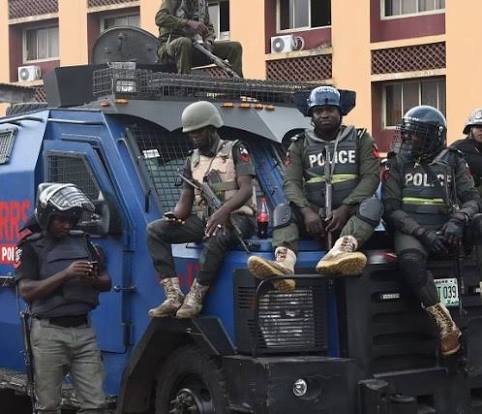
Three days before voters in Osun State choose their next governor, the Nigeria Police Force has drawn a firm line around who may provide security for the poll, excluding the Western Nigeria Security Network, better known as Amotekun, along with vigilante groups and other non-state outfits.
In a statement issued on Wednesday by Force Public Relations Officer CSP Ani Iniedu on behalf of Inspector-General of Police Olatunji Disu, the police declared that Amotekun, the Joint Civilian Task Force, hunters’ associations, community-based security groups, neighbourhood watch formations and similar quasi-security bodies have no authorised role in the election. They are barred from escorting electoral materials, guarding polling units, mounting checkpoints or carrying arms during the process scheduled for Saturday, 15 August 2026 across the state’s 30 local government areas.
The Force insisted that election security remains the exclusive preserve of constitutionally recognised agencies. These include the Nigeria Police Force, the Department of State Services, the Nigeria Security and Civil Defence Corps, the Nigeria Immigration Service, the Nigeria Correctional Service, the Federal Road Safety Corps and other statutory bodies. A joint deployment covering polling units, collation centres, materials, officials, observers, journalists and voters is already under way.
The directive comes amid elevated political tension in Osun. Reports of cult-related clashes, attacks on campaign activities and fatalities linked to the contest have prompted heightened federal attention. The Inspector-General earlier directed the state commissioner of police to step aside and appointed a specialised election security commander, while promising a larger personnel deployment than was used in the recent Ekiti governorship poll. Estimates circulated by police leadership point to more than 14,000 officers for Osun alone, excluding personnel from other agencies.
Police statements have repeatedly warned political parties, candidates and supporters against engaging, arming or deploying unauthorised groups. Anyone found involved in ballot snatching, voter intimidation, vote buying, thuggery or clashes will face arrest and prosecution regardless of status or affiliation. Firearms and offensive weapons are prohibited around polling units and collation centres except those carried by accredited security personnel on duty.
The exclusion of Amotekun is not entirely new. The regional security network, launched in 2020 by South-West governors in response to rising insecurity, has operated under state laws in Ekiti, Ondo, Ogun, Osun and Oyo. Its mandate centres on complementing conventional agencies against kidnapping, robbery and related crimes. From the outset, however, its involvement in electoral processes has been contested. In the 2022 Osun governorship election, a Federal High Court restrained the corps from deployment after a suit by one of the major parties. Similar caution has been exercised in subsequent cycles.
Amotekun’s legal and operational status has always sat in a grey area. While state assemblies passed enabling laws and governors have defended the corps as a necessary local response to security gaps, federal authorities have at times questioned its constitutionality, citing the exclusive federal control over police under the 1999 Constitution. The current police position reinforces that distinction for election duty: non-state or quasi-state formations, even those established by state law, are not to be integrated into the formal election security architecture.
The Osun contest itself features 14 candidates cleared by the Independent National Electoral Commission. The main contenders are incumbent Governor Ademola Adeleke of the Accord Party, seeking a second term; Bola Oyebamiji of the All Progressives Congress; and Najeem Salaam of the African Democratic Congress. Neither the Peoples Democratic Party nor the Labour Party is fielding a candidate. Civil society monitors have identified multiple local government areas as potential flashpoints, citing earlier incidents of violence and the involvement of cult groups allegedly linked to political actors.
Police leadership has directed officers deployed for the election to act professionally, impartially and firmly while respecting human rights and the rule of law. Traditional rulers, religious leaders, civil society groups, the media and accredited observers have been urged to report suspicious movements or activities promptly. The Force has restated its commitment to ensuring that eligible voters can exercise their franchise freely and without fear.
The decision underscores a broader institutional preference for centralised control of election security even as states continue to expand complementary local security structures. How strictly the ban is enforced on the ground, and whether it affects the operational capacity of Amotekun outside the electoral context, will be watched closely in the days ahead. For now, the police message is unambiguous: only statutory agencies will secure the Osun governorship election.