
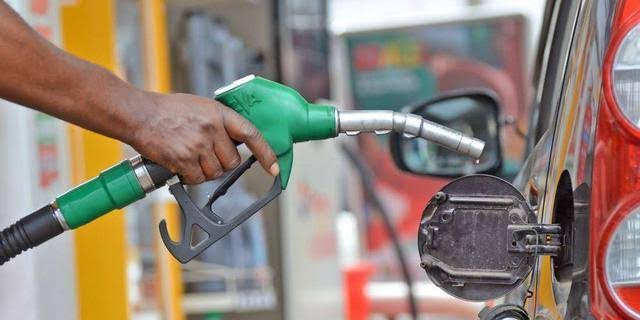
The Federal Government’s petrol relief package could cost as much as 0.4 per cent of Gross Domestic Product, or about N1.77 trillion, according to BMI, a Fitch Solutions company. The estimate, contained in a report titled “Fuel Discount Mechanism Raises Macro Risks in Nigeria”, covers a package announced by Finance Minister Taiwo Oyedele on October 8.
BMI puts the likely cost at 0.2 to 0.4 per cent of GDP, assuming the measures are withdrawn in early second quarter of 2027. Applying the National Bureau of Statistics’ 2025 nominal GDP of N441.5 trillion, that range translates to roughly N883 billion to N1.77 trillion. The government has not published its own cost estimate.
The centrepiece is a 30-day arrangement under which NNPC Retail sells petrol at cost, forgoing its profit margin. Oyedele has said the discount is not funded by the federal budget or the Federation Account, and that retail margins account for less than five per cent of the pump price. Civil society groups supporting the policy have put the discount at about N66 per litre.
A second plank proposes a ceiling of N1,350 per litre on the ex-gantry or landing cost of petrol, with refiners and importers absorbing costs above that threshold and recovering them when crude prices fall. As of early October, the landing cost was about N1,311 per litre, while Dangote Refinery raised its gantry price to N1,350.
Oyedele has drawn a firm line between this and the subsidy abolished in 2023. A margin discount, he argues, involves a retailer cutting its own profit, while a subsidy involves government revenue covering part of the cost. Selling Federation-owned crude below market price, he has said, would amount to a subsidy because the shortfall would fall on public revenue.
BMI accepts the distinction but warns that duration changes the character of the intervention. The firm expects the mechanism to last roughly six months, into late first quarter or early second quarter of 2027, partly on expectations that crude prices will ease after a possible United States-Iran agreement. Citi has forecast Brent at $60 to $65 per barrel by the first quarter of 2027 as flows through the Strait of Hormuz normalise.
The fiscal backdrop sharpens the risk. BMI forecasts the budget deficit widening from 1.7 per cent of GDP in 2025 to 3.3 per cent in 2026, citing pre-election pressure. The 2026 budget framework projects a narrower 3.61 per cent deficit, down from 4.17 per cent, while the World Bank has projected a consolidated deficit of 3.5 per cent. The divergence reflects different definitions and assumptions, but all three point to elevated borrowing in an election year.
There is also a remittance question. NNPC Limited recorded no interim dividend payment to the Federation Account in the first quarter of 2026, despite budgeting N271.18 billion monthly, according to its published reports. Oyedele argues that higher volumes and customer loyalty can offset lower margins per litre, protecting dividends. BMI is less convinced, warning that prolonged discounting could reduce NNPC’s remittances and crowd out spending on infrastructure, public services and security.
Smuggling is the second transmission channel. Aliko Dangote said in September that petrol at N1,350 is still 30 to 50 per cent cheaper than in neighbouring countries, with Niger about 20 to 25 per cent more expensive. That differential, he argued, sustains cross-border smuggling. Oyedele has dismissed the concern, noting the discount sits within a margin worth under five per cent of the pump price.
BMI warns that if smuggling raises import requirements, demand for foreign exchange could rise, pressuring the naira. It also flags risks to the Dangote Refinery’s planned initial public offering, arguing that tighter price control could push refiners towards exports rather than domestic sales. That tension is already visible. The naira-for-crude arrangement has twice buckled, and Dangote briefly halted naira sales in July 2026 before returning at a gantry rate of N1,215.
The forward sale of crude to domestic refineries is, in BMI’s view, the more promising element of the package, though it has stumbled in implementation. Oyedele has acknowledged that Nigeria cannot yet meet Dangote’s 700,000 barrels per day crude requirement, which is why the naira-for-crude deal was introduced.
For households, the relief is immediate but modest. For the Federation Account, the exposure depends on how long a temporary measure survives. BMI’s central warning is that a mechanism designed to be removed in 30 days could become entrenched, and that an entrenched discount is a fiscal commitment by another name.