
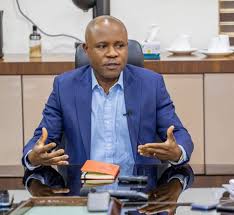
Nigeria’s failure to finance new large-scale power plants for over a decade has been traced to policy inconsistency and the abrupt dismantling of a once-functional investment framework, according to former Minister of Power, Barth Nnaji.
Speaking at the 2026 conference of the Nigerian Association for Energy Economics in Lagos, Nnaji said the country had built momentum in attracting global capital into electricity generation projects before a change in government disrupted progress.
He explained that a partial risk guarantee mechanism, developed in collaboration with former Finance Minister Ngozi Okonjo-Iweala, had made Nigerian power projects bankable by reducing investor risk. The framework enabled projects such as the Azura Edo power plant to secure financing.
“A number of companies developed their power plants to the level where they could just finance them. And the world was galloping to us to finance power plants because we were getting a service guarantee,” Nnaji said.
He noted that the system was discontinued after a change in administration, halting financing flows. “As soon as the government changed, it got wiped away. And till today, we have not financed any new major power plant in Nigeria. That’s about 11 years ago,” he stated.
According to Nnaji, the policy shift sent negative signals to investors and contributed to a sustained financing gap in the sector, highlighting the broader impact of inconsistent government decisions on infrastructure development.
Beyond financing, the former minister urged a pragmatic approach to energy transition, citing global developments such as the Russia-Ukraine conflict as evidence of shifting priorities. He said Europe’s return to coal underscored the limits of a rigid transition away from fossil fuels.
For Nigeria, he argued, natural gas remains the most viable energy source. “We happen to be lucky that we have natural gas as the main ingredient for power production… I predict that for the next 20 years, we will be relying on different forms of natural gas to power our economy,” he said.
Despite holding over 210 trillion cubic feet of gas reserves, Nnaji said inadequate infrastructure has constrained utilisation. He pointed to supply challenges affecting the Nigeria LNG Limited, which he said is operating at about 60 per cent capacity due to gas shortages.
He also cited the long-delayed Mambilla Hydropower Project as evidence of weak execution. The project has remained on the drawing board for more than four decades despite its strategic importance.
Nnaji further emphasised the need for reforms in tariffs, metering, and energy theft to improve sector performance.
In a separate address, the president of the association, Hassan Mahmud, said Africa’s energy crisis is driven more by execution gaps than resource scarcity. He noted that over 600 million Africans lack electricity, while nearly one billion depend on biomass for cooking.
Mahmud said Nigeria’s installed capacity of about 13,000 megawatts contrasts sharply with average generation of 4,000 to 5,000 megawatts, citing gas supply constraints, weak infrastructure, and market inefficiencies.
He added that Africa requires more than $100 billion annually to achieve universal energy access by 2030, but current investment levels fall short.
The conference highlighted a recurring concern across the sector: bridging the gap between resource potential and actual energy delivery remains Nigeria’s central challenge.