
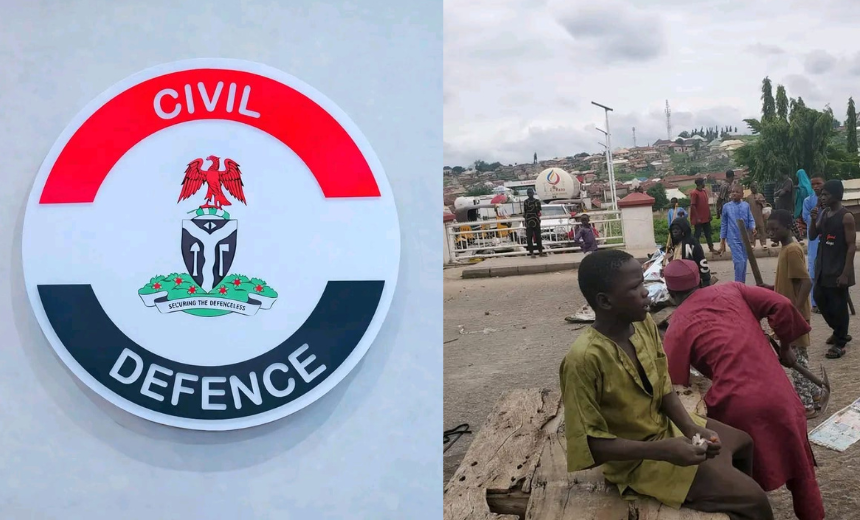
At least 37 suspected illegal miners have died in the custody of the Nigeria Security and Civil Defence Corps in Minna, Niger State, the state governor, Umaru Bago, confirmed on Thursday, 17 September 2026. He announced three days of mourning and said the state commandant of the Corps had been suspended.
The dead were among scores of suspects arrested during a Corps operation on 15 and 16 September in the Mohammed Inuwa Wushishi Housing Estate and Lukoto area, according to a statement by the Niger State Commandant of the NSCDC, Suberu Siyaka Aniviye. He said the detainees were found dead in the early hours of 17 September, “following a suspected outbreak of disease.”
Aniviye did not state a death toll in his statement, using the word “scores,” and did not name the illness suspected. The NSCDC’s Niger State spokesperson put the figure at 33 in remarks to reporters, while the governor and relatives of the deceased put it at 37. The variation reflects a still developing situation rather than a settled count.
The official account of a disease outbreak has been contested. A survivor identified as Dauda Shehu told the Associated Press that about 65 detainees had been held in a poorly ventilated cell, an account that points to possible suffocation rather than illness. The claim has not been independently confirmed, and no post mortem findings had been released as of the time of filing.
At the national level, the Corps moved to widen the inquiry. Its Commandant General, Prof Ahmed Abubakar Audi, ordered a high powered investigative team led by the Deputy Commandant General in charge of Intelligence and Investigation, according to a statement by the National Public Relations Officer, ACC Babawale Afolabi. The team was mandated to examine the condition of the suspects on arrest, their time in custody, the conditions of detention, and any medical attention given.
The NSCDC said the remains had been deposited at the General Hospital, Minna, for medical examination to establish the cause of death, and that it was working with health authorities and other security agencies. Daily Trust reported that the hospital management initially declined to admit the bodies to its mortuary, an indication of the uncertainty around the suspected cause.
The Corps was careful to distance itself from any firm conclusion. It said reports attributing the deaths to a specific disease remained subject to medical and laboratory confirmation, and that it would “refrain from speculation until the outcome of the medical examination is established.” Niger State police said they had opened a separate investigation and asked relatives to come forward with information.
Some accounts described distressing physical signs among the deceased, including foam at the mouth, and said several of the victims were teenagers. Reports also indicated that some of those held were internally displaced persons from communities in the Shiroro area, though the identities and full profiles of the dead had not been officially released.
News of the deaths drew relatives and residents to the Corps headquarters in Minna, and some protests were reported. The NSCDC appealed for calm and asked families and the public to avoid actions capable of causing a breakdown of order while investigations continued.
The incident lands on a state already strained by conflict over its mineral wealth. Niger has been a focal point of enforcement against unlicensed mining, and confrontations have turned deadly on both sides. In February 2026, suspected illegal miners killed an NSCDC officer and burnt a patrol vehicle at Zuzungi near Kataeregi in Bosso Local Government Area, after which the state ministry temporarily closed the site. Governor Bago separately mourned the killing of another officer, Aminu Eshin, at an illegal mining site in Paikoro.
Collapses at unregulated pits have also cost lives. In April 2025, two miners from Kano State died when a pit caved in at Farin Doki in Shiroro, and in June 2024 a pit collapse at Galkogo in the same area left one person dead and about 30 trapped. The pattern points to the human cost of an activity that operates largely outside licensing, safety and environmental controls.
For the Corps, the deaths raise questions that go to the treatment of persons in its custody, a matter that will now turn on the findings of the internal team, the police inquiry and the medical examination. The suspension of the state commandant signals that the state government is treating the matter as serious, though it does not by itself establish responsibility for the deaths.
What is confirmed is that a significant number of detainees died within about two days of arrest, that an official cause has not been established, and that a survivor’s account and the Corps’ own explanation do not agree. The autopsy results and the reports of the two investigations will determine which account holds, and whether the deaths were the result of illness, detention conditions or a combination of factors.