
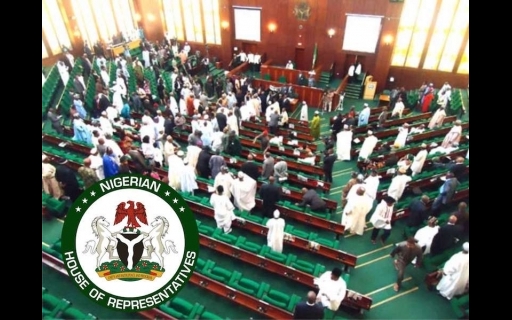
The House of Representatives Public Accounts Committee has recovered 521.8 million naira in unremitted Value Added Tax from the Central Bank of Nigeria. The recovery followed a legislative inquiry into systemic revenue leakages and non-compliance with standard operating procedures by public institutions. The retrieved funds represent unremitted tax deductions on fees collected through the Remita payment gateway between November 2018 and April 2024. Committee Chairman Bamidele Salam confirmed that the central bank transferred the outstanding balance into the federal treasury following a direct legislative mandate. Lawmakers are currently pursuing an additional 33 billion naira in related claims from the apex bank.
The completed recovery highlights a long-standing vulnerability within the automated payment collection systems used by the state. The House of Representatives initiated the targeted investigation after receiving multiple reports of massive processing leakages within the national treasury. Congressional investigators discovered that the central bank routinely failed to forward mandatory tax percentages earned from electronic services. The bank provided formal documentation on May 7 proving full compliance with the new legislative repayment orders. While this initial settlement closes the immediate tax dispute, it uncovers a much wider pattern of institutional oversight failures.
Legislative focus has now shifted to recovering a separate 3.28 billion naira slice of unrefunded bank charges and interest. This additional dispute involves unremitted processing fees accumulated over an eight-month window between March and October 2015. The central bank allegedly held onto these specific transaction fees despite explicit circulars requiring immediate treasury remittance. Committee members are currently examining old transaction logs alongside independent auditing firms to verify the exact interest calculations. Central bank officials are expected to present their formal defense regarding these older liabilities during subsequent hearings.
The largest single outstanding claim involves a massive 29.72 billion naira liability tied to the Treasury Single Account platform. This specific balance includes 8.99 billion naira in unrefunded collection fees and an astronomical 20.73 billion naira in accrued interest penalties. Lawmakers argue that the prolonged retention of these public funds actively starved critical infrastructure projects of necessary liquidity. The apex bank faces intense pressure to explain why these multi-billion-naira balances remained hidden from standard automated reporting platforms. The committee expects to confront senior banking executives with these comprehensive ledger discrepancies this week.
This multi-layered financial probe signals a highly aggressive stance by parliament to enforce fiscal transparency across a struggling public sector. For years, major state institutions operated with considerable financial autonomy, frequently bypassing basic tax remittance schedules. The ongoing scrutiny of the Remita infrastructure demonstrates that even the primary monetary authority remains subject to rigorous legislative discipline. Analysts point out that recovering these dormant billions is crucial for an administration dealing with severe budget deficits. The lawmakers intend to expand this forensic tracking process to other lucrative state-backed digital service providers.
The Public Accounts Committee will resume its formal hearings on Monday at the National Assembly Complex in Abuja to review outstanding claims. Technical teams from the Office of the Accountant-General of the Federation are expected to assist lawmakers in parsing the disputed interest calculations. The outcome of the 33 billion naira chase depends entirely on the accuracy of these historical transaction records. For now, the successful retrieval of the 521.8 million naira proves that parliamentary oversight can yield tangible financial results. The central bank must now brace for an extended period of intense fiscal auditing.