
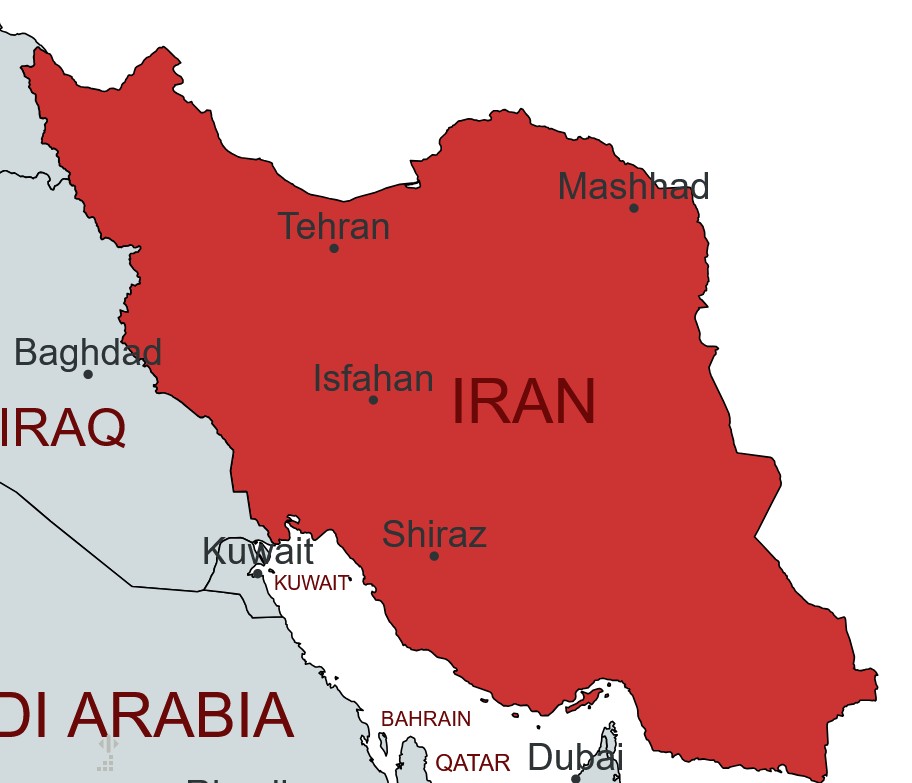
The Islamic Revolutionary Guard Corps launched retaliatory ballistic missile and drone strikes against American military facilities in Jordan and the United Arab Emirates early on Monday, 31 August 2026. The regional salvo came hours after American warplanes bombed rocket launch platforms on Iran’s southern Larak Island in the Strait of Hormuz, breaking a month-long lull in direct fighting. United States Central Command stated that its pilots struck two launchers preparing to fire naval mines into international shipping lanes. Tehran quickly confirmed hits on technical hangars and maintenance hubs across two air bases inside Jordan. Iran’s regular army also claimed responsibility for launching swarms of attack drones against American forces at Al Minhad Air Base in the United Arab Emirates. The renewed cross-border exchanges pushed global crude benchmarks up by more than two per cent, with Brent crude nearing $90 a barrel. Military deterrence in the Persian Gulf remains an elusive political illusion. Limited strikes rarely produce lasting diplomatic silence.
The American attack on Larak Island marked the first direct strike on Iranian sovereign soil since late July. Central Command spokesman Captain Tim Hawkins maintained that American surveillance aircraft detected Iranian teams loading sea mines onto rocket rails. Washington had declared international transit lanes cleared of naval explosives just last week. The sudden American raid shattered the fragile regional pause that Gulf monarchies helped negotiate earlier this month. Revolutionary Guard commanders reported that the bombardments caused casualties among both military crews and local civilians living near coastal installations. General Hossein Mohebi called the attack a fatal calculation by the White House that would carry heavy military and economic penalties. The White House had recently claimed it was pivoting from direct kinetic strikes to secondary banking sanctions. Kinetic force remains the default American reflex in contested maritime choke points.
Jordanian air defence batteries intercepted at least eight ballistic missiles entering the kingdom’s airspace during the early morning hours. Amman found itself dragged back into the middle of the confrontation despite strenuous efforts to stay out of regional crosshairs. Iranian state television broadcast footage of missile batteries firing salvos toward Jordan from launch sites in western Iran. Tehran aimed to prove that host nations providing airfields to the Pentagon will bear real physical costs during regional escalations. While defensive missile shields intercepted the majority of the incoming projectiles, the demonstration rattled Gulf capitals. Regional rulers who host American staging wings know that modern interception systems cannot guarantee total protection against saturated drone swarms. Proximity to American air bases turns allied neighbours into frontline combat zones. Geography leaves small Gulf kingdoms with very thin margins of error.
The simultaneous drone assault on Al Minhad Air Base in the United Arab Emirates signals Tehran’s readiness to widen its retaliatory perimeter. Emirati officials have spent months lobbying Washington to refrain from deep strikes inside Iran to protect their domestic real estate and tourist trade. The Iranian army’s decision to target an airfield near Dubai serves as a blunt warning to Gulf monarchies. Tehran insists that Gulf neighbours cannot lease sovereign soil to American combat units while claiming diplomatic neutrality. Commercial cargo operators across Dubai and Abu Dhabi face mounting insurance surcharges as regional airspace becomes contested. Iranian military planners calculate that threatening Gulf commercial stability will force regional rulers to demand American restraint. Regional commerce suffers whenever military airfields draw hostile fire. A wider war threatens the commercial foundations of the entire Gulf.
The naval standoff inside the Strait of Hormuz continues to paralyse global energy logistics after six months of unresolved conflict. Revolutionary Guard naval units claimed that an inbound commercial supertanker struck two underwater mines south of the waterway on Sunday, bringing the vessel to an immediate halt. The incident followed a separate projectile strike on a merchant hull documented by the United Kingdom Maritime Trade Operations on Saturday. Daily commodity vessel transits through the narrow strait dropped to five hulls over the weekend, according to commercial shipping data. International tanker syndicates refuse to enter the channel without direct naval escorts and exorbitant war-risk insurance covers. President Donald Trump insisted that the passage remains open, citing dozens of prior vessel passages. Real energy markets trade on verifiable physical security rather than optimistic political declarations.
The latest escalation complicates delicate mediation led by Omani and Qatari envoys in Tehran. Diplomats had spent the past week trying to revive the lapsed June memorandum of understanding to establish safe commercial shipping corridors. Iranian President Masoud Pezeshkian departed for a security conference in Kyrgyzstan on Monday, declaring that Iran does not seek war but will give a firm response to aggression. Iranian parliamentary security chief Ebrahim Azizi warned Washington on social media that testing Iranian resolve will only increase the costs of American operations. American Treasury Secretary Scott Bessent had earlier promised to crush the Iranian economy through sweeping secondary financial bans rather than bombs. However, economic warfare and selective kinetic strikes have failed to force political concessions from Tehran. Coercive pressure often hardens resistance rather than produces diplomatic surrender.
The conflict exposes the growing exhaustion of American military logistics across the Middle East. Pentagon planners worry about depleted interceptor missile stockpiles after half a year of continuous defensive combat operations. Shooting down cheap Iranian drones with multimillion-dollar surface-to-air missiles creates an unsustainable financial and industrial drain on Western arsenals. American commanders must weigh regional munition expenditures against strategic commitments in the Indo-Pacific and eastern Europe. Tehran exploits this cost imbalance by producing thousands of expendable strike drones and short-range rockets in domestic workshops. The six-month war has settled into an expensive stalemate that neither Washington nor Tehran can easily escape. Prolonged attrition punishes superior military powers far more than low-cost regional adversaries. Wars of exhaustion favour the player with the highest pain tolerance.
The resurgence of open combat along the Persian Gulf removes any realistic prospect of a quick diplomatic settlement before the winter months. Developing economies across the global South will absorb the immediate shock through higher retail fuel prices and climbing import costs. Global central banks cannot control energy inflation when key maritime corridors face active mine warfare and missile fire. The failure of American air power to eliminate Iranian coastal launch batteries proves that precision bombing cannot secure open sea lanes alone. As long as Washington insists on economic capitulation and Tehran demands total sanctions relief, the cycle of violence will grind on. Both sides remain committed to a dangerous game of military chicken in the world’s most critical oil artery. An accidental miscalculation in the strait could plunge the entire Middle East into an uncontrolled inferno.