
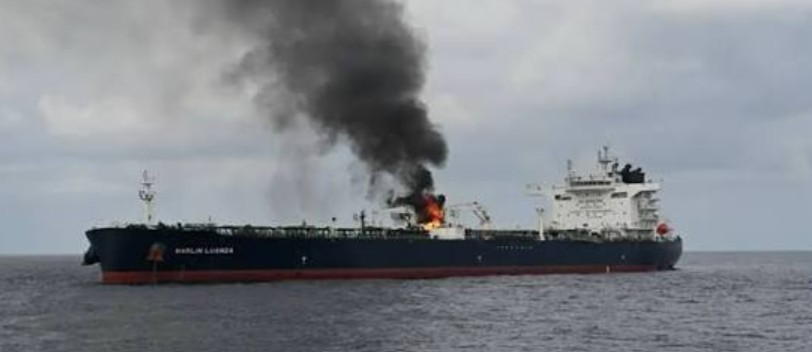
American and Iranian forces traded direct military strikes on Monday, 31 August 2026, ending a month of uneasy silence across the Persian Gulf. United States Central Command launched precision air raids against rocket launch pads on Larak Island to stop Tehran from dropping naval mines into the Strait of Hormuz. Iran’s Islamic Revolutionary Guard Corps hit back within hours, firing ballistic missiles at airbases in Jordan that house American troops. President Donald Trump escalated the rhetoric from Washington, boasting online that American bombs were blowing Kharg Island to pieces. Yet commercial maritime trackers and satellite feeds showed normal port activities continuing at the main oil export terminal. The renewed fighting pushed Brent crude prices past $90 a barrel as traders braced for more tanker attacks. Both capitals have returned to open combat after weeks of stalled backchannel talks. Kinetic force has once again replaced diplomatic mediation.
The raid on Larak Island marks the first direct American strike on Iranian sovereign soil in more than four weeks. Pentagon officials argued that surveillance aircraft caught Iranian crews loading naval explosives onto rapid-fire launchers near the narrowest shipping channels. The air strikes wiped out two launch sites but caused casualties among nearby personnel and coastal hamlets. Tehran viewed the morning raid as an unprovoked violation of its territorial waters. The Islamic Revolutionary Guard Corps immediately placed its southern coastal batteries on maximum alert. Field commanders scattered their mobile rocket trucks into underground bunkers along the rocky Gulf coast. The White House had recently promised to focus on financial sanctions rather than dropping heavy bombs. Washington still reaches for heavy air power at the first sign of maritime friction.
Tehran’s missile response targeted American military hubs outside the Persian Gulf to expose the vulnerability of regional staging grounds. Iranian missile crews launched long-range projectiles from western launch pads toward airbases in Jordan. Air defence batteries intercepted several inbound rockets, but shrapnel damaged hangars and technical equipment across the installations. Tehran wants to remind Arab rulers that hosting American combat wings carries severe physical risks. The Iranian leadership insists that any country that opens its airfields to American bombers becomes a legitimate wartime target. Jordanian officials now face the awkward challenge of explaining foreign troop presence to an uneasy domestic public. Small regional states find themselves trapped between competing superpowers. Geography leaves neighbouring kingdoms with very little room to hide.
President Trump’s loud claims about destroying Kharg Island highlight the wide gulf between political posturing and physical reality. The offshore island handles over ninety per cent of Iran’s crude exports, making it the most critical energy asset in the country. While Trump claimed the oil hub was crumbling under American firepower, satellite images showed zero structural damage to the loading berths. Energy analysts believe destroying the terminal would trigger an uncontrollable leap in global petrol prices ahead of American elections. The White House prefers dramatic social media declarations to the real fallout of a total energy war. Iranian oil tankers continue to load crude under the cover of night, slipping past naval patrols to reach Asian buyers. Exaggerated political rhetoric rarely changes the facts on the water. Loud threats cannot substitute for coherent military strategy.
The renewed clash shatters any immediate hope of reviving the maritime truce that collapsed in early July. Omani and Qatari mediators had spent weeks shuttling between foreign ministries to draft workable navigation terms. Tehran demanded an end to secondary banking sanctions and the withdrawal of Western warships before opening the shipping lanes. Washington flatly rejected those terms, insisting that freedom of navigation requires no preconditions. As both governments trade missile fire, those fragile diplomatic channels have closed down completely. Shipping companies have pulled their container vessels from the route, choosing to sail around the Cape of Good Hope at great expense. The waterway remains a perilous no-go zone for unescorted merchant hulls. Stubborn political demands continue to choke global sea trade.
The economic cost of the escalating war is spreading across global commodity markets with alarming speed. Higher maritime insurance rates have pushed tanker transport fees to historic highs across the Indian Ocean. Asian manufacturers must pay steep premiums to secure raw petrochemicals and crude shipments from alternative African suppliers. Developing countries feel the pain immediately as their central banks burn through dollar reserves to pay for expensive imported petrol. Higher crude benchmarks threaten to undo months of anti-inflation efforts by Western central banks. The standoff in the Gulf demonstrates how quickly regional fighting can shake global supply chains. A few naval mines in a twenty-mile strait can distort consumer prices across the entire globe. Economic warfare always produces innocent collateral victims thousands of miles away.
The Pentagon faces a difficult logistical challenge as it tries to maintain a heavy naval presence across the region. Defending open waters against cheap attack drones and mobile missile launchers drains expensive surface-to-air missile stockpiles. American commanders must burn millions of dollars in advanced munitions to shoot down low-cost Iranian rockets. That spending rate limits the military’s ability to prepare for other global security crises in Asia and Europe. Tehran understands this cost imbalance and relies on domestic factories to produce endless streams of cheap drones. The six-month war has settled into a grinding war of attrition that favours the cheaper weapon. Washington cannot afford to fire million-dollar interceptors forever. Low-cost asymmetric arms continue to frustrate conventional military dominance.
The exchange of fire on Monday proves that neither side possesses an easy military exit from the Persian Gulf deadlock. Precision air raids on coastal launch pads will not stop Iranian squads from dropping more mines at night. Broad financial sanctions have failed to bring political collapse in Tehran, while missile strikes have failed to push American fleets out of the region. Both governments remain locked in an expensive test of nerve that neither can win cleanly. With winter approaching, the world economy will have to live with high oil prices and closed waterways. The cycle of strikes and counter-strikes will continue until one capital decides the price of war has grown too high. The Persian Gulf remains the most volatile powder keg in world politics.