
Cumulative investment in Nigeria’s telecommunications industry has surpassed 75 billion dollars, marking an extraordinary journey from state monopoly to essential economic utility. Bismarck Rewane, managing director of Financial Derivatives Company and chairman of FCMB, highlighted the milestone during an industry review on Wednesday, 16 September 2026. The capital deployed across the sector stood at barely 500 million dollars in 2001 when market deregulation began. Two and a half decades later, private capital has replaced the inert apparatus of state-owned NITEL with commercial networks that underpin everyday national commerce. The sector has evolved far beyond basic voice communication into the primary arterial plumbing of modern enterprise. Without continuous data flows, contemporary commercial activity grinds to a halt. Telecoms now serve as fundamental economic infrastructure.
The scale of this shift reflects profound changes in how ordinary citizens use mobile networks. Industry figures show that monthly internet traffic expanded from 615,207 terabytes in July 2023 to 1.66 million terabytes in July 2026. This represents an enormous leap of roughly 170 per cent in data consumption over three years. Over the very same period, total active mobile telephone lines shrank by 25.75 million subscriptions down to 195.11 million. Stricter identity audits and regulatory line disconnections pruned millions of duplicate and dormant voice accounts from carrier ledgers. Yet surviving consumers are using their smartphones far more intensively than ever before. Network operators no longer depend on sheer headcounts to grow. Traffic intensity now drives commercial expansion.
Broader internet penetration metrics confirm this structural migration from simple voice chatter to deep broadband usage. Active high-speed broadband subscriptions jumped from 89.73 million in July 2023 to 124.42 million by July 2026. This expansion pushed national broadband penetration from 47.01 per cent up to 57.40 per cent across the federation. Back in 2000, Nigeria possessed just 250,000 fixed copper telephone lines under state control, which left teledensity hovering near an abysmal 0.4 per cent. The Nigerian Communications Commission now reports that teledensity stands near 80 per cent, giving the overwhelming majority of citizens direct network links. Millions of households bypass traditional landlines altogether to work, trade, and bank online. Cheap mobile handsets have replaced obsolete telephone poles.
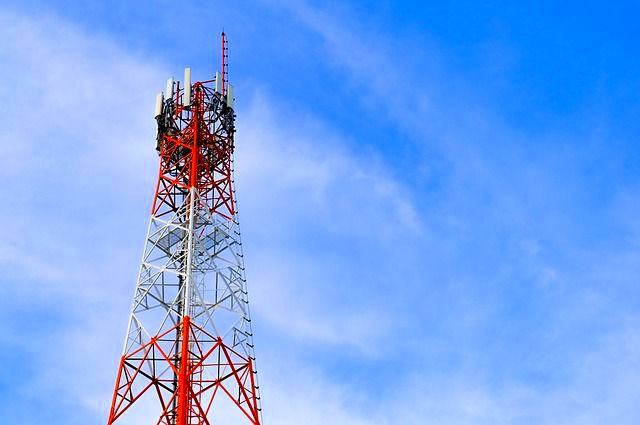
Conventional economic metrics systematically understate the genuine weight of this digital spine. Gross domestic product calculations measure the direct revenues and taxes generated by network operators while missing the indirect activity that connectivity enables. Mobile bandwidth now carries electronic cash payments, digital trade channels, medical records, freight monitoring systems, and remote classroom lectures. If technical disruptions knock cell towers offline, the broader macroeconomy does not merely lose a fraction of sectoral output. Commercial banks stop clearing funds, road hauliers lose fleet telemetry, and retail markets freeze up entirely. Mr Rewane noted that the true value of connectivity lies in these systemic interlocks rather than raw balance sheets. A modern economy cannot breathe without stable bandwidth.
This structural dependence brings acute commercial and regulatory obligations for both state administrators and network builders. Operating telecom networks across the federation remains expensive and punishing. Mobile operators burn enormous volumes of costly diesel fuel each day to keep remote base stations powered amid grid collapse. The sharp depreciation of the naira has driven up the cost of importing base stations and fibre cables. Fibre line cuts caused by careless road contractors cost telecom carriers billions of naira in repair bills each quarter. If authorities treat network operators merely as targets for local taxes, capital inflows will dry up. Telecom firms need predictable operating rules to sustain investment.
The regulator must also fix glaring imbalances in national radio spectrum allocation to sustain future data demand. The Nigerian Communications Commission acknowledged in its Spectrum Roadmap that uneven frequency distribution creates severe capacity bottlenecks for certain network operators. Early spectrum auctions in 2001 and 2007 established 2G and 3G coverage, but newer 5G deployments require wider spectrum pipes. Network operators must continuously refarm and optimise their existing spectrum blocks to handle surging video streaming, commercial data pipelines, and cloud computing. The GSMA projects that the digital economy will contribute 83 trillion naira to national output by 2030. Reaching that ambitious target demands equitable spectrum access and faster approvals for right-of-way permits across the thirty-six states. Idle spectrum benefits nobody.
Building reliable networks outside bustling commercial capitals remains the final unfinished hurdle of this 25-year transformation. Rural communities still face irregular signals and poor broadband coverage because low population density discourages private capital expenditure. Commercial providers concentrate modern 5G gear in wealthy metropolitan quarters while peripheral farming belts manage on patchy connections. The central bank and state planners increasingly tie financial inclusion and agricultural market efficiency to mobile access. If rural communities remain cut off from broadband pipes, economic inequality between cities and farming belts will widen further. Closing that rural coverage deficit requires targeted state incentives and shared infrastructure pools. A national network must reach everyone.