
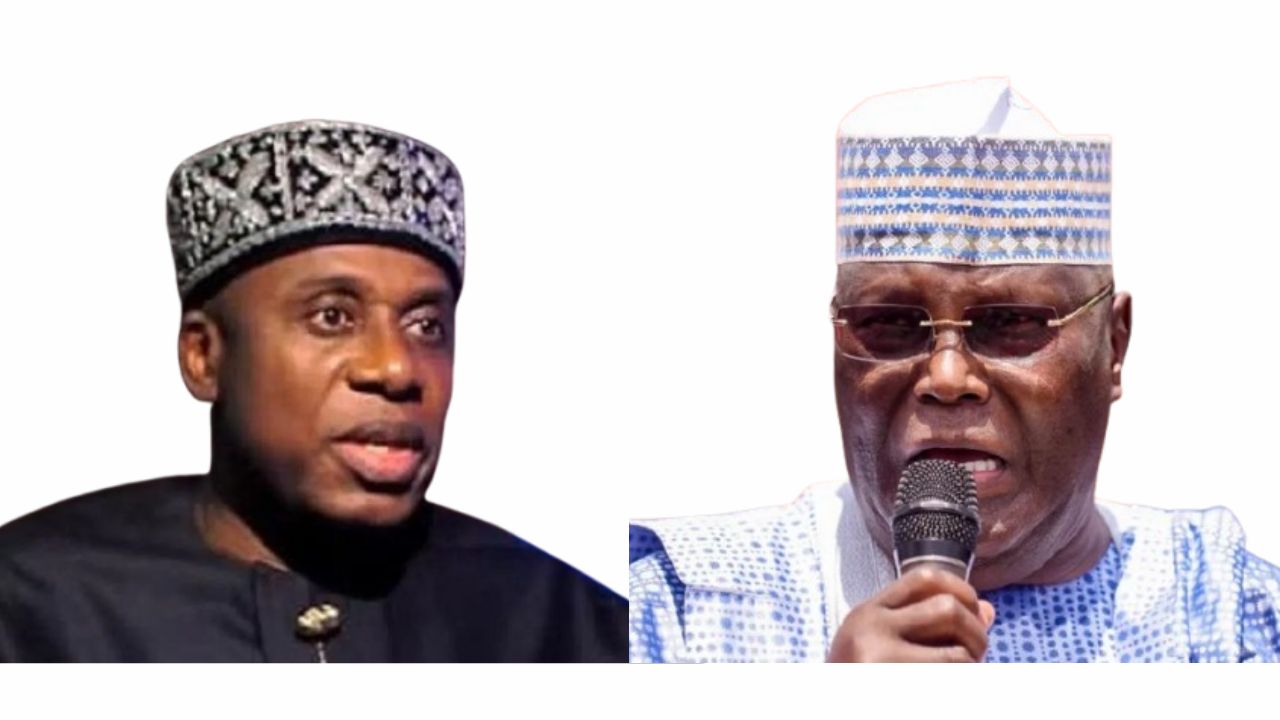
Former Vice President Atiku Abubakar and former Minister of Transportation Rotimi Amaechi met behind closed doors with leaders of the African Democratic Congress in Abuja to hammer out an alliance ahead of the 2027 general elections. The high-level parley brings two perennial heavyweights together in an ambitious bid to stitch together a credible opposition challenge to President Bola Tinubu. Both chieftains, having abandoned their former partisan homes after bitter falling-outs with current party hierarchies, view the ADC as a viable vehicle to consolidate disgruntled political blocs. The discussion focused on crafting a unified platform capable of fielding candidates across all thirty-six states. Party officials kept the precise tactical details private, yet the political intent was unmistakable. Big men out of power invariably seek fresh shelter. Opposition figures must unite or face another swift defeat.
The gathering underscores the acute urgency gripping Nigeria’s fragmented opposition networks as the political calendar speeds toward party nomination deadlines. Under the electoral rules set down by the Independent National Electoral Commission, political associations face strict windows to submit audited membership rolls and conclude their candidate selection processes. Neither Mr Abubakar nor Mr Amaechi can afford protracted legal squabbles within their former redoubts, the Peoples Democratic Party and the All Progressives Congress. The ADC offers a nimble alternative, free from the crushing internal court disputes that crippled larger platforms in recent years. By engaging the party’s national leadership directly, both men seek to bypass messy local skirmishes. They want a clean vehicle with national reach. Speed matters when the clock begins to run out.
The alliance faces formidable structural hurdles that no amount of private bonhomie can easily dissolve. Both politicians command fierce loyalty from personal followings, yet both also carry enormous presidential ambitions that rarely accommodate second fiddle. Mr Abubakar brings a battle-tested political network, deep personal resources, and substantial voter goodwill across the northern states. Mr Amaechi offers formidable organisational grit, deep roots across the Niger Delta, and a track record of running national campaign machinery. Finding space on a single ticket will test their diplomatic skill to the limit. The ADC national leadership insists that all aspirants must submit to open internal ballots. Big egos seldom surrender their dreams without a fight.
The backdrop to these manoeuvres is an electorate battered by steep economic pain and mounting living costs. Fuel pump prices hovering near record highs and chronic currency weakness have created widespread public anger across the country. Opposition strategists recognise that popular discontent offers ripe political ground to unseat the governing party. Yet discontent alone never wins elections without disciplined boots on the ground and cash at the polling units. The ruling party commands vast federal patronage, state apparatuses, and seasoned electoral operatives who know how to protect their turf. An opposition coalition that relies merely on popular grievance will quickly find itself outmanoeuvred. Voters need a coherent plan, not just shared anger.
Regional calculations complicate the emerging arithmetic within the ADC leadership. Prominent figures from the South-East and Middle Belt demand firm commitments on ticket balancing and power rotation before committing their grassroots structures. Mr Amaechi’s allies argue that power must remain in the southern half of the country to preserve equity, while the Atiku camp points to northern delegate strength as essential to unseating the incumbent. These competing geographical claims nearly broke previous opposition experiments before the first vote was cast. The party chairman and national working committee must navigate these rival interests without alienating key regional chieftains. A misstep in power sharing will trigger immediate defections. Geopolitics rules every Nigerian election.
The meeting also signals a broader realignment that could draw in other unaligned political forces across the federation. Civil society observers and dissident lawmakers watch the ADC closely to see if it can build a durable bridgehead against the status quo. If Mr Abubakar and Mr Amaechi agree on a formal pact, third-party defectors and regional caucuses will likely follow them into the tent. If negotiations stall over the presidential slot, the coalition will fragment into toothless splinter groups. The ruling party understands this dynamic perfectly and will work relentlessly to exploit every personal fault line between the principals. Opposition unity requires genuine sacrifice, a virtue rarely displayed by senior Nigerian politicians. Words must soon turn into binding pacts.
The Abuja talks mark the opening skirmish in what promises to be a ferocious contest for political survival. For Mr Abubakar, the 2027 cycle represents perhaps his final realistic run at the presidency he has pursued for decades. For Mr Amaechi, the race offers a vital chance to reclaim relevance after years in the political wilderness following the 2023 primaries. Both men know that divided opposition tickets in previous elections handed easy victories to the governing party. They must either settle their rivalries inside the ADC boardroom or watch the ruling party extend its mandate without breaking a sweat. The path ahead demands iron discipline, transparent delegate rules, and hard compromises. History suggests Nigerian politicians prefer fighting each other to sharing power.