
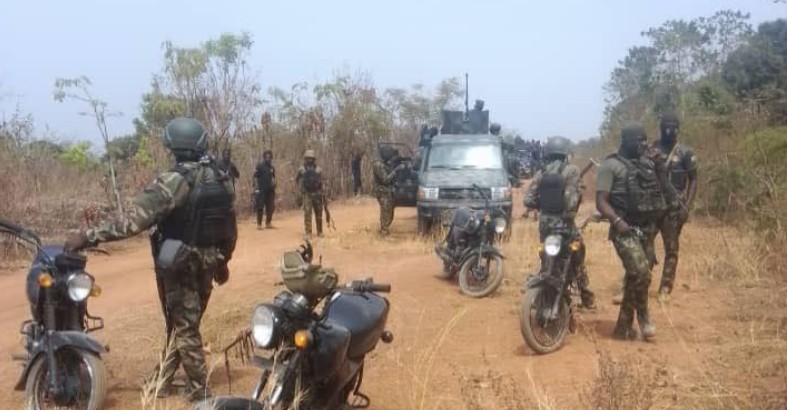
Troops of Operation Hadin Kai neutralised four senior leaders of the Islamic State West Africa Province in the Kukawa Local Government Area of Borno State on 31 October 2026. Acting Media Information Officer Captain Mohammed Goni confirmed that joint ground forces and air support repelled a heavy night assault against military positions. The dead insurgents include Abu Hajara, a prominent member of ISWAP’s governing Shura Council, senior battlefield commander Abul Walid, and two foreign Arab mercenaries. Ground operations remain active.
The presence of foreign Arab fighters underlines deep operational links between Sahelian jihadist syndicates and external terror networks. Foreign mercenaries routinely provide technical guidance on improvised explosive devices, encrypted satellite communications, and tactical drone deployments to local insurgent cells. Eliminating top-tier commanders strips away vital operational experience that ISWAP relies on to coordinate complex raids against military outposts. Regional security analysts view the presence of external fighters as clear proof that global jihadist networks continue to treat the Lake Chad Basin as a primary operational theatre.
Military planners used real-time intelligence and aerial surveillance to trap the advancing insurgent column before it could breach defensive perimeters. Nigerian infantry forces recovered high-calibre weapons, military-grade communication gear, and significant quantities of ammunition from the battlefield. Combined air bombardments destroyed secondary insurgent staging camps hidden inside the dense marshlands surrounding Lake Chad. Swift counter-attacks prevent militant groups from consolidating hold over strategic northern transit corridors.
The tactical victory comes barely seventy-two hours after troops killed fifty-five insurgents during a similar military engagement in the Buni Yadi district of Yobe State. Sustained military pressure across the North-East aims to disrupt ISWAP’s command structure ahead of the dry season when insurgent mobility increases. Yet tactical victories on the battlefield must yield long-term territorial control to prevent remnants of Boko Haram and ISWAP from regrouping in remote border enclaves. Military commanders must maintain relentless pressure to deny armed groups safe havens.
Re-establishing state authority across rural Borno requires durable civilian security networks alongside regular military patrols. Displaced agrarian communities cannot return to their ancestral farmlands while militant cells control outlying rural roads and charge illegal tolls. The Theatre Command pledged to sustain aggressive offensive operations until troops dismantle all remaining terror infrastructure across the Lake Chad basin. Military dominance on paper must translate into absolute physical safety for local farming families.
Ending the seventeen-year insurgency demands uncompromising military force matched with tight border enforcement to choke off foreign fighter inflows. Regional governments across the Lake Chad Basin Commission must coordinate intelligence sharing to prevent cross-border escapes by fleeing militant units. Nigerian troops have proved their willingness to stand firm and crush high-profile insurgent commanders on the battlefield. Defeating extremist ideology permanently requires sustained political will and unyielding operational discipline across every front.