
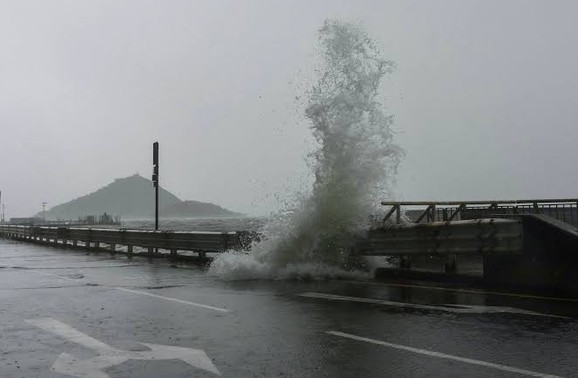
Typhoon Dolphin battered Japan’s southern Okinawa prefecture on Saturday, unleashing destructive winds and torrential rain before heading toward eastern China. The Japan Meteorological Agency reported peak gusts exceeding 180 kilometres per hour, knocking out power to thousands of homes and grounding regional flights. Local authorities urged over 100,000 residents across low-lying coastal zones to seek immediate emergency shelter. Japanese utility crews struggled through severe gales to repair damaged electrical lines. Extreme weather events disrupt East Asian transport networks with increasing frequency.
The powerful storm system is tracking northwest across the East China Sea toward China’s commercial heartland. Marine authorities in Zhejiang and Fujian provinces ordered commercial vessels back to harbour and suspended all coastal ferry services. Port operators in Shanghai and Ningbo-Zhoushan, two of the world’s busiest container hubs, halted cargo handling operations ahead of expected landfall. Regional supply chains face immediate logistics delays as maritime traffic grinds to a temporary halt. Port closures quickly cascade through global trade lanes.
Chinese weather forecasters warned that Typhoon Dolphin will bring severe storm surges and flash flooding to low-lying coastal cities by Sunday. Provincial emergency management teams raised flood response alerts to the highest level and pre-positioned rescue personnel along major river basins. Local governments ordered thousands of fishing boats to dock and evacuated workers from offshore oil platforms. Agricultural officials urged farmers to harvest vulnerable crops to minimise economic losses. Heavy rainfall threatens to inundate high-value farmland and industrial parks across eastern China.
The storm’s arrival compounds regional supply chain vulnerabilities already strained by extreme summer heat and volatile energy demand. Regional logistics managers expect significant backlogs at major eastern seaports as container ships anchor offshore to ride out the gale-force winds. Rail and road haulage networks across coastal Zhejiang face temporary suspensions until safety inspectors clear transport corridors. Factory operators across Shanghai’s manufacturing belt prepared backup generators to guard against potential grid failures. Weather disruptions impose real costs on global manufacturing networks.
Climate scientists note that rising ocean temperatures in the West Pacific fuel faster intensification and erratic movements in seasonal typhoons. Warmer sea surfaces provide extra energy, allowing storms like Dolphin to maintain high intensity closer to mainland coasts. Coastal urban planners in Asia face mounting pressure to reinforce sea walls and upgrade urban drainage systems against rising storm surges. Upgrading coastal infrastructure requires long-term capital investments that local municipalities struggle to fund. Severe storms test municipal resilience every year.
Typhoon Dolphin’s dual impact on Japan and China highlights the shared environmental risks facing East Asia’s economic hubs. National emergency agencies must improve real-time meteorological data sharing to mitigate cross-border supply chain shocks. As the storm makes landfall, municipal authorities must focus on protecting lives and restoring power and transport links rapidly. Resilient infrastructure and clear emergency planning remain the best defense against severe weather. Climate volatility demands continuous adaptation from governments and businesses alike.