
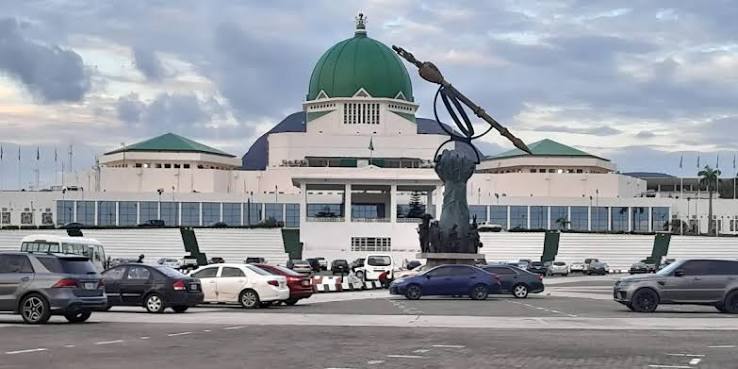
Nigeria’s National Assembly is moving to create 74 additional legislative seats reserved for women, in what would be the most far reaching attempt yet to close one of the widest gender gaps in any parliament on the continent. The plan, part of the ongoing review of the 1999 Constitution, would add 37 seats to the Senate and 37 to the House of Representatives, giving every state and the Federal Capital Territory one extra seat in each chamber to be contested only by female candidates.
The Senate Leader, Opeyemi Bamidele, who is also vice chairman of the Senate committee reviewing the constitution, set out the details at a law week organised by the International Federation of Women Lawyers in Ekiti State. He said the measure would run alongside a separate proposal for three reserved seats for women in each of the 36 state Houses of Assembly, bringing the total number of special seats to 182. By his account, the new seats would be created without removing any existing elected position.
The reform carries a built-in expiry date. Bamidele said the reserved seats would last for 16 years, covering four electoral cycles, before a comprehensive review decides whether they should continue. He described the arrangement as a sunset clause meant to nurture a more inclusive political culture rather than a permanent quota, and framed the bill as a constitutional correction rather than a political favour, arguing that a democracy which shuts out half its population is “at best, a flawed democracy and, at worst, a veiled oligarchy.”
The numbers behind the push are stark. Women make up about half of Nigeria’s population but hold roughly 4.5 per cent of seats in the National Assembly, with about four of the 109 senators and 17 of the 360 members of the House of Representatives. That leaves Nigeria near the bottom of global and African rankings for female representation, well below countries such as Rwanda and Uganda, which reserve seats or apply quotas. Rather than improving, the figures have slipped, with the number of women in the Senate falling back to where it stood when civilian rule returned in 1999.
The current effort revives a proposal the National Assembly has rejected before. During the last constitution review in March 2022, lawmakers voted down five gender bills, including one for special seats, with 208 members of the House opposing it against 81 in favour, and the Senate also throwing it out. That rejection drew protests from women’s groups and criticism at home and abroad. The bill was reintroduced in the current 10th Assembly, where it is championed by the Deputy Speaker, Benjamin Kalu, and has advanced through second reading. First Lady Oluremi Tinubu, herself a former senator, has publicly urged lawmakers to pass it, and civil society coalitions have rallied repeatedly at the National Assembly to press for action before the 2027 general election.
Turning the bill into law will not be straightforward. As a constitutional alteration, it must secure a two-thirds majority in both federal chambers and the approval of at least 24 of the 36 state Houses of Assembly. Bamidele acknowledged that the concurrence of the state assemblies is a constitutional requirement, and advocates have warned that the timetable is tight if the seats are to be ready for the 2027 polls.
The proposal is not without opposition. Critics have questioned the cost of expanding an already large legislature, warned that reserved seats could amount to tokenism, and argued that creating women only constituencies discriminates on the basis of gender. Supporters counter that temporary measures of this kind have lifted women’s representation elsewhere, and that leaving it to political parties has failed to move the numbers in more than two decades.
For now, the bill remains one of dozens of alteration proposals awaiting final votes as the constitution review enters its decisive phase. Whether the 10th Assembly breaks with the pattern of 2022, and whether enough state legislatures fall in line, will decide if Nigerian women enter the next parliament in far greater numbers or face another spell on the margins of power.