
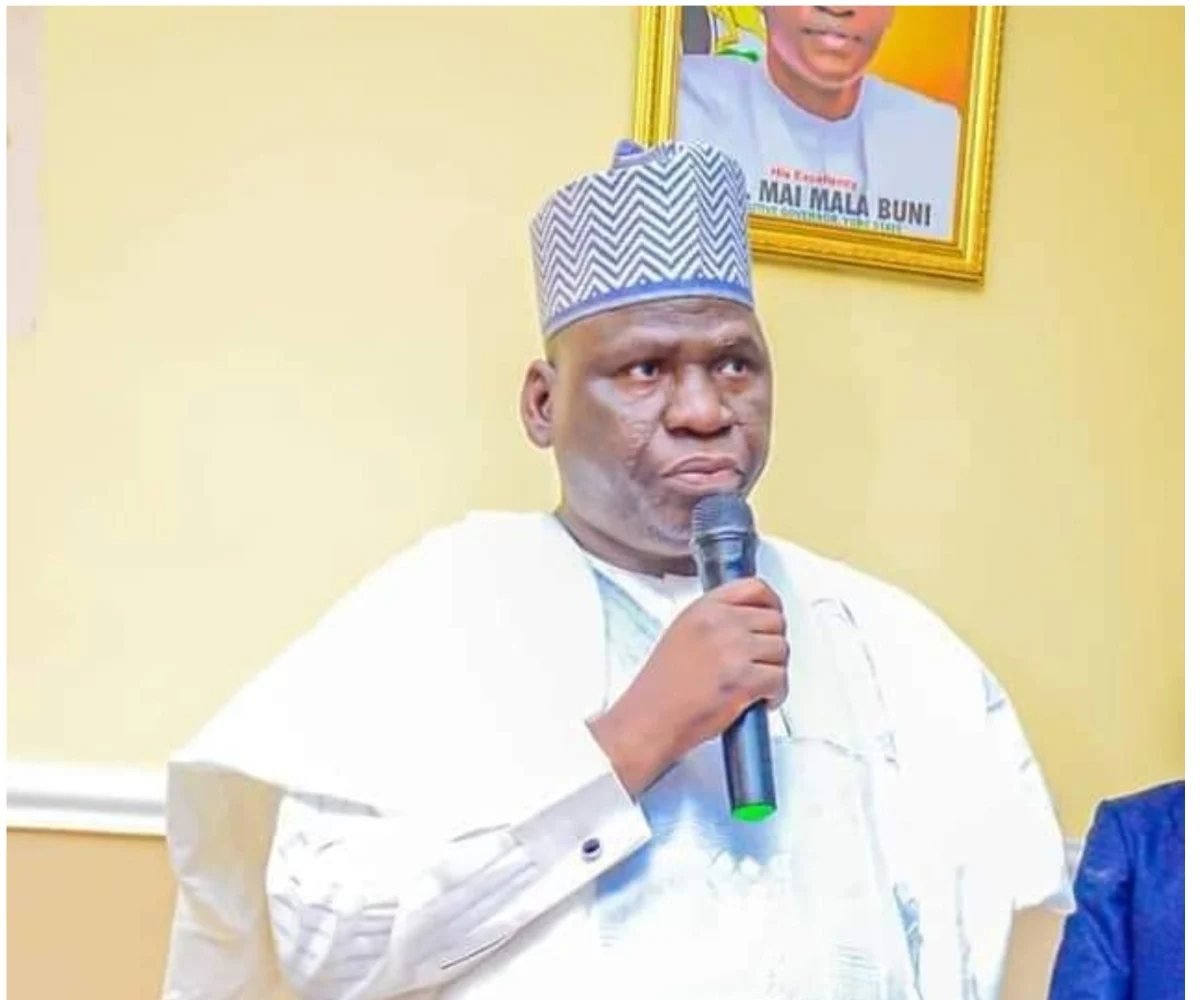
The All Progressives Congress chairman in Yobe State, Muhammad Gadaka, has apologised and withdrawn a remark urging married women whose husbands prevent them from voting for the party to seek divorce, offering to pay their dowries.
Gadaka made the comment on Thursday while addressing supporters and receiving defectors at a campaign rally in Nangere, Yobe State. In a video that circulated widely, he said women should stand up to husbands who would not allow them to vote for the APC and leave their marriages. He added that he would pay the dowry and marry any such woman.
The remark drew sharp criticism from residents and Islamic scholars in the state, who described it as reckless and provocative. Critics warned that the statement risked undermining family values and could be interpreted as encouraging marital breakdown for political reasons.
In a 42-second video shared on Friday on the Facebook page of the Director-General of Press and Media Affairs to Yobe State Governor Mai Mala Buni, Gadaka said his comment had been misconstrued. He described it as a joke rooted in traditional banter between his Ngamo ethnic group and the Kare-Kare-speaking people.
“My statement was just a usual joking banter and does not in any way represent the ideals I stand for or intended to encourage divorce among married people,” Gadaka said. “I offer apologies for my statement, and I hereby withdraw it.”
The episode comes days after a similar controversy in neighbouring Borno State. The Commissioner for Youth and Sports Development, Sainna Buba, had threatened to “flog” people who refused to support the APC in the 2027 election and used language about cutting off fingers of opponents. Buba later apologised and retracted the comments after criticism from Amnesty International and others, saying the remarks were not intended to be taken literally.
Both incidents highlight tensions around political mobilisation in the North-East ahead of the 2027 general elections. Nigeria’s electoral framework guarantees every adult citizen the right to vote freely, regardless of marital status or family pressure. Section 77 of the 1999 Constitution (as amended) and the Electoral Act affirm the right of every qualified Nigerian to participate in elections without interference.
Women’s political participation remains low. In the 2023 general elections, women accounted for only about 10 per cent of candidates and less than 5 per cent of those elected to the National Assembly. Several northern states, including Yobe, recorded no female legislators in their state houses of assembly. Voter registration data from the Independent National Electoral Commission show women making up a substantial share of new registrants in recent continuous voter registration exercises, yet overall turnout in the 2023 presidential election stood at approximately 27 per cent, the lowest since the return to civilian rule in 1999.
Yobe State, like much of the North-East, has experienced the impact of insecurity on civic life. Low voter turnout and limited female representation have been linked by analysts to cultural norms, insecurity and limited political mobilisation targeting women. Statements by party officials that appear to link voting decisions to marital status have therefore drawn particular scrutiny.
Gadaka’s apology seeks to close the controversy. Whether the retraction will fully address concerns about the tone of political campaigning in the region remains to be seen as parties intensify mobilisation for 2027.