
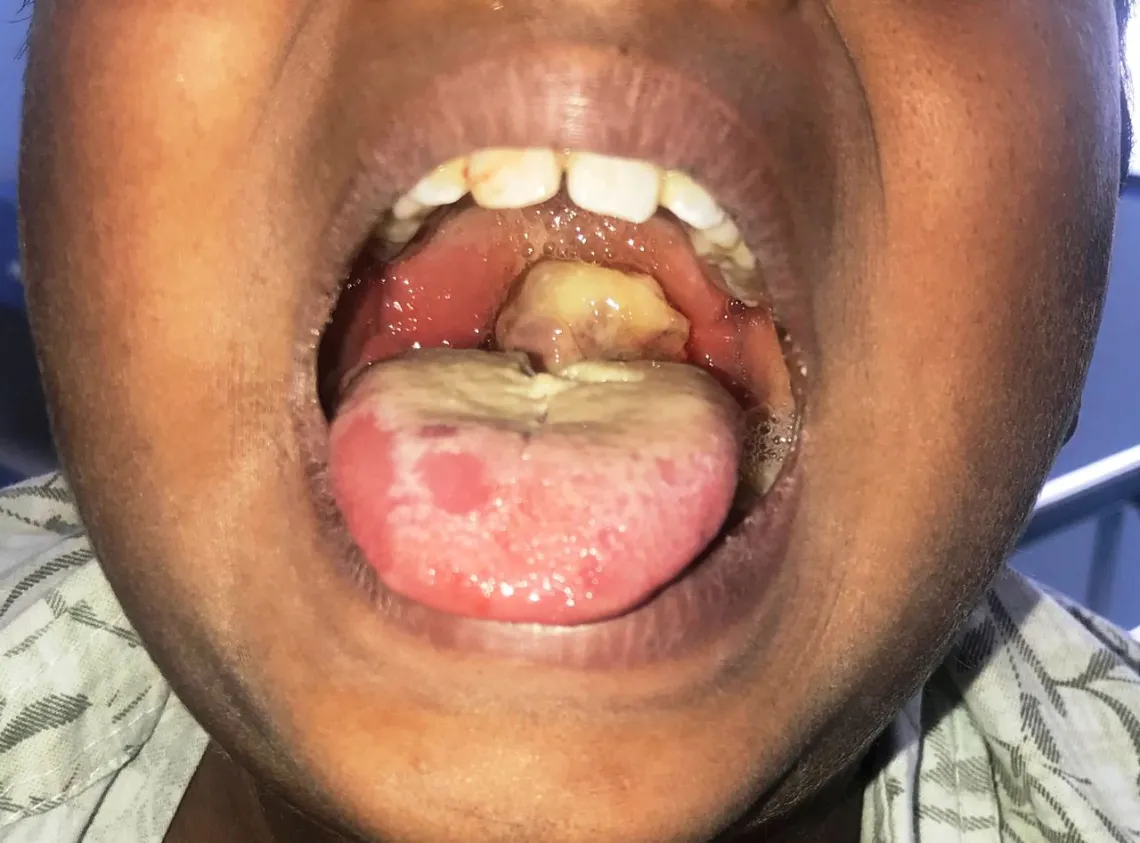
Nigeria has recorded more than 10,000 confirmed diphtheria cases in 2026, a fresh indication that a disease preventable through routine vaccination remains a significant public health problem nearly four years after the country’s major outbreak began.
The latest figure, disclosed by the Nigeria Centre for Disease Control and Prevention (NCDC) Director General, Dr Jide Idris, is particularly significant because it comes after years of vaccination campaigns and emergency responses aimed at containing the disease. Most of the confirmed cases this year are concentrated in Kano, Borno and Bauchi, with inadequate vaccination coverage continuing to expose children to infection.
Idris said the case fatality rate has declined considerably compared with the corresponding period last year, but warned that the continuing number of infections means the outbreak cannot be considered resolved.
The development also places Nigeria’s 2026 diphtheria experience within a much longer epidemic. NCDC surveillance data show that between epidemiological week 19 of 2022 and week three of 2026, Nigeria had recorded 61,930 suspected cases and 40,460 confirmed cases across 31 states and 300 Local Government Areas. Kano alone accounted for 24,687 confirmed cases in that cumulative dataset, followed by Borno with 5,077, Bauchi with 4,139, Yobe with 3,159 and Katsina with 2,589.
Those figures show why the latest 2026 number should not be viewed simply as another annual disease statistic. Diphtheria has become a sustained public health challenge, with transmission repeatedly affecting communities where routine immunisation has not provided sufficient protection.
Nigeria’s current diphtheria burden grew out of an outbreak that escalated sharply in 2023.
UNICEF reported that by the end of 2023, Nigeria had recorded 22,296 suspected cases, of which 13,455 were confirmed. The outbreak claimed 580 lives, giving a case fatality rate of 4.4 per cent. Kano was the epicentre, accounting for about 80 per cent of confirmed cases, while children aged two to 14 represented about 90 per cent of those affected. Cases were confirmed in 35 of Nigeria’s 36 states.
Earlier during that outbreak, UNICEF found a serious vaccination gap. Its September 2023 assessment showed that only 22 per cent of confirmed cases had received their routine childhood immunisation vaccinations. Another UNICEF situation report later found that 58.3 per cent of confirmed patients were not fully vaccinated, comprising 32.8 per cent who had received no vaccination and 25.5 per cent who were partially vaccinated.
The problem, therefore, has never been simply the presence of the bacterium that causes diphtheria. It is also about whether children receive and complete the vaccines designed to protect them.
Diphtheria is caused by toxin-producing strains of Corynebacterium diphtheriae and spreads mainly through respiratory droplets and close contact. Severe disease can cause breathing difficulties, heart complications and nerve damage, and can be fatal without timely treatment.
The concentration of cases in northern Nigeria has remained striking.
NCDC’s cumulative surveillance data through January 2026 showed that Kano, Yobe, Katsina, Bauchi and Borno accounted for 99.1 per cent of confirmed cases recorded in that period. Kano alone represented more than 60 per cent of all confirmed cases in the dataset.
The concentration reflects several overlapping challenges rather than a single cause.
NCDC has identified vaccine hesitancy, insecurity, displacement, population movement and difficulty reaching underserved communities as barriers to vaccination. These challenges are particularly consequential in parts of northern Nigeria where conflict and displacement can interrupt routine health services and make repeated vaccination campaigns difficult.
Research published in 2026 examining public perceptions and health behaviours relating to diphtheria in northern Nigeria also studied ten states selected because of their high outbreak burden, including Kano, Katsina, Bauchi, Borno and Yobe. The study underscores the importance of understanding community behaviour alongside the availability of vaccines and health services.
The decline in case fatality is an important improvement, but it should not be confused with elimination of transmission.
NCDC’s January 2026 surveillance report provides an illustration. By epidemiological week three, 2026 had recorded 318 confirmed cases and eight deaths, giving a 2.5 per cent case fatality ratio. At the same point in 2025, there were 482 confirmed cases and 28 deaths, producing a 5.8 per cent case fatality ratio.
The figures suggest improvement in outcomes, but they also show that infections continued.
NCDC’s current assessment similarly says that the proportion of confirmed cases resulting in death has declined considerably compared with the same period in 2025. The agency attributes the continuing burden primarily to inadequate vaccination coverage, particularly among children who have never been vaccinated or have not completed the recommended schedule.
The response has consequently shifted beyond treating patients to finding children who have been missed by routine immunisation.
NCDC says reactive vaccination is continuing in affected communities, while treatment and laboratory supplies are being provided. National Rapid Response Teams have also been deployed when required, with surveillance, laboratory capacity, case management and infection prevention measures strengthened in affected states.
The diphtheria situation is unfolding alongside another major infectious disease challenge.
NCDC says Nigeria has recorded more than 65,000 suspected cholera cases in 2026 across 35 states and approximately 195 LGAs. Although weekly cholera cases have fallen substantially from the earlier peak and the fatality proportion is lower than at the same period last year, transmission remains ongoing.
The two diseases have different causes and require different interventions, but both expose weaknesses in public health delivery.
For diphtheria, vaccination coverage and early diagnosis are central. For cholera, access to safe water, sanitation, hygiene, water quality monitoring and rapid treatment are critical. NCDC says its response includes oral cholera vaccination in high burden areas, water chlorination, rehabilitation of water sources and strengthened treatment capacity.
The latest 10,000 plus confirmed diphtheria cases are not evidence that Nigeria’s response has failed entirely. The falling fatality rate indicates that case management and response capacity have improved.
But the continued transmission of a vaccine preventable disease raises a different question: whether emergency responses are reaching enough children before they become exposed.
The historical data provide a clear warning. Nigeria moved from 13,455 confirmed cases in 2023 to continued substantial transmission in subsequent years, while the cumulative NCDC surveillance record had already reached 40,460 confirmed cases by the third epidemiological week of 2026.
NCDC is therefore calling on states and Local Governments to identify communities with low vaccination coverage and ensure children who missed routine doses are reached and fully vaccinated. The agency has also urged health workers to maintain a high index of suspicion, report suspected cases promptly and begin appropriate treatment and infection prevention measures.
The central challenge is increasingly clear. Nigeria does not only need to respond faster when diphtheria appears. It needs to close the vaccination gaps that allow a preventable disease to keep finding susceptible children.