
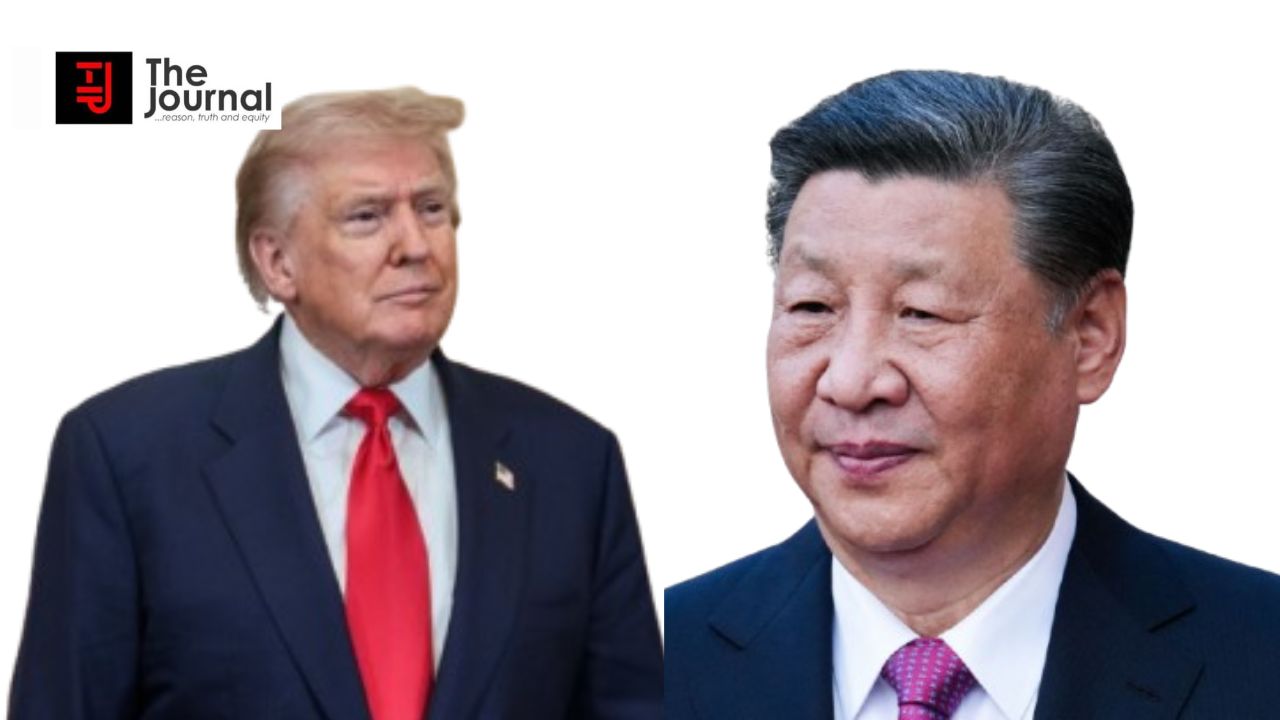
Donald Trump has arrived in Beijing for a high-stakes summit with Xi Jinping as the shadow of a widening war in Iran threatens global stability. The meeting, their first face-to-face encounter of 2026, focuses on five critical friction points: the Middle East conflict, Taiwan, artificial intelligence, trade tariffs, and semiconductor exports. Xi opened the session with a stark warning that any mishandling of the Taiwan issue could lead to direct military “clashes and even conflict.” Trump, characteristically optimistic, insisted that his personal relationship with the Chinese leader remains “better than ever” despite the escalating geopolitical tensions.
The war in Iran dominates the diplomatic hallway talk as the US seeks China’s help to reopen the Strait of Hormuz. With nearly half of China’s crude oil imports passing through that waterway, Beijing has a vested interest in unblocking the route to prevent a global recession. However, the American administration has sent mixed signals, with Trump claiming he does not need “any help” to win the conflict. The US recently sanctioned several Chinese firms for allegedly assisting Iranian military operations, adding another layer of distrust to the negotiations.
Taiwan remains the most volatile topic on the agenda and a core priority for Xi’s political legacy. Beijing is demanding that Washington move from “not supporting” independence to actively “opposing” it. The Chinese leadership is particularly incensed by a pending $11bn arms package authorized by Trump in December. While the US president believes his personal rapport with Xi will prevent an invasion, the Chinese foreign ministry has labeled Taiwan the “most important issue” in the bilateral relationship.
Technology competition has entered a “technological cold war” phase, specifically regarding artificial intelligence and high-end chips. US tech giants, including Elon Musk and Nvidia’s Jensen Huang, joined the presidential delegation to push for market access. Beijing remains frustrated by Washington’s refusal to allow the export of Nvidia’s most powerful processing units. Both sides are expected to discuss non-binding AI safety guidelines to prevent the accidental escalation of AI-driven weaponry.
Trade relations remain fraught following Trump’s imposition of tariffs exceeding 140 per cent last year. China retaliated by blocking the export of rare earth minerals, a move that hit the American weapons industry during the active Iran conflict. To ease these tensions, a new “Board of Trade” is being proposed to oversee significant Chinese purchases of American aircraft, agriculture, and energy. A massive order for 500 Boeing 737 Max jets is rumored to be the centerpiece of a potential deal.
The summit highlights the limits of American power as Trump navigates multiple international crises simultaneously. European allies have largely distanced themselves from the US position on Iran, leaving Washington more dependent on Beijing’s cooperation than it cares to admit. For Xi, the meeting offers an opportunity to extract concessions on tech restrictions and Taiwan while the US is distracted in the Middle East. Whether these two leaders can find a “constructive strategic stability” or slide into deeper confrontation remains the week’s most pressing question.