
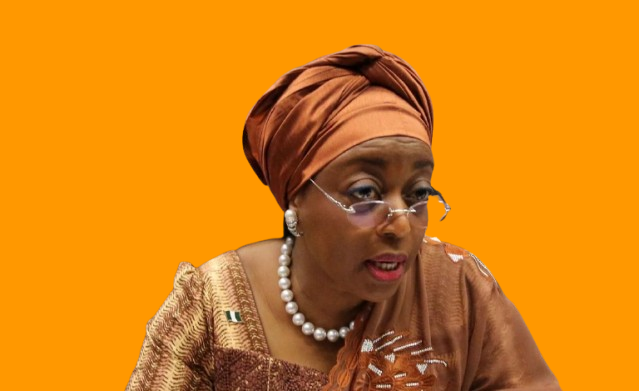
Former Petroleum Minister Diezani Alison-Madueke accused British law enforcement authorities of destroying her life, career, and integrity through a failed corruption prosecution spanning more than a decade. The former minister made the remarks during an interview with the BBC following her full acquittal by a jury at Southwark Crown Court in London. A British jury found her not guilty on five counts of accepting bribes and one count of conspiracy to commit bribery, ending a thirteen-year international probe. Alison-Madueke described the protracted legal battle as deeply painful, revealing that the severe travel and work restrictions severely damaged her mental well-being.
The high-profile prosecution fell apart because prosecutors failed to prove that the former minister accepted illicit benefits from wealthy oil businessmen seeking government contracts. British authorities alleged that Alison-Madueke received luxury goods worth two million pounds from Harrods, chauffeur-driven vehicles, and free access to expensive properties in London and Buckinghamshire. Defense lawyers successfully argued that the highlighted expenses were fully legitimate disbursements connected directly to her official public responsibilities. The former minister maintained that she never accepted bribes or abused her executive powers while managing Nigeria’s lucrative oil resources between 2010 and 2015.
The collapse of the case highlights severe procedural failures across both British and Nigerian law enforcement agencies. Alison-Madueke claimed that crucial financial documents that would have supported her innocence mysteriously disappeared after state intelligence forces raided her Abuja residence in 2015. The missing records reportedly included detailed receipts showing that she fully reimbursed the oil businessmen for any personal payments made on her behalf. She criticized international investigators for failing to exercise sufficient caution when pursuing cases heavily influenced by internal political rivalries. The former minister suggested that her pioneering role as the first female head of the state oil ministry made her an easy target for politically motivated attacks.
The London jury verdict represents a massive setback for the United Kingdom’s National Crime Agency, which began trailing the politician shortly after her arrest in 2015. British prosecutors spent nearly ten years compiling financial evidence before formally charging the former minister in 2023. This long delay meant that key witnesses became unavailable and vital trails cooled, ultimately eroding the prosecution’s narrative before the court. The acquittal vindicates her long-standing claims of innocence but leaves the British state facing intense scrutiny over the efficiency of its specialized anti-graft units.
Despite securing a total legal victory in London, the former minister still faces independent asset forfeiture proceedings and active corruption cases initiated by regulators back home. Nigeria’s Economic and Financial Crimes Commission has previously seized expensive local properties and jewelry allegedly linked to her ministerial tenure. Alison-Madueke dismissed these domestic actions, asserting that the forfeited assets were never directly traced to her personal bank accounts. She expressed relief that her name has finally been cleared in the United Kingdom, noting that her newly restored freedom will allow her to challenge the ongoing asset seizures in Nigerian courts.
Ultimately, the spectacular collapse of this decade-long international prosecution demonstrates the extreme difficulty of proving cross-border financial crime within a Western judicial system. While anti-corruption activists frequently celebrate media arrests, converting public outrage into a flawless criminal conviction requires an airtight chain of evidence that survives rigorous defense cross-examination. For now, the historic ruling allows the former OPEC president to rebuild her private life after years of forced isolation. The case serves as a stern reminder that international judicial cooperation requires flawless administrative precision rather than mere geopolitical theater.