

“Putting My Country First,” Starmer Says As He Resigns
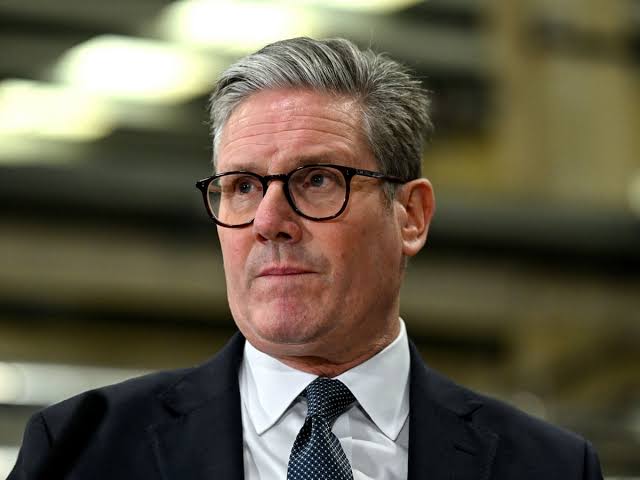
British Prime Minister Keir Starmer has announced his resignation as Labour leader, bowing out after less than two years in office at the end of a turbulent term defined by policy reversals, ministerial walkouts and historic electoral defeats.
Starmer announced on Monday that he was resigning as leader of the ruling Labour Party, a move that will also see him replaced as the country’s leader. Speaking outside 10 Downing Street, he choked up as he declared, “Every decision I have taken has been about putting the country I love first. That is why I will resign as leader of the Labour Party.”
The Prime Minister said the contest to replace him would begin in July and that he would stay in post until a successor emerges. “I will remain in post as prime minister until the contest is complete, and I will do everything I can to ensure an orderly handover of power,” he said. A new leader is expected before parliament returns from summer recess in September.
His departure caps a months-long crisis. Starmer has served as Prime Minister since 2024 and as Labour leader since 2020.
An Ipsos poll rated him the most unpopular prime minister since the firm’s records began in 1977, with 13 percent of the public satisfied with his performance and 79 percent dissatisfied, a net rating of minus 66.
The unravelling accelerated this year. At the May 2026 local elections, Labour lost 1,498 councillors and control of 38 councils, triggering the internal leadership crisis. At the Senedd election, Welsh Labour suffered a defeat that ended 100 years of Labour control in Wales, with leader Eluned Morgan becoming the first sitting head of government in British history to lose their seat in an election. The anti-immigration Reform UK party, led by Nigel Farage, was the chief beneficiary.
Resignations compounded the damage. Health Secretary Wes Streeting quit the cabinet on 14 May, while Defence Secretary John Healey resigned on 11 June over the government’s defence spending plans, followed the same day by Armed Forces minister Al Carns and aide Pamela Nash. Earlier, the fallout from Starmer’s appointment of Peter Mandelson, an associate of the late US sex offender Jeffrey Epstein, as ambassador to Washington, had already cost him his chief of staff and director of communications.
The path was cleared by a rival’s return to Westminster. Greater Manchester Mayor Andy Burnham won the Makerfield by-election on 18 June with 54.8 percent of the vote, defeating his Reform opponent by 24,927 votes to 15,696. Burnham, due to be sworn in as an MP on Monday, now needs the backing of 81 Labour lawmakers to formally trigger a contest, though Streeting has also signalled he will stand if there is one.
Starmer’s exit comes a day before the tenth anniversary of the Brexit referendum, which ushered in an era of churn at the top. If he leaves, he will be the sixth prime minister to depart office in the past 10 years. The next general election is due by 2029.
“I will also give my successor my full and unequivocal support, knowing that they will inherit a Britain that is far stronger and fairer than the one I inherited two years ago,” Starmer said.