

$150m, N36bn: Obi Defends Anambra Legacy Amid Fresh Attacks
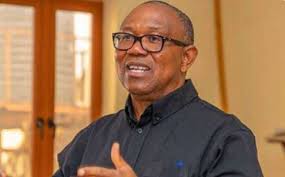
Peter Obi has returned to a familiar battleground, restating one of the most debated claims of his political career: that he left the Anambra State treasury flush with roughly $150 million and N36 billion when his tenure ended in 2014. Speaking in an interview with media entrepreneur Chude Jideonwo, published on Wednesday, the former governor and Nigeria Democratic Congress presidential hopeful insisted every naira and dollar was legitimately invested, transparently recorded and open to verification.
Obi, who governed Anambra between 2006 and 2014, brushed aside allegations that he stashed public money in banks he was personally tied to. “Whatever you do, people have their views,” he said, framing the criticism as opinion rather than fact.
He offered a breakdown of how the reserves were spread across three commercial lenders. By his account, the state held $50 million and N12 billion in Diamond Bank, another $50 million and N12 billion in Fidelity Bank, and a further $50 million and N12 billion in Access Bank at the point of handover. “50 million dollars in Fidelity Bank, which is supposed to be the bank I’m involved in… 50 million dollars in Access Bank,” he said, addressing head on the suggestion of a conflict of interest.
On the foreign currency component, Obi maintained the funds were placed in bonds at openly published rates and returned value to the state rather than eroding it. “Go to those banks. Let me start with the dollar. There are bonds; the rates are as issued. Everybody knows the rates. Go to them and see if there’s anyone who has been shortchanged,” he said. He then threw down a challenge that has become something of a signature. “Show me any other sub-national state in this country where a governor has left with savings. One. And I’ll stop running,” he said.
The claim is not new, and neither is the pushback. Obi has for years presented the reserves as proof of prudent stewardship, a contrast he leans on heavily in national politics. His narrative has drawn support from some figures in the banking world, including Abia State Governor and former Diamond Bank chief executive Alex Otti, who has previously confirmed that portions of the money were tied up in financial instruments.
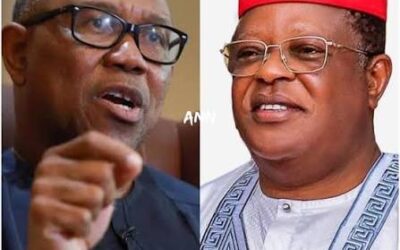
Yet the counter-arguments have been just as persistent. His successor, Willie Obiano, and other critics have long argued that the administration also left behind liabilities, including sums owed to contractors, raising the question of whether the celebrated savings told the full story. That line resurfaced only this week when Minister of Works Dave Umahi publicly queried the wisdom of leaving dollars idle “when people are hungry,” recalling that once contractor debts were settled, the balance sheet looked far less impressive.
The renewed defence lands at a politically charged moment. In the same conversation with Jideonwo, shared on X, Obi alleged that his life and livelihood were being deliberately frustrated by the government, going as far as to say he “might not even be alive” to contest the 2027 election. The Presidency had not publicly responded to those claims as of the time of reporting.
For a politician whose brand rests on frugality and accountability, the Anambra savings figure remains both his strongest talking point and his most contested. Nearly twelve years after he left office, the numbers are still being argued over, and with 2027 approaching, they are unlikely to fade from the conversation soon.