


First Since The War: Netanyahu, Trump Meet On Iran
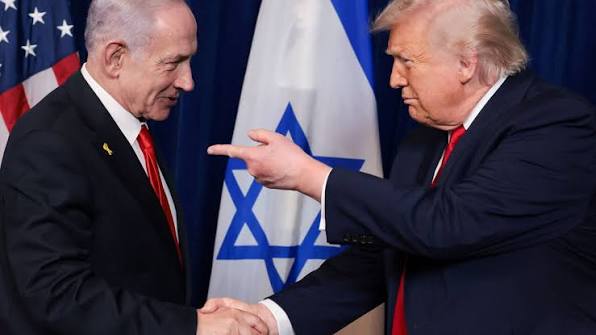
Israeli Prime Minister Benjamin Netanyahu arrives at the White House on Tuesday for his first face to face talks with United States President Donald Trump since the two leaders launched a joint war against Iran, an encounter aimed as much at repairing a visibly strained partnership as at shaping the conflict’s next phase.
The meeting, confirmed by the White House and Netanyahu’s office, is the first between the allies since American and Israeli forces struck Iran in late February, opening a war that has now run for roughly six months. Wire reports describe it as the eighth engagement between the two men since Trump returned to office last year, though tallies vary, and Netanyahu has visited Washington more frequently than any other foreign leader in that period.
Speaking before departing Israel, Netanyahu said Iran would top the agenda and that his aim was to “safeguard our security and also to expand the circle of peace.” Trump played down talk of a rift, telling reporters on Monday, “We have a little difference, but pretty close,” while acknowledging the two governments do not fully agree on how to handle Tehran.
The war has carried a heavy price. Disruption to shipping through the Strait of Hormuz has pushed global crude oil above 100 dollars a barrel, according to U.S. News reporting, which also put American public approval of the campaign at about 30 percent. Casualty tallies remain contested and incomplete, but independent trackers and health authorities across Iran, Lebanon and the Gulf point to thousands killed and tens of thousands wounded since fighting began. Trump ordered the military campaign without seeking approval from Congress.
A ceasefire reached in April brought a lull, but hostilities between Washington and Tehran flared again this month after that truce collapsed. Israel has stayed out of the latest round of exchanges. The Pentagon’s own death count has become a point of dispute, after four service members killed during the renewed fighting were briefly dropped from an official casualty database before being restored.
Beyond Iran, the leaders are expected to review a US brokered framework signed last month by Israel and Lebanon, whose rollout on the ground has proved difficult. Israel, which still occupies much of southern Lebanon, has agreed to let the Lebanese army deploy into some villages under a pilot arrangement meant to test security where Hezbollah once held sway. Trump has previously voiced unease at the scale of Israeli strikes there, saying too many people were being killed.
Gaza also remains on the agenda. Nearly three years after the Hamas assault of October 7, 2023 triggered the Gaza war, reconstruction efforts are stalled and humanitarian conditions in the territory remain severe.
Analysts read the optics of unity as the visit’s central purpose. Yonatan Freeman, an international relations scholar at the Hebrew University of Jerusalem, told AFP there was “no break” between the United States and Israel, arguing that the leaders differ over methods rather than goals.
The relationship has had rocky moments. Ties dipped sharply during April’s ceasefire negotiations, when Trump directed coarse public criticism at Netanyahu and later described him as a difficult partner, a characterisation the Israeli leader dismissed as tactical.
The talks carry domestic weight. Netanyahu faces national elections within months and is trailing in polls, with public anger persisting over his government’s failure to prevent the 2023 attack. An International Criminal Court arrest warrant issued against him in 2024 over the Gaza war also shadows his travels, though Washington does not recognise the court. Trump is scheduled to host Ukrainian President Volodymyr Zelensky separately the same day.