

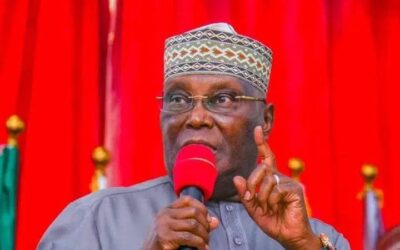
Amaechi Faults Wike Over Onaiyekan Partisanship Claim
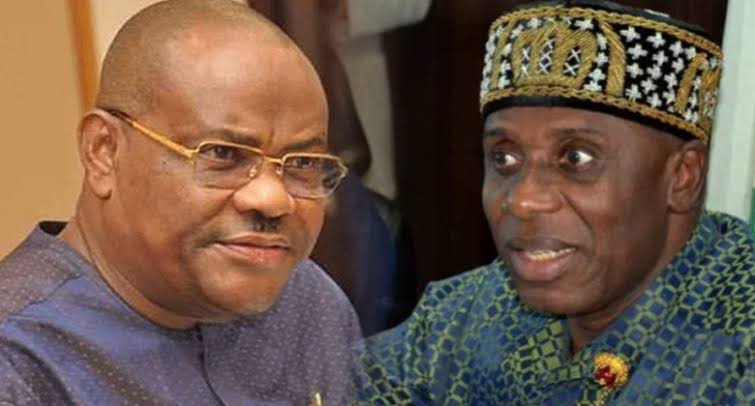
A dispute over whether a Catholic cardinal took sides in Nigeria’s last presidential election has drawn two of the country’s most combative political figures into open disagreement, barely two weeks before campaigning for the 2027 general election legally begins.
Rotimi Amaechi, former Minister of Transportation and vice presidential candidate of the African Democratic Congress (ADC), has rejected the claim by the Minister of the Federal Capital Territory, Nyesom Wike, that the Archbishop Emeritus of the Catholic Archdiocese of Abuja, John Cardinal Onaiyekan, was partisan during the 2023 general election.
Speaking on Channels Television’s Politics Today, Amaechi said the cleric holds no political brief for anyone. “He supports nobody. I see Cardinal Onaiyekan regularly, I worship at his chapel. He has no political leaning, the Catholic Church has no political leaning. Cardinal Onaiyekan himself supports nobody,” he said.
The former Rivers State governor disclosed that he suspended the traditional mourning of his late mother to appear on the programme, saying he considered it necessary to defend his faith in the circumstances. His mother, Dame Ezinne Mary Oduah Amaechi, died on July 16, 2026 at the age of 89, drawing condolence messages from President Bola Tinubu, Peter Obi, former President Goodluck Jonathan, Rivers State Governor Siminalayi Fubara and Senator Orji Uzor Kalu, among others.
Amaechi added that his long acquaintance with the cardinal had convinced him that the cleric’s worry is economic rather than partisan. “I’ve had several conversations with him, the only thing that pains him is the level of indiscretion and poverty in the country,” he said. He has also accused the Presidency of insulting the Catholic Church, arguing that a cardinal ranks in national standing with a state governor and deserves corresponding respect.
The exchange traces back to a meeting between President Tinubu and the Catholic Bishops’ Conference of Nigeria (CBCN) at the State House, Abuja, in late July, with most published accounts placing it on July 28, 2026. The delegation was led by the CBCN President and Archbishop of Kaduna, Most Rev. Matthew Man-Oso Ndagoso, and raised concerns about insecurity, economic hardship, tertiary education, the state of democracy and the conduct of elections.
Onaiyekan, who was part of the delegation, later told Arise News that the President had made it “quite clearly” known that he disagreed with the bishops’ assessment. He said the bishops’ position paper was the product of wide consultation across the conference rather than the view of a few individuals, and suggested that those around the President might not be presenting an accurate picture of conditions facing ordinary Nigerians. Published accounts of the meeting also quote the President as defending the electoral umpire, saying, “The opportunities are equal. INEC is neutral. They have never intimidated anyone.”
The Presidency pushed back. In a statement titled “Cardinal Onaiyekan’s Abuse of Clerical Privilege,” presidential aide Temitope Ajayi said, “There is something fundamentally inappropriate about Cardinal John Onaiyekan granting a television interview to offer his own account and interpretation of what transpired during the private meeting between the Catholic Bishops’ Conference of Nigeria and President Bola Tinubu. It is, in my view, an abuse of clerical privilege.” Presidential spokesman Daniel Bwala argued that the cardinal did not speak for all Nigerian Christians and alleged that the Catholic Church was backing Peter Obi of the Nigeria Democratic Congress (NDC). Special Adviser on Information and Strategy, Bayo Onanuga, said the President did not dismiss the bishops’ concerns but explained that the administration’s reforms were designed to deliver long term stability despite short term pain.
Wike then entered the argument at his monthly media parley in Abuja, questioning the cardinal’s impartiality. “If a religious leader is perceived or seen to be taking a side, which is very clear, it is very difficult for people to begin to see those comments as being helpful,” he said. He went further: “I am aware of the position of Cardinal Onaiyekan; all of us know, it’s not hidden, whom he supports; everybody knows that.” The minister argued that criticism should be balanced, adding, “It is not every time you say things are bad; nobody has heard you say government has done this well.”
Onaiyekan, speaking on Frontline, a current affairs programme on Eagle 102.5 FM, Ilese-Ijebu, Ogun State, indicated that the conference would not be drawn into a public exchange with government spokespersons, saying the bishops had delivered their message and were concerned only with whether it would shape governance.
Onaiyekan, 82, was born on January 29, 1944 in Kabba, Kogi State, and ordained a priest on August 3, 1969. He was consecrated bishop on January 6, 1983, became Bishop of Ilorin in 1984, moved to Abuja as Coadjutor Bishop in 1990 and became Bishop of Abuja in 1992. When Abuja was raised to a Metropolitan See on March 26, 1994, he became its first Archbishop, serving until his retirement was accepted on November 9, 2019, when Most Rev. Ignatius Kaigama succeeded him. He is a former President of both the CBCN and the Christian Association of Nigeria, was created cardinal by Pope Benedict XVI on November 24, 2012, and was named Pax Christi International’s Peace Laureate the same year.
His interventions on national questions are not new. Catholic bishops were among the loudest critics of the same faith presidential ticket fielded by the All Progressives Congress in 2023, and the CBCN has issued repeated communiqués on insecurity and poverty across successive administrations.
The cardinal has drawn support from outside the Church. The Middle Belt Forum, in a statement by its National Spokesman, Luka Binniyat, described the criticism as “unfair, unnecessary and completely misplaced,” adding, “The Middle Belt Forum expresses its total solidarity with His Eminence, John Cardinal Onaiyekan, on his position regarding poverty and hardship in Nigeria.” The forum urged the President to hear directly from displaced farmers, widows, market women, unemployed youths and community leaders. The Northern Youth Council of Nigeria also declared solidarity with him, while at the same time urging faith leaders generally to place the welfare of citizens above personal interest.
The row is unfolding against an electoral calendar that leaves little room for distraction. Following the repeal of the Electoral Act 2022 and the enactment of the Electoral Act 2026, INEC issued a revised timetable moving the presidential and National Assembly elections to Saturday, January 16, 2027, and the governorship and state assembly polls to Saturday, February 6, 2027. Notice of election was issued on February 13, 2026, party primaries ran from April 23 to May 30, 2026, and campaigning for presidential and National Assembly candidates becomes legal on August 19, 2026.
The 2027 field reprises the 2023 contest. Tinubu secured the APC ticket through a nationwide direct primary conducted across 8,809 wards in the 774 local government areas. The ADC named Amaechi as Atiku Abubakar’s running mate on June 15, 2026, after he finished runner up in the party’s presidential primary with 504,117 votes, with Mohammed Hayatu Deen third on 177,120; both names were uploaded to the INEC portal on June 30, 2026. Notably, Amaechi had insisted in December 2025, through his media aide David Iyofor, that he was “not seeking to be running mate to anybody.” Obi, who left the ADC alongside Rabiu Kwankwaso, emerged the NDC candidate at a special convention in Abuja on May 30, 2026, under the chairmanship of Senator Seriake Dickson.
The 2023 figures explain the stakes. INEC declared Tinubu winner with 8,794,726 votes, ahead of Atiku with 6,984,520, Obi with 6,101,533 and Kwankwaso with 1,496,687, from about 24.9 million votes cast against a register of roughly 93.5 million, a turnout of about 26.7 per cent and the lowest since 1999, down from 34.7 per cent in 2019. Tinubu, Atiku and Obi each carried 12 states, with Obi’s tally including Lagos and the FCT.
Wike’s own trajectory is part of the backdrop. A leader of the G-5 governors who withheld support from the PDP candidate in 2023, he was appointed FCT Minister in August 2023 while remaining in the PDP, and has publicly pledged to work for Tinubu’s re election.
With campaigning due to open within weeks, the argument over Onaiyekan’s neutrality is unlikely to end quickly. What remains contested is not whether the bishops spoke, but whether their words belong to pastoral duty or to the emerging politics of January 16, 2027.