


Sokoto Community Attacked Twice In One Week As Death Toll Climbs
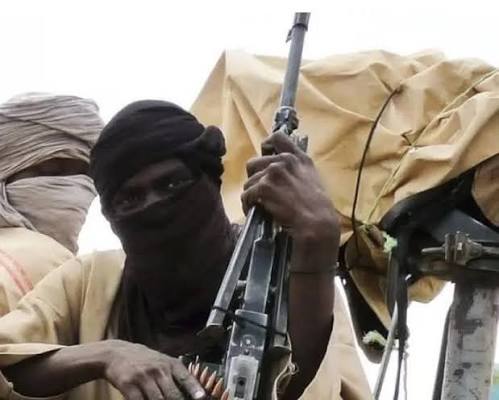
Six hours of gunfire, a burning village and a capsized boat have again exposed the fragility of security in eastern Sokoto State, where at least 21 people are feared dead and 37 others abducted after heavily armed men stormed Tsamaye community in Sabon Birni Local Government Area.
The assault began around 9 p.m. on Monday, August 3, 2026, and lasted until after 3 a.m. the following day, according to accounts by residents and a local vigilante member published by Vanguard. Two houses were razed, livestock rustled and the community left almost completely deserted. Residents named Kabiru Tanimu, Ayuba Hashim and Yakubu Mu’azu among those confirmed killed, with several others still unaccounted for.
The Chairman of Sabon Birni Local Government Area, Ayuba Hashimu, confirmed that the attack took place but said he was not in a position to certify the casualty count. “The incidents, indeed, happened but I was not there myself. Therefore, I have to verify the figures before I can confirm them,” he said. The spokesperson of the Sokoto State Police Command, DSP Ahmad Rufai, also confirmed the attack and said additional personnel had been deployed to restore calm and forestall further raids.
A large share of the reported deaths did not come from gunfire. Residents said scores of villagers, warned that the attackers were closing in, rushed to cross a nearby river. The overloaded boats capsized and about 25 people, mostly women and children, were swept away. Seven were pulled out alive, while 18 remain missing and are feared drowned. Families were still searching the water as of Tuesday, and the toll may yet shift.
Relatives said they only learned the scale of the abductions when they dialled the phones of missing family members. “When we called our relatives, the bandits answered the phones and told us they were the ones who abducted them. They said they had taken 37 people,” one resident said in published accounts.
The same resident explained that many victims were not taken from their homes at all. “Because of the frequent attacks, many people no longer sleep in the village. They spend the night in farms and bushes to avoid being attacked. This time, the terrorists searched through the farms, woke people up and took them away.” He added, “Most of those abducted were women and children. I personally saw three infants placed on the ground by the terrorists while they led their mothers away.”
A vigilante member, who withheld his name for safety reasons, said the attackers entered the village around 8 p.m., moving house to house and compelling residents to identify wealthy households and livestock pens. “Some people managed to escape and alerted us. We informed the security operatives stationed in our village and asked them to support us so we could confront the terrorists but they told us they did not have adequate equipment,” he said, adding that appeals to the traditional leadership yielded only sympathy.
Residents drew a distinction between this attack and the earlier one. “We excused them during the previous attack because the terrorists had surrounded them and were firing at them. But this time, they were informed early enough, yet nobody came to rescue us,” a resident said.
Two of the burnt homes belonged to Lawwali Ta’u Mai Chaji and Hassan Hasken Halara, a vigilante. “Our colleague was with us defending the village when his house was burnt. We only found ashes afterwards. We cannot even determine how many members of his family or livestock died in the fire because everything was reduced to ashes,” the vigilante said.
Fewer than 20 residents were said to remain in Tsamaye, with more than 100 vehicles ferrying people out. Displacement spread to Borai, Tsululu, Garin Tudu, Bukka Hamsin, Turkawa, Rumbukawa, Dutsin Na Umma, Zangon Mu’azu, Arawa, Kuru, Zangon Mallam, Mai Hurde, Zugun, Gidan Na Birni, Mashaya and Marina, among others. “About 40 of us escaped here, and everyone is now staying with relatives,” said one man who fled to Sokoto metropolis.
Tsamaye was struck days earlier, on Wednesday, July 29, 2026. Vanguard reported eight residents killed, including three worshippers inside a mosque. Sahara Reporters, citing a security alert, put the toll at at least seven and attributed the raid to fighters loyal to the bandit leader Bello Turji, adding that livestock were rustled after a clash with security operatives. The differing counts reflect the difficulty of verification in an area where telephone networks are erratic and access is restricted.
The wider local government has been under sustained pressure. Between Friday, July 31 and Sunday, August 2, 2026, Daily Trust reported at least 16 deaths across Sabon Birni and Rabah, including 12 at Lajinge village where a man and two of his sons were reportedly burnt alive. On June 18, 2026, gunmen intercepted two civilian vehicles at Kura Mota along the Sabon Birni to Shinkafi road, killing one passenger, before troops of Sector 2, Joint Task Force North West Operation Fansan Yamma rescued 22 abducted persons in Sabon Birni and Isa, according to a statement by the task force media officer, Lieutenant Colonel Aliyu Danja.
The corridor has a long and violent record. Reuters reported that about 30 passengers were burnt to death when gunmen torched a bus between Sabon Birni and Gidan Bawa on December 7, 2021. Months earlier, an attack on Goronyo market left at least 50 people dead.
The Armed Conflict Location and Event Data Project recorded 13,485 deaths linked to banditry across the seven North West states between 2010 and 2023. Nextier put 2025 at 599 banditry incidents and 2,742 casualties, roughly double the previous year, and its Nigeria Violent Conflicts Database logged 156 violent incidents, 842 deaths and 279 abductions nationwide in May 2026 alone, representing increases of 51.5 per cent in incidents, 90.1 per cent in deaths and 19.7 per cent in kidnappings compared with May 2025.
SBM Intelligence, cited in Human Rights Watch’s World Report 2026, recorded 2,938 abductions in the North West between July 2024 and June 2025, more than 60 per cent of the national total. Zamfara led with 1,203, followed by Kaduna with 629, Katsina with 566 and Sokoto with 358. SARI Global’s monthly overview counted 792 deaths across 882 security incidents nationwide in June 2026, with 274 insurgents killed by the military. Estimates cited by the Institute for Peace and the IPI Global Observatory place the number of armed bandits in the North West at roughly 30,000.
The demand from Tsamaye’s displaced families is specific. They want Armoured Personnel Carriers. Sokoto State says it has been supplying them. On July 8, 2026, Governor Ahmed Aliyu unveiled 62 armoured security vehicles and other equipment valued at more than N27 billion under the state’s Operation Fight Terrorism, having earlier established a Community Security Guards Corps equipped with 40 vehicles, a Mobile Police Barracks at Tarah village in Sabon Birni and Forward Operating Bases in Kagara, Sabon Birni and Isa. In April 2026, the governor told the State Executive Council that banditry affected 13 local government areas, adding, “We will not relent in this effort until all displaced communities return to their ancestral homes.”
At federal level, President Bola Tinubu announced during his June 2026 Democracy Day address that N5.41 trillion had been allocated to defence and security in the 2026 budget, the largest such allocation in Nigeria’s history, alongside approval for more than 50,000 police recruits. In July 2026, the presidency announced the expansion of the Nigerian Army from eight to 12 divisions and the recruitment of 28,000 additional troops, with the first phase due for completion by September 2026.
The gap between that architecture and Tsamaye’s experience is the unresolved question. The Nigerian Army’s 8 Division reported neutralising 305 bandits and rescuing 1,023 kidnap victims across Sokoto, Katsina, Kebbi and Zamfara in 2025. Yet in June 2026 the Army confirmed receiving intelligence that Turji’s fighters were conducting weapons drills in parts of Isa Local Government Area, and a video circulated on June 20, 2026 showing a masked figure said to be the bandit leader flanked by armed men.
With the rainy season peaking and planting underway, the displacement of thousands from Tsamaye and its neighbouring villages carries consequences beyond the immediate casualty figures. Whether the reinforcements announced by the police command hold long enough for families to return, and whether the missing 18 are recovered, remains unresolved.