
Nigeria’s police leadership has lifted the veil on the research behind the country’s most far reaching security reform in decades, disclosing that the framework now before the 36 state legislatures was drawn partly from the policing systems of India, the United States and Pakistan.
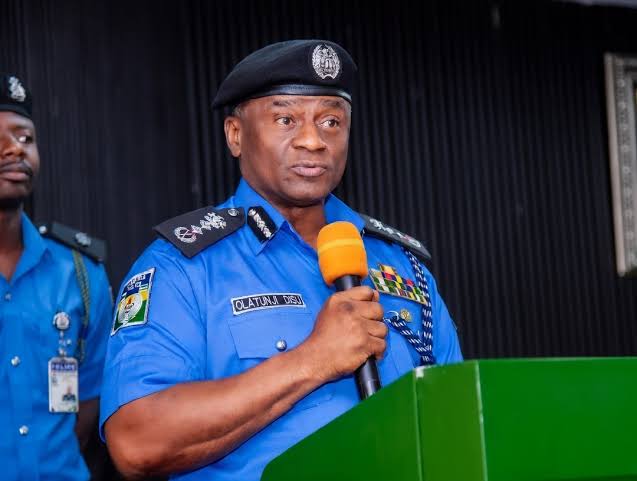
The Inspector General of Police, Olatunji Disu, made the disclosure at a workshop on state police in Abuja on Thursday, saying the police committee that developed the framework carried out an extensive comparative study of countries operating decentralised policing before submitting its recommendations. The one day workshop was organised by the Nigeria Police Institute at the Nigeria Police Resource Centre, Abuja.
“We are going to deliberate on a very important topic of state police. This is a very important topic ravaging the country today and in other parts of the world,” Disu said. He added, “The most important thing is we are leading hundreds of officers who must be told about state police, who must be educated about state police to alleviate their fears, because there are fears everywhere. It is our duty to educate them and let them know what state police is all about.”
On the research itself, the police chief said, “A lot of comparative analysis has been done. We have taken time to study nations where they have state police, India, America and even Pakistan and how things work there.”
The three countries offer instructive contrasts. In India, policing is a state subject under the Seventh Schedule of the constitution, with more than 30 distinct state and union territory forces employing roughly 2.2 million personnel for a population above 1.4 billion, each headed by a Director General of Police drawn from the centrally recruited Indian Police Service. Pakistan runs a mix of federal, provincial and territorial forces, but the senior ranks of the provincial commands are staffed by officers of the Police Service of Pakistan, a central civil service cadre. The American model is the most fragmented of the three, built on thousands of municipal, county and state agencies operating alongside federal bureaus.
Disu was firm that the decision itself had already been taken at the highest level of government. “The Federal Government of Nigeria has made up its mind to have state police, and it is our duty to assist them to achieve it. This is not the issue of us only. This is the issue of the Federal Government of Nigeria and the people of Nigeria,” he said.
Recalling how the police committee came about, he noted that there was early resistance. “And I’ll go back to when we were about to start. Argument arose that decisions had been taken and we should just sit down and be complacent and not do anything about it. I’m happy we quickly agreed to set up a committee,” he said. He added that the panel finished its initial work quickly. “I think it took us 17 days only to come up with a framework that has become the genesis of what everybody is working on today, and we still need to put some finishing touches to it,” he said.
The IG also acknowledged that the governors moved first. “The governors have already set up their committee. They have already almost concluded. In fact, they have concluded. We started late. We caught up with them, and I’m happy to say our work is what they are deliberating on today,” he stated. He disclosed further that former police chiefs had reviewed the document, saying, “Retired Inspectors General of Police have visited me and they have shown their concern, and we have deliberated. They have put in their contributions into this as well.”
Disu, who inaugurated a seven member committee on the framework on March 4, 2026, shortly after his appointment, acted against the backdrop of renewed presidential backing for decentralised policing. He formally presented the framework to the Deputy Senate President, Barau Jibrin, chairman of the Senate Committee on the Review of the Constitution, in March. At Thursday’s workshop, the Director General of the Nigeria Police Institute, Prof. Olu Ogunshakin, said several recommendations of the committee had been reflected in the proposed framework.
The legislative record shows how far the proposal has travelled. The Senate passed the executive bill on June 24, 2026, and on July 23 no fewer than 311 members of the House of Representatives voted in support, with 276 voting in person and 35 virtually, well above the constitutional threshold of 240. President Bola Tinubu had transmitted the executive bill to the House on July 14, describing it as an improvement on earlier legislative efforts with additional safeguards for a dual policing system. Section 9 of the Constitution requires the support of two thirds of each chamber, meaning 73 senators and 240 representatives, plus the approval of at least 24 state assemblies.
On the safeguards that Disu says his officers must understand, the Senate Leader, Opeyemi Bamidele, has publicly explained that governors may nominate commissioners of police, but such appointments would require recommendations by the National Police Council and approval by a two thirds majority of the state House of Assembly, while an independent State Police Service Commission would regulate operations outside the control of governors. Section 215(7) of the proposal bars any directive requiring the arrest, detention, investigation or use of force against any named person, political party or association except in accordance with law. Federal intervention is permitted only in defined circumstances, and Section 15(14) subjects the legality, scope, duration and conduct of any intervention to judicial review. Disu has himself conceded that public anxiety persists, acknowledging in July concerns that governors could hijack the outfits for political ends and arguing that such issues must be addressed by learning from countries that have already adopted decentralised policing.
The manpower arithmetic explains much of the urgency. The Nigeria Police Force has long been put at an estimated strength of 371,800 for a population estimated at about 236.7 million in 2024, with reports that more than 100,000 officers were assigned to protecting politicians and VIPs rather than the general public. Existing plans envisage growing the force to 650,000 officers, requiring roughly 280,000 recruits across several cycles, and Tinubu declared a nationwide security emergency on November 26, 2025, ordering the recruitment of 50,000 officers. That exercise reached a milestone this week when the Police Service Commission formally handed over the 50,000 new constables to the Force for training. Ogun State Governor Dapo Abiodun, speaking for the Nigeria Governors’ Forum, has estimated that if each state recruits about 6,000 personnel, nearly 200,000 additional officers would complement the federal police.
The violence data explains why the argument has hardened. SBM Intelligence recorded 5,091 killings nationwide in the second quarter of 2026, with the North East accounting for 1,980 deaths and the North West 1,889, and among the dead were 99 police officers, 200 soldiers and five customs officers. Nextier’s Nigeria Violent Conflicts Database logged 156 violent incidents in May 2026 alone, producing 842 deaths and 279 abductions, representing increases of 51.5 per cent in incidents, 90.1 per cent in fatalities and 19.7 per cent in kidnappings compared with May 2025. This has come despite steadily rising security budgets, which climbed from N1.97tn in 2021 to N5.41tn in 2026.
The debate is not new. Delegates at the 2014 National Conference recommended state police as part of broader constitutional restructuring, and the push intensified with the emergence of Amotekun in the South West, Ebube Agu in parts of the South East and community arrangements in the North. The ruling party’s own Committee on True Federalism, chaired by then Kaduna governor Nasir El Rufai, recommended a three tier federal, state and community policing structure in its January 2018 report, which was shelved. By December 2024 the National Economic Council reported that all 36 governors had endorsed state police, and in March 2026 the Governors’ Forum submitted its proposals to the National Security Adviser and the National Assembly.
What follows now is largely political. The bill requires ratification by at least 24 state assemblies before it can return to the President for assent. Tinubu has already inaugurated a Presidential Working Group on the National Policing Bill, chaired by his Chief of Staff, Femi Gbajabiamila, telling members that the constitutional amendment establishes the framework for dual policing but does not operationalise it. Whether the state assemblies deliver the numbers, and how quickly, remains the open question.