
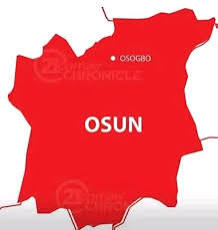
With less than 24 hours to the Osun State governorship election, the political landscape remains fluid as last-minute endorsements, factional realignments and internal party crises have blurred the lines between the leading contenders. What was expected to be a straightforward contest between incumbent Governor Ademola Adeleke of the Accord Party and his main challenger, Bola Oyebamiji of the All Progressives Congress, has evolved into a complex multi-cornered race complicated by party defections, court-ordered ballot changes and a deepening rift within the Accord Party itself.
Fifteen political parties are contesting Saturday’s election, according to the Independent National Electoral Commission, following a Federal High Court judgment that compelled the commission to include the Social Democratic Party candidate, Dr Francis Olugbenga Ajala, on the ballot. The reprinting of ballot papers and result sheets just days before the poll has added to the uncertainty surrounding an election already defined by intense horse-trading among the smaller parties.
The electoral commission has confirmed that 2,339,233 voters are registered for the election, spread across 30 local government areas, 332 registration areas and 3,763 polling units. However, INEC announced on Thursday that only 1,906,390 Permanent Voter Cards, representing 81.5 per cent of the registered total, have been collected. The remaining 426,842 PVCs, or 18.5 per cent, have been deposited with the Central Bank of Nigeria.
The race is widely seen as a three-horse contest among Adeleke, who is seeking a second term; Oyebamiji, a former Commissioner for Finance in Osun State and immediate past Managing Director of the National Inland Waterways Authority; and Dr Najeem Salaam, a former Speaker of the Osun State House of Assembly running under the African Democratic Congress.
Adeleke, who first won the governorship in July 2022 under the Peoples Democratic Party, defeated the incumbent, Gboyega Oyetola, with 403,371 votes against 375,027. That victory came four years after he lost to Oyetola by a margin of just 482 votes in the 2018 election, underscoring the volatility of Osun politics.
The governor’s decision to leave the PDP for the Accord Party following internal disputes within the party has raised questions about whether he can retain the coalition that delivered his 2022 victory. Political analysts have noted that while Adeleke retains significant personal appeal, the absence of the PDP structure could prove costly.
Oyebamiji, popularly known as AMBO, hails from Ikire in Irewole Local Government Area and served as finance commissioner under both the Rauf Aregbesola and Oyetola administrations. He resigned from his position at NIWA in November 2025 to contest the election. His campaign has emphasised what he describes as a “Prosperity Agenda” focused on agriculture, education and health, with a promise to “banish hunger and poverty” in the state.
Salaam, the ADC candidate, has pledged to recruit 20,000 people into the state civil service within his first 100 days in office and has launched a 10-point agenda for the state. The ADC has repeatedly insisted that it is not withdrawing from the race or entering into any alliance, with former Governor Rauf Aregbesola, now a national leader of the party, declaring at the party’s grand finale in Osogbo: “We are not in alliance with anyone or party. We will vote and win on Saturday”.
The contest has been further complicated by a series of endorsements and withdrawals that have reshaped the political calculus. On Thursday, the governorship candidate of the Allied Peoples Movement, Adebayo Adewale, withdrew from the race and declared his support for Adeleke. Adewale said his decision followed “deep reflection and extensive consultation” with party leaders and supporters, and that he believed Adeleke deserved another term to consolidate his administration’s achievements.
However, the Adeleke camp also suffered a significant setback last Sunday when the faction of the PDP led by former Governor Olagunsoye Oyinlola endorsed Oyebamiji. The endorsement ended months of speculation about where the Oyinlola faction stood in the current political realignment. Oyinlola, who governed Osun from 2003 to 2010, had as recently as January 2026 publicly endorsed Adeleke for a second term at the state’s new year prayers.
A prominent figure in Oyinlola’s camp, speaking on condition of anonymity, alleged that the relationship between the two men deteriorated because Adeleke failed to involve Oyinlola in key decisions and reportedly stopped paying a special adviser appointed on the former governor’s recommendation. The source also claimed that Adeleke’s camp accused Oyinlola of taking a picture with Oyebamiji and reported the matter to Oyo State Governor Seyi Makinde.
A kinsman of the governor from Ede, Bello Akintunde, who serves as Head of Bureau of Social Services, countered in a series of Facebook posts that Adeleke had done his best to retain Oyinlola’s support, including providing a vehicle as part of the former governor’s pension package. Akintunde wrote: “Today, the same Oyinlola perhaps drove in the brand new car bought by Governor Ademola Adeleke upon soliciting at the venue where he said no to everything he had said for the past 4 years. That is human nature of inconsistency”.
The Oyinlola faction’s decision to back Oyebamiji is seen by some observers as a potential boost for the APC, though the faction remains formally within the PDP.
The APC has also had to contend with concerns over the commitment of Senator Iyiola Omisore, a former National Secretary of the party who was screened out of the APC governorship primary in December 2025. Omisore had been conspicuously absent from the party’s early campaign activities, though he appeared at the APC grand finale, temporarily easing fears about his loyalty.
Adding to the complexity of the race is a deepening crisis within the Accord Party itself. On Thursday, a faction of the party led by its National Chairman, Professor Christopher Imumolen, announced the withdrawal of support for Adeleke and endorsed Oyebamiji. Imumolen said: “As Chairman of the Accord Party, and with all our National Working Committee members here present, we withdraw our support for Governor Ademola Adeleke and support AMBO”.
However, the Accord Party recognised by INEC is led by Maxwell Mgbudem and has endorsed Adeleke for a second term. The Imumolen faction’s endorsement of Oyebamiji has been dismissed by the Adeleke campaign as coming from an unrecognised leadership.
The Accord Party has also petitioned the European Union and the Economic Community of West African States over what it described as rising political tension and violence ahead of the election. The party’s appeal called for “the protection of democratic principles, the rule of law, political pluralism and the fundamental right of the people of Osun to freely choose their leaders”.
INEC has assured stakeholders of its readiness for the election. Deputy Director of Publicity, Wilfred Osilama Ifogah, said the commission has implemented 11 out of 13 activities in its timetable and has deployed more than 15,000 ad hoc personnel across the state. The Bimodal Voter Accreditation System has been tested and certified ready following a mock trial on 1 August.
The commission was, however, forced to reprint ballot papers and result sheets to accommodate the SDP candidate following a Federal High Court judgment delivered on 22 July 2026 in Suit No. FHC/ABJ/CS/344/2026. The reprinted materials arrived in Osun State on Thursday and were distributed to local government area offices.
Osogbo Local Government has the highest number of registered voters at 167,704, followed by Ife-East with 128,515 and Olorunda with 123,063. The local governments with the lowest registered voters are Ifedayo with 28,361, Boluwaduro with 29,797 and Atakumosa-West with 44,076.
Osun State has a history of closely contested elections and political realignments. Since the return to democracy in 1999, no single party has dominated the state for consecutive terms without interruption. Bisi Akande of the Alliance for Democracy won in 1999. Olagunsoye Oyinlola of the PDP won in 2003 and again in 2007, though the 2007 election became one of the most significant legal battles in the state’s history, culminating in Rauf Aregbesola taking office in 2010 after a court ruling. Aregbesola won decisively in 2014. In 2018, Oyetola defeated Adeleke by 482 votes after a supplementary election.
The 2022 election saw Adeleke defeat Oyetola by 28,344 votes. Political commentators have noted that Osun’s electorate is fluid and capable of shifting allegiances rapidly, making predictions hazardous. One analyst, writing in an opinion piece, concluded that “Osun has never been a state where one political party can confidently claim permanent ownership”.
As campaign activities officially ended at midnight on Thursday, in line with INEC’s 24-hour rule before the election, several questions remain unanswered. The preference of the PDP faction led by Federal Capital Territory Minister Nyesom Wike remains unclear, as the group has not openly disclosed which candidate it supports. The impact of the Accord Party factional crisis on Adeleke’s vote base is unknown.
The potential for Salaam’s ADC candidature to split the vote in ways that could favour either Adeleke or Oyebamiji is another variable that polling day will determine. With the race widely considered too close to call, observers say the outcome may ultimately depend on turnout in key local government areas and the ability of each campaign to mobilise its supporters to the polls.
INEC has reassured political parties, civil society organisations and the public of its commitment to conducting a free, fair and credible election. Voting is scheduled to begin at 8:30 am on Saturday across all 3,763 polling units in the state.