
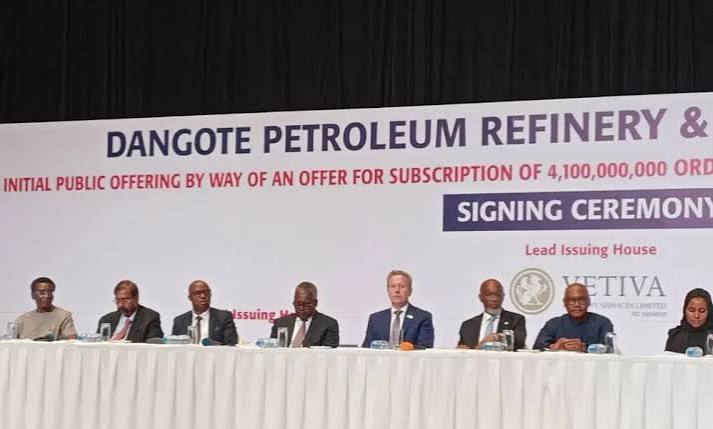
The planned public offering of shares in the Dangote Petroleum Refinery and Petrochemicals project is expected to attract significant attention from Nigerian investors as one of the country’s most closely watched capital market transactions.
With the offer price set at N525 per share, and a minimum subscription requirement of 10 shares costing N5,250, the Initial Public Offering (IPO) is positioned as an opportunity for individuals and institutions to acquire ownership stakes in one of Africa’s largest industrial projects.
However, financial experts and market regulators have repeatedly stressed that participation in an IPO requires careful assessment, not simply enthusiasm around the reputation or size of a company. For prospective investors, understanding the application process, investment risks and official requirements will be essential before committing funds.
The Dangote Petroleum Refinery, with a stated capacity of 700,000 barrels per day, represents one of Nigeria’s biggest industrial investments and has been at the centre of efforts to increase domestic refining capacity and reduce reliance on imported petroleum products.
According to details provided about the offer, investors seeking to participate must follow established capital market procedures, beginning with access to a licensed stockbroker.
Unlike ordinary purchases where consumers directly buy products from sellers, acquiring shares in a public offering requires registration through approved financial market channels. Investors without existing arrangements are expected to open accounts with stockbrokers authorised by the Securities and Exchange Commission (SEC).
A key requirement is obtaining access to the Central Securities Clearing System (CSCS), the electronic platform where shares traded on the Nigerian Exchange are held. Stockbrokers typically assist investors with linking their trading accounts to CSCS accounts.
Before applications can be processed, investors must also complete Know Your Customer (KYC) requirements. These procedures involve providing identification and other necessary information required by financial institutions to verify customers and comply with regulatory obligations.
The minimum entry point for the Dangote Refinery IPO is 10 shares at N525 each, bringing the basic subscription amount to N5,250. Investors interested in purchasing more shares will need to follow the terms and conditions outlined in the official offer documents, including any applicable limits or subscription requirements.
After deciding how much to invest, applicants are expected to fund their brokerage accounts and submit applications through approved channels when the offer opens.
The Securities and Exchange Commission has warned investors to be cautious of unauthorised individuals or platforms seeking to collect money for shares outside approved procedures. Market participants are advised to rely only on official offer documents and recognised financial intermediaries.
One important issue investors should understand is that submitting an application does not automatically guarantee receiving the full number of shares requested.
Where demand exceeds the number of available shares, allocations may be reduced. Successful applicants will have their shares credited to their CSCS accounts, while any applicable refunds will be handled according to the conditions of the offer.
The listing of the shares on the Nigerian Exchange will also mark the beginning of another phase for investors. Once trading begins, the market value of the shares will depend on several factors, including investor demand, company performance, industry conditions and broader economic trends.
The offer price of N525 per share should not be interpreted as a guarantee that the market price will rise after listing. Like other investments traded on the stock market, share prices can increase or decline depending on market realities.
For potential shareholders, the decision to invest should therefore involve reviewing available information about the refinery’s financial position, business outlook, expansion plans, risks and intended use of funds raised through the IPO.
The scale of the Dangote Refinery project has made the share offer a major event in Nigeria’s business and investment landscape. Beyond allowing investors to own part of a large industrial company, the IPO also highlights the growing role of Nigeria’s capital market in financing major private-sector projects.
For many Nigerians, especially first-time investors, the offer may serve as an introduction to stock market participation. However, financial literacy remains critical, as investing in shares carries both opportunities and risks.
The central message for prospective investors is that an IPO is an investment decision, not a guaranteed path to profit. Careful research, use of approved channels and understanding of market risks remain important steps before committing funds.