
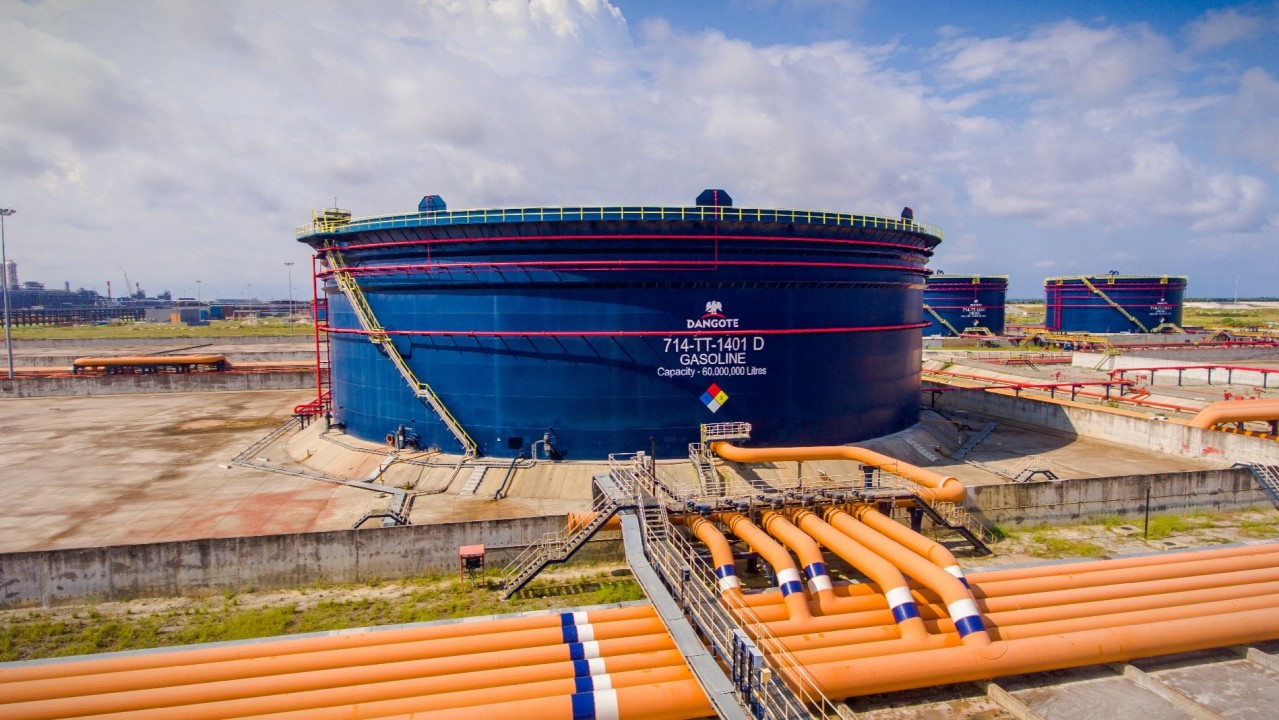
Recently, Dangote Refinery has stood as one of the most ambitious industrial projects ever undertaken in Africa, requiring enormous capital and a level of private-sector commitment rarely seen on the continent, from its 2013 announcement through more than a decade of construction to its 2024 startup. Now it’s entering a different phase entirely.
On September 14, 2026, Dangote Petroleum Refinery and Petrochemicals opened its Initial Public Offering, giving Nigerians and other eligible investors a chance to own a piece of the business. The offer comprises 4.1 billion ordinary shares priced at ₦525 each, with the company targeting roughly ₦2.15 trillion in new capital. The minimum subscription is 10 shares at ₦5,250, and the offer closes on October 13, 2026 (SEC Nigeria).
It isn’t an ordinary IPO. It’s being called Africa’s largest, and the scale has put Nigeria’s capital market under a spotlight it rarely gets. But the more interesting question isn’t really about size. It’s about what happens when an industrial asset this significant moves from being the property of one private business group to being shared, in part, with the public.
From Private Empire to Public Ownership
The Dangote Group has always represented concentrated private capital. Aliko Dangote built his empire across commodities, cement, fertiliser, food manufacturing, and eventually oil refining, and the refinery is the most ambitious expression of that strategy yet.
Built at an estimated cost of about $20 billion, the Lagos refinery was designed to change Nigeria’s position in the petroleum products market outright. With a stated capacity of 700,000 barrels per day, it has become central to the country’s shift away from imported refined products and toward domestic refining and exports (Reuters).
The IPO changes the ownership conversation. For the first time, ordinary members of the public are being invited to hold a direct stake in the refinery through the capital market, and that’s a meaningful shift. Buying a Dangote product has never made anyone an owner of Dangote’s business. Buying shares does. An investor who subscribes to this IPO isn’t just expressing confidence in the brand; they’re taking on an equity interest in the company, with all the financial upside and risk that comes with it.
Why Raise Money Now?
The obvious question is why a company that has already built one of the world’s largest refineries needs to raise another ₦2.15 trillion. The answer is mostly about what comes next. Dangote Refinery has announced plans to expand processing capacity substantially: an estimated $14.3 billion programme aimed at nearly doubling output, from 700,000 barrels per day to 1.4 million. So the IPO isn’t just a way for existing shareholders to sell down their stakes; it’s also how the company plans to fund its next stage of growth. According to reports, the proceeds are intended to support that expansion over the coming years.
Put simply: the refinery Nigerians know today isn’t the final version of what Dangote is building. The IPO is partly about financing what’s still ahead.
Why Everyone’s Talking about ₦5,250
The minimum subscription has become one of the most talked-about details of the offering. At ₦525 a share, an investor can participate with 10 shares for ₦5,250 (The IPO for the People), a number that changes the character of the whole transaction. An asset tied to one of Africa’s wealthiest men, built at a cost running into tens of billions of dollars, suddenly has an entry point within reach of a much wider group of Nigerians. That’s why the offering has been framed as one for retail investors.
But accessibility isn’t the same as certainty. A low minimum means more people can take part; it doesn’t mean the investment is risk-free. Anyone buying in is betting on a business whose performance will depend on refinery operations, crude supply, petroleum-product prices, foreign-exchange conditions, regulation, capital spending, and the company’s ability to deliver on its expansion plans.
Read Also: Dangote IPO: Can Retail Capital Truly Democratise a N63 Trillion Asset?
The Numbers behind the Excitement
The scale of the deal explains a lot of the attention. At ₦525 per share across 4.1 billion shares, a fully subscribed offer raises about ₦2.15 trillion. Reuters has put the refinery’s valuation, based on the offer structure, at roughly ₦63 trillion, which is about $47.6 billion.
The company’s financial trajectory adds to the story: Reuters reported more than $13 billion in revenue and a net profit of around $1.82 billion in the first half of 2026, a reversal from a loss in the same period the previous year. Numbers like that explain why people are paying attention, but also a reason to look at the IPO carefully, rather than treat its popularity as a guarantee of future returns.
A Test for Nigeria’s Capital Market
The significance of this IPO reaches well beyond Dangote himself. It’s also a test of how deep Nigeria’s capital market really is. Can the Nigerian Exchange absorb an offering of this size? Can millions of retail investors participate without the process breaking down? Can banks, brokers, and digital investment platforms handle the demand? And most importantly, will Nigerians who’ve long seen the stock market as something for institutions and the wealthy start to see equity ownership as part of ordinary personal finance?
Early signs suggest the public response has been strong. Reports indicate unusually high traffic on several investment platforms when the offer opened, and the Nigerian Exchange has described this as the first petroleum refinery to be offered to investors in its 66-year history. That alone makes the IPO notable, even before final subscription numbers are in.
The “People’s IPO”
Dangote has called this a “people’s IPO,” language that frames the offering inside a bigger idea about wealth creation. Nigeria has a large population but a fairly shallow culture of direct retail investing; most people engage with the economy as consumers, workers, or entrepreneurs, rarely as shareholders.
This IPO flips that a little. The same person who buys petrol and consumes goods made within Nigeria’s industrial economy can now, depending on eligibility, become a shareholder in one of its largest industrial enterprises. The real question is whether that turns into a lasting investment culture, or just a moment of enthusiasm.
But an IPO Is Not a Promise
This might be the most important part of the whole conversation. The excitement shouldn’t blur the line between access to an investment and its outcome.
An IPO doesn’t guarantee the share price will rise after listing. It doesn’t guarantee dividends. It doesn’t remove the possibility of losses, and the promoter’s reputation doesn’t erase the commercial risks sitting underneath the business itself.
The refinery operates in an industry exposed to global oil prices, refining margins, currency movements, geopolitics, government policy, and a changing energy market. On top of that, it’s now taking on a massive expansion programme with its own execution and financing risks. Investors should read the prospectus, understand the company’s financial position, and weigh the risks before investing.
The Securities and Exchange Commission has specifically warned prospective investors to use only approved subscription channels, and to be wary of unsolicited individuals, websites, or social media accounts claiming to offer access to the IPO, a warning that matters more than usual, given how much attention this offering is getting.
What Happens After the IPO?
The offer itself is only the beginning. Once it closes, the market will decide what investors are willing to pay for these shares once trading starts, and that’s where the next chapter begins.
The IPO price is ₦525. The market price after listing could be something else entirely. The gap between those two numbers will reflect how the market will view the refinery’s prospects, earnings, risks, and growth potential.
This is where the public ownership experiment gets genuinely interesting. Dangote isn’t simply asking Nigerians to put money into a company; he’s placing one of Africa’s most important industrial assets under the constant scrutiny of the capital market. Quarterly results, profit margins, dividend policy, production volumes, expansion progress, management decisions- all of it will now matter to a much wider group of people with a financial stake in the outcome.
The Larger Story
At its core, the Dangote IPO is about more than 4.1 billion shares. It’s about whether an industrial project can mature into a publicly held corporate asset. Whether Nigerian savings can be mobilised into Nigerian industry. Whether ordinary citizens can move from watching large businesses from the outside to owning a piece of them. And whether Nigeria’s capital market can handle companies operating on a continental scale.
The refinery began as an extraordinary concentration of private capital. The IPO marks the start of a different experiment: whether that capital can be spread into broader public ownership without losing the industrial ambition that built the asset in the first place.
That may end up being the most important story behind the Dangote IPO.