
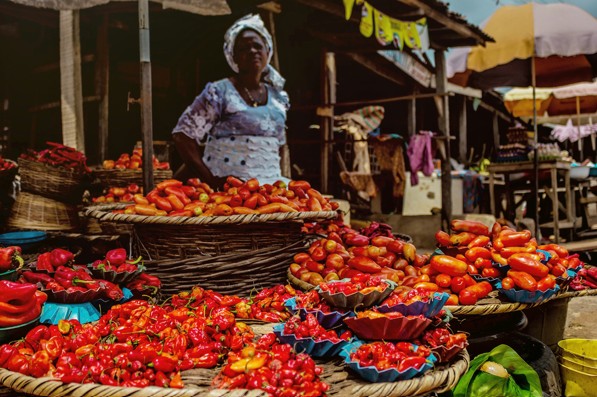
Official statistics from the National Bureau of Statistics and the Central Bank of Nigeria present an apparent monetary achievement. Foreign exchange volatility has receded, the naira has found relative equilibrium against major trading currencies, and core inflation measures have shed several percentage points from their previous peaks. Yet across the retail markets of Dawanau in Kano, Bodija in Ibadan, and Mile 12 in Lagos, the food basket tells an entirely different story. Prices of basic staples, dry white maize, brown beans, local parboiled rice, tubers, and cooking oils remain stubbornly high, defying the downward trajectory of aggregate macro indicators. While financial press releases celebrate macroeconomic normalisation, feeding an ordinary household still consumes more than half of median personal incomes.
This divergence exposes a profound fault line between central banking theory and Nigerian physical commerce. Technocrats in Abuja view inflation primarily as a monetary phenomenon to be subdued through aggressive interest rate hikes, cash reserve ratio adjustments, and currency market liquidity interventions. For households, however, price formation is physical, logistical, and local. The structural reality is that currency stabilisation does not translate directly into affordable carbohydrates and proteins. Farm-gate insecurity, predatory road levies, haulage fuel expenses, and cold-chain deficits exert a far stronger pricing pull on domestic food crops than the Central Bank of Nigeria’s Open Market Operations. The kitchen-table crisis is not a product of excess domestic liquidity, but of systemic physical friction in moving food from the soil to the plate.
The Haulage Gap and Transmission Lags
Central bankers often assume that exchange rate stability lowers consumer prices by dampening the cost of imported components and fuel. In domestic agricultural commerce, this transmission mechanism is slow and distorted. While a clearing agent in Apapa or Tin Can Island might observe immediate tariff adjustments when the official exchange rate settles, the Northern farmer and the long-distance trucker experience no such direct relief.
The primary input cost for domestic food haulage is automotive gas oil, or diesel. Even when global benchmark crude prices moderate and the currency firms, the retail price of diesel across rural transport corridors remains rigid. Marketers who purchased inventory at higher exchange rates refuse to mark down their fuel stocks until old supplies clear. The spare parts that keep Nigeria’s ageing haulage fleet on the road, tyres, gearboxes, leaf springs, and brake linings, are priced according to previous replacement cycles. Importers and regional mechanics maintain precautionary pricing margins because they distrust the permanence of foreign currency.
These vehicle operating expenses are compounded by non-tariff barriers along domestic transport routes. A 30-tonne articulated truck laden with grain moving from Giwa in Kaduna State to the south-western retail hubs traverses dozens of state checkpoints, local government revenue gates, and rogue security blockades. Haulage operators budget hundreds of thousands of naira per trip strictly for discretionary road tolls and extortion fees. These levies are non-negotiable cash expenses that bear zero correlation to foreign exchange rate movements or monetary policy rates. When the truck finally discharges its cargo at an urban depot, every naira extorted along the federal highway has been factored into the wholesale price of each sack. Macroeconomic stability at the central bank cannot dismantle a toll barrier in Kogi or Benue.

Post-Harvest Ruin as an Unhedged Premium
A significant portion of what consumers pay for agricultural produce is not the cost of cultivation, but an unhedged insurance premium against aggregate spoilage. Nigeria loses an estimated forty to fifty per cent of its perishable agricultural output—particularly tomatoes, peppers, citrus, leafy vegetables, and tubers—before it reaches end users. Because the rural interior lacks commercial cold storage, grid-connected drying floors, and reliable processing hubs, farmers and traders treat every harvest as a race against bacterial decay.
When thirty per cent of a perishable consignment rots in transit on a broken highway between Jos and Port Harcourt, the merchant does not absorb the loss. Instead, the surviving seventy per cent must be priced high enough to cover the purchase cost of the entire load, the haulage fee, and the merchant’s target trading profit. This built-in loss margin functions as a severe domestic tariff on food consumption.
Monetary policy possesses no tool to cure physical rot. An increase in the Monetary Policy Rate to twenty-seven per cent does not construct an insulated cold-chain facility, nor does it pave the rural feeder roads that trap produce in muddy agrarian hamlets during the rainy season. Farmers who cannot preserve their yields are forced into immediate distress sales at the farm gate, receiving low prices that fail to cover their seed and fertiliser expenses. Intermediary cartels then monopolise the scarce storage facilities that do exist, hoarding non-perishable grains to profit from seasonal scarcity. The price spikes that result are the product of infrastructural collapse, yet monetary authorities continue to address them by restricting private sector credit.
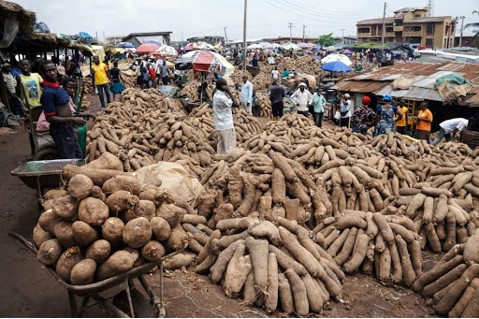
The Distortion of Sub-National Commodity Boards
Confronted with public outrage over market prices, several state governments have revived interventionist schemes, establishing state-level bulk-purchase agencies and commodity distribution corporations. The stated intent is noble: sub-national governments propose to buy produce directly from agrarian communities at harvest, warehouse it, and release it to the public at subsidised rates to drive down retail prices.
The empirical outcome has been counterproductive. Instead of lowering food costs, these sub-national purchasing entities have introduced secondary supply bottlenecks into the internal market. State agencies armed with public treasury allocations enter primary grain markets with significant liquidity. Their bulk orders create artificial demand spikes, outbidding private wholesale aggregators and driving farm-gate prices higher during harvest periods.
These public purchasing bodies suffer from bureaucratic mismanagement, poor storage technology, and political patronage. Substantial quantities of grains bought with state funds spoil in unventilated government warehouses, while distributed parcels are channelled into political networks rather than open commercial stalls. By attempting to supersede the traditional market structure without fixing rural transport or storage infrastructure, state authorities succeed only in breaking the private supply networks that keep foodstuffs circulating across state borders. The interventionist approach replaces informal market efficiencies with bureaucratic stagnation.
The Policy Direction
Nigeria’s persistent food inflation cannot be remedied through the Central Bank of Nigeria’s monetary toolkit. Raising lending rates and absorbing commercial bank liquidity will not harvest a field in Zamfara or preserve a tomato harvest in Kano. Price stability requires shifting attention from central bank communiqués and toward structural industrial reform.
The federal and sub-national governments must treat agricultural logistics as national economic infrastructure. This demands the elimination of internal road extortions through federal enforcement and the complete overhaul of rural feeder roads connecting farming belts to arterial trunk routes. Capital expenditure must target private-sector concessions for cold-chain networks, solar-powered aggregation points, and modern dry-storage granaries along major transit corridors. Until policy targets the real impediments that destroy produce and inflate transport costs, foreign exchange charts will continue to promise relief that never arrives at the dinner table.