
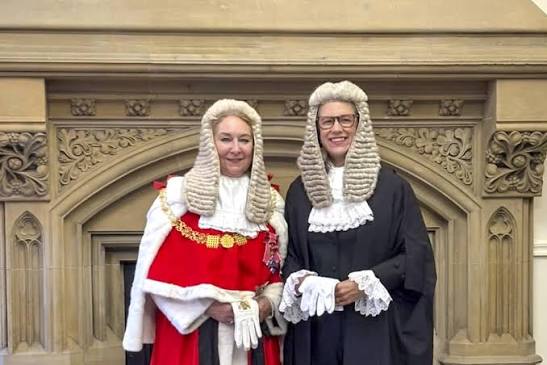
Ellie Reeves KC MP has been sworn in as Attorney General for England and Wales, and Andy Slaughter MP as Solicitor General, at a ceremony on Thursday, 1 October 2026 at the Royal Courts of Justice in London. The Attorney General’s Office announced the swearing in in a statement published the same day.
The two senior Law Officers took their oaths on the first day of the new legal year, following their appointments in July. Reeves was named Attorney General on 20 July and Slaughter Solicitor General on 21 July, according to the government’s record.
At the same ceremony, Alex Norris MP was sworn in as Lord Chancellor and Secretary of State for Justice. Norris, previously Minister of State at the Home Office, was appointed to the justice brief in July under Prime Minister Andy Burnham.
The oaths were administered by the Lady Chief Justice of England and Wales, Baroness Carr of Walton-on-the-Hill, who heads the judiciary. In her remarks, she said the ceremony affirmed the Lord Chancellor’s constitutional relationship with the judiciary and his statutory duty to defend judicial independence.
Reeves moves up from the post of Solicitor General, which she held before the reshuffle, and her elevation created the vacancy Slaughter now fills. In her statement, Reeves described the appointment as an honour and said opening the legal profession to people of every background was a cause she would champion.
She also set out her priorities for the role. “Building on the work I was proud to lead as Solicitor General, tackling violence against women and girls remains my top priority,” she said, adding that she looked forward to working with Slaughter to uphold the rule of law and strengthen confidence in the criminal justice system.
Slaughter, who chaired the Justice Select Committee before his appointment, said the role bridged law and government to ensure good governance. He said his committee work had shown him the pressures facing the justice system, and that he intended to tackle those challenges directly so the system commanded public confidence.
The Attorney General serves as the government’s chief legal adviser and attends Cabinet. Together, the Attorney General and the Solicitor General superintend the Law Officers’ Departments, which include the Crown Prosecution Service, the Serious Fraud Office, the Government Legal Department and HM Crown Prosecution Service Inspectorate.
Their duties also extend to several public interest functions. These include referring sentences to the Court of Appeal under the Unduly Lenient Sentence scheme, bringing action against people in contempt of court, and granting consent to prosecute certain offences.
The changes come amid wider churn at the top of the justice system. The post of Lord Chancellor has passed through several hands in recent years, and Norris takes it on at a point when the courts face mounting pressure, including a large backlog of cases in the Crown Court and sustained strain on the prison estate.
For observers in Nigeria, the appointments carry a measure of relevance. The United Kingdom remains a common destination for Nigerians studying and practising law, and the Crown Prosecution Service and the courts in England and Wales handle matters that periodically touch Nigerian nationals and businesses abroad. Changes at the head of those institutions shape the legal environment that community operates within.
What the appointments will mean in practice now rests on delivery. Both Reeves and Slaughter have named clear areas of focus, but the outcome of their stated priorities, from violence against women and girls to confidence in the courts, will be measured over the course of their tenure rather than at the point of taking office.