
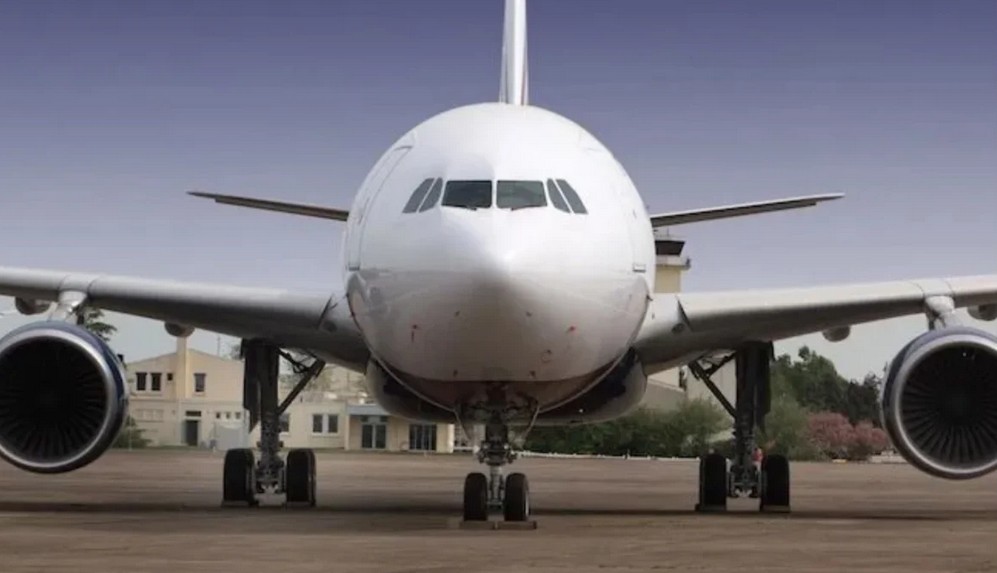
A terrifying mid-air smoke emergency over Portugal exposes the acute vulnerabilities of air travel, sparking an urgent case for investing in safe, affordable, and sustainable passenger rail.
An unexpected haze in the cabin, an acrid smell at 30,000 feet, and a routine flight can instantly become a race for survival. On a recent Sunday afternoon, passengers aboard Delta Flight 251 from Barcelona to Boston watched their transatlantic journey shatter as fumes filled the aircraft, forcing an emergency descent into Porto, Portugal.
Ground crews at Francisco Sá Carneiro Airport scrambled as the Airbus A330 touched down, treating eight passengers on the tarmac for smoke inhalation while emergency teams rushed three others to hospital. No lives were lost, but the ordeal laid bare a harrowing reality for every traveller: at high altitude, options vanish in an instant.
For millions of Nigerian commuters navigating an increasingly chaotic transport landscape, that feeling of helplessness is painfully familiar. Broken promises in the sky – marked by exorbitant ticket prices, sudden cancellations, and technical delays – routinely collide with severe safety hazards and security risks on the highways below. As air travel becomes an expensive gamble and road trips turn into high-risk endurance tests, a crucial question emerges: why are we ignoring the safest, most sustainable lifeline beneath our feet?
THE ACCELERATING SHIFT TO MODERN RAIL
AIR TRAVEL HIGHWAY TRAVEL PASSENGER RAIL
————————————————————————————————————-
- Sky-high airfares • Dangerous road conditions • Fixed, affordable fares
- Last-minute flight delays • Security & safety risks • Dedicated right-of-way
- Mid-air emergency panics • Fuel price volatility • High safety & low stress
—————————————————————————————————-
SUSTAINABLE INTERCITY TRANSPORTATION
The Mid-Air Reality Check
Aviation remains mathematically one of the safest ways to travel, but mechanical failures thousands of meters above the earth carry a unique psychological weight. Flight tracking logs show that Delta Flight 251 departed Barcelona at 3:15 p.m., only to find its trajectory cut short two and a half hours later in northern Portugal. When mechanical issues or cabin fires occur at high altitude, emergency crews cannot pull up alongside the craft; pilots must race against the clock to reach an accessible runway.
For Nigerian passengers, aviation worries often stem from operational instability long before a plane leaves the tarmac. Passengers routinely face stranded departures at urban hubs, engine warning delays, and unpredictable schedule changes. The high cost of domestic airfare strains family budgets and business operations alike, forcing many to re-evaluate how they move across the country.
When air travel becomes unpredictable and expensive, commuters traditionally fall back on road transport. However, long-distance highways expose families and traders to severe traffic congestion, rising fuel prices, and unpredictable security challenges. The dilemma leaves travellers searching for a middle ground that combines speed, safety, and peace of mind.
Reclaiming the Ground Through Track and Steel
The global shift toward sustainable transportation demonstrates that high-speed rail can successfully bridge the gap between aviation disruptions and highway hazards. Modern passenger trains provide a closed-system environment that drastically reduces collision risks and completely removes the airborne threats of mid-air emergencies.
Rail networks offer a level of reliability that neither commercial airlines nor highway buses can match. Trains operate on dedicated rights-of-way, insulated from the chaotic gridlock of urban expressways and immune to the sudden weather cancellations that air passengers frequently endure.
Moreover, the human experience aboard a modern train contrasts sharply with the cramped stress of a commercial airliner cabin. Passengers enjoy space to move, consistent connectivity, and straightforward boarding procedures that eliminate hours spent in airport security queues. When mechanical issues arise on a train, the vehicle halts safely on the track, allowing straightforward passenger transfers without emergency landings or tarmac medical triage.
COMPARATIVE TRAVEL RISK PROFILE
Risk Factor Aviation Highways Modern Rail
————————————————————————————————
Mid-air emergency Present N/A N/A
Road security risk N/A High Low
Ticket volatility Extreme Moderate Predictable
Carbon footprint High High Very Low
Schedule reliability Unpredictable Traffic-dependent High
Economic and Environmental Sustainability
Beyond personal comfort and physical security, expanding rail infrastructure carries profound economic advantages for developing economies. High-efficiency trains consume far less energy per passenger-kilometre than commercial jets or single-occupancy motor vehicles. As nations seek to lower emissions and curb fuel dependence, investing in electrified and modern diesel rail routes stands as a primary climate solution.
From an economic perspective, stable rail corridors lower the cost of doing business. Freight and passenger trains keep goods moving efficiently between regional production hubs and coastal ports, insulating supply chains from international jet fuel volatility and highway haulage costs.
For the average citizen, accessible train routes turn multi-day, high-risk road journeys or unaffordable flights into smooth, predictable daily commutes. The ability to travel safely between major commercial centres without facing sky-high airfares or perilous road stretches restores a vital sense of mobility to the workforce.
Building the Future of Intercity Transit
The incident over Portugal serves as a stark reminder that every transport mode carries inherent limits. While commercial flight will always remain essential for crossing oceans, it was never designed to be the sole lifeline for regional intercity travel. Over-relying on domestic flights leaves citizens vulnerable to industry shocks, while over-relying on highways exposes them to preventable accidents.
Prioritising passenger rail offers a proven pathway toward transport independence. By channelling resources into well-maintained, secure, and modern rail networks, nations create a resilient transport backbone that protects citizens from both airborne panics and highway hazards.
As travel demands continue to rise, the choice facing modern commuters becomes increasingly clear. Reclaiming the ground through safe, sustainable rail ensures that travelling across the country no longer requires a choice between sky-high anxiety and road-bound risks.