
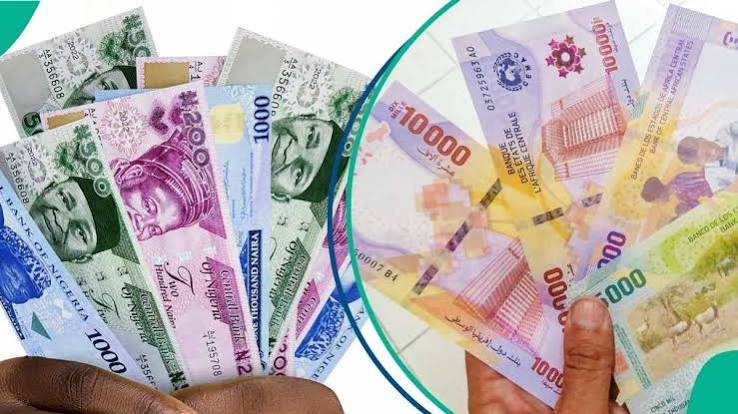
A fresh surge in the United States dollar squeezed the Nigerian naira and the South African rand in the week ended 13 November, even as the Egyptian pound firmed and the Kenyan shilling held steady, laying bare how unevenly a stronger greenback now moves across African markets.
The pressure traced back to Washington and the bond market. The Bloomberg Dollar Spot Index climbed about 0.7 per cent over the week, its strongest showing since early October, as traders raised their bets that the US Federal Reserve could lift interest rates next month. The dollar touched its highest level since May 2025 on Friday, tightening the screws on emerging-market currencies that had enjoyed a long run of gains through 2025.
For Nigeria, the moment interrupted a steadier stretch. At the Nigerian Foreign Exchange Market, the naira shed N10.50 in Wednesday’s session to N1,364 per dollar, its sharpest single-day fall since 22 October, before clawing back to close Friday at N1,353.50. Central Bank of Nigeria data put the official rate at N1,353.97 on Friday, against N1,346.79 a week earlier, a depreciation of roughly 0.5 per cent. The parallel market softened too, with the dollar quoted between N1,435 and N1,441, about N30 weaker on the week, though some dealers reported rates nearer N1,408.
The weekly slip sits inside a far stronger yearly picture. The naira has gained about 6.3 per cent against the dollar over the past year, helped by a sustained rebuild of reserves and tighter policy from the Central Bank, which reset its benchmark rate to 23 per cent in September. Gross external reserves, which had climbed above $55bn in late October on the back of improved oil earnings and non-oil inflows, eased to about $54.87bn during the week. That buffer, among the highest in more than a decade, gives the apex bank room to steady the market when demand spikes.
South Africa felt the strain most sharply. The rand weakened about 2.4 per cent to close Friday between R16.92 and R16.94 per dollar, down from R16.53 a week earlier, and lost around 1.2 per cent on Friday alone to touch a seven-month low. The slide followed US producer price data showing factory-gate inflation quickening to 6.5 per cent in October from 6.3 per cent in September. Attention now turns to South Africa’s own inflation reading and the Reserve Bank’s rate decision on 18 and 19 November, after it lifted the repo rate by 25 basis points to 7.25 per cent in September.
Ghana’s cedi, the continent’s standout performer in 2025, edged lower to trade between GH¢11.70 and GH¢11.72 per dollar, from GH¢11.67 a week earlier, though analysts at Databank Research estimate it has still shed about 10 per cent against the dollar since the start of the year. The Bank of Ghana, which is targeting $800m in dollar supply through its gold-linked auctions this month, delivers its own policy decision on 18 November, with inflation having risen to 5.5 per cent in October, its highest in 11 months.
Elsewhere the tone was calmer. Kenya’s shilling held at KSh129.96 per dollar on 12 November, steady for a third straight week according to the Central Bank of Kenya, and firmer against the pound and euro, while reserves slipped $94m to $14.605bn, still covering 5.9 months of imports. Egypt’s pound ran the other way, appreciating about 1.4 per cent to around EGP53.37 to EGP53.50 by Thursday, supported by stronger foreign exchange liquidity, diaspora remittances of $13bn in the first quarter of the 2026/2027 fiscal year and headline inflation easing to 12.7 per cent in October.
The split performances point to a familiar lesson for the continent. When the dollar strengthens, the currencies most exposed to global risk sentiment, the rand chief among them, tend to move first and fall hardest, while those cushioned by heavy reserves, remittances or tighter policy ride out the turbulence better. For Nigeria, the coming test is whether reserves above $54bn and a market-driven rate can hold the naira’s recovery in place if the dollar’s climb extends into December.