
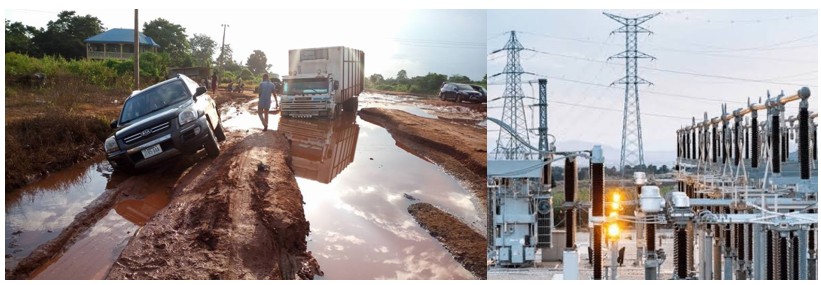
Broken roads, erratic electricity, and steep haulage costs are crippling Nigeria’s industrial estates and stalling its push to become Africa’s manufacturing hub. Across major hubs from Agbara in Ogun State to Aba in Abia State, as well as the Apapa and Ikeja corridors in Lagos, factory owners battle daily infrastructure failures that inflate production expenses and delay shipments. The Nigerian Investment Promotion Commission estimates this national infrastructure deficit at roughly $100 billion, which drags down productivity across every commercial sector.
Unreliable grid electricity forces manufacturers inside designated zones to run costly diesel generators and private gas plants around the clock. Small and medium-sized producers suffer most because they lack the spare cash to build independent power systems. Although President Bola Tinubu launched the Nigeria Industrial Policy 2025 on 17 February 2026 to cut import dependence, firms still pay a punishing energy tax just to keep their machines running.
Real industrial clusters succeed only when neighbouring factories share expensive utilities rather than shoulder every bill alone. Femi Egbesola, who leads the Association of Small Business Owners of Nigeria, notes that functional zones must offer steady power, paved internal roads, water, testing laboratories, and shared machinery. Merely allocating empty plots of land without shared equipment or cheap credit leaves small producers exposed to ruinous overhead costs.
Muda Yusuf, chief executive of the Centre for the Promotion of Private Enterprise, observes that high occupancy rates prove small industrialists still value physical proximity to suppliers and buyers. Yet operators across these estates consistently complain about missing warehouses, broken feeder roads, and absent grid support. Without reliable haulage links and storage hubs, local factories lose their price advantage before goods even reach the highway.
Energy-intensive industries like textiles face near-impossible odds against foreign rivals backed by state utility subsidies. Kwajaffa Hamma, director-general of the Nigerian Textile Employers Association, points out that competing nations discount electricity for their garment parks to keep export prices low. Nigerian textile parks conceived back in 2009 still await unreleased capital budgets, making local fabrics uncompetitive on international shelves.
Foreign competitors demonstrate how targeted state investment turns industrial zones into genuine export engines. Ethiopia equips its manufacturing parks with dedicated logistics and warehousing that slash factory overheads, while India’s cluster development programme funds shared machinery and technical training for small enterprises. Until federal and state governments pour real capital into power lines and access roads rather than ribbon-cutting ceremonies, Nigeria’s industrial clusters will remain expensive islands of frustration.