
More than two decades after the national carrier was wound up, about 400 former Nigeria Airways workers are still waiting for their final entitlements, even after the presidential approval document that had held up the money was traced and recovered this week.
The Aviation Safety Round Table Initiative, ASRTI, said on Monday that the approval authorising release of the last N36 billion tranche, reported missing since June, had now been located. In a statement by its president, Air Commodore Ademola Onitiju (rtd), the group welcomed the recovery but described the prolonged delay as a grave injustice to men and women who gave their productive years to the country. It urged the Federal Government to act on the recovered document without further administrative delay.
The recovery removes what had become the single biggest obstacle to concluding a payment that President Bola Tinubu approved more than a year ago. Whether the funds now reach the beneficiaries will test the government’s repeated assurances that the matter is finally being closed.
The current phase of the saga began in June 2025, when the Federal Government approved the release of the final N36 billion to settle the outstanding severance benefits of former workers of the defunct Nigeria Airways Limited. In December 2025, the Minister of Aviation and Aerospace Development, Festus Keyamo, announced that the approval had been forwarded to the Ministry of Finance for implementation.
The money, however, did not move. In a letter to the President dated 7 May 2026, the Nigeria Union of Pensioners, Nigeria Airways Branch, signed by its acting chairman, Olusegun Adeleke, and secretary, Thomas Ojuderi, said the workers were shocked to find that the sum could not be traced in the extended 2025 budget or the 2026 Appropriation Bill. The union asked Tinubu to issue an executive order directing payment from any available source.
The reason for the paralysis emerged after a four-member delegation of Concerned Elders, made up of Ore Salako, Ayuba Kyari, Prex Porbeni and Chris Aligbe, visited Abuja between 16 and 18 June 2026 to establish the cause of the delay. According to the delegation’s report, officials at the Ministry of Finance could not locate the presidential approval authorising the release. An official handling the matter, John Waitono, reportedly confirmed that the document was not in the ministry’s files, while a technical adviser to the Permanent Secretary, Akor Abbah, said the process remained active but could not be concluded without it.
The delegation was also told that because the amount exceeded the approval threshold of the Minister of Finance, a fresh submission to the President might have become necessary had the original document not been recovered. Officials of the Office of the Accountant-General of the Federation and the Presidential Initiative on Continuous Audit were said to have confirmed the importance of the missing paper. In July 2026, the Ministry of Finance was reported to have set up a payment committee to oversee disbursement once the obstacle was cleared.
ASRTI has now called for accountability over how a document central to an already approved payment came to disappear. It said officials responsible for what it called systemic stalling, sabotage or misplacement should be sanctioned under public service regulations.
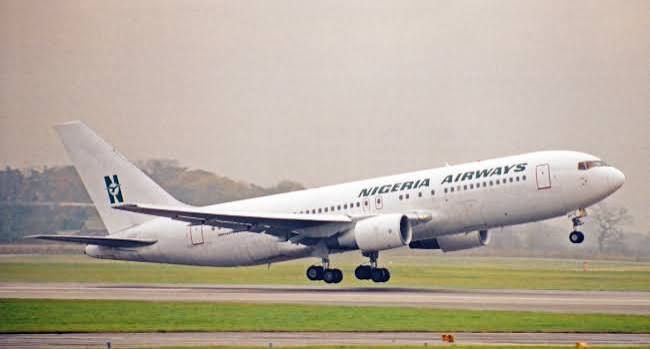
Nigeria Airways was established in August 1958 and served as the country’s flag carrier for decades. At its peak it operated more than 30 aircraft. Years of mismanagement and accumulated debt led to its liquidation in 2003, disengaging a workforce that unions have put at more than 6,000 people.
Following the shutdown, aviation unions and the Federal Government agreed on a one-off severance package equivalent to 25 years of each worker’s salary, a settlement estimated at N78 billion. Successive administrations made partial payments. In 2018, the government of former President Muhammadu Buhari approved N22 billion as part settlement, leaving the balance that has now narrowed to the outstanding N36 billion.
The human cost of the delay has been heavy. According to the pensioners’ union, many affected workers are now elderly, aged between 65 and 101, and include former pilots, engineers, cabin crew, technicians, accountants and administrators. Advocacy groups say a significant number are battling age-related illnesses worsened by hardship, and that some have died while waiting. ASRTI stressed that the beneficiaries were not merely former employees but citizens who devoted years of service to the national airline.
What is confirmed is that Tinubu approved the N36 billion in 2025, that the sum could not be traced in the 2025 and 2026 budget documents, that a missing approval stalled implementation, and that the document has now been recovered. A payment committee has reportedly been constituted. What remains unresolved is when the money will actually be paid, and whether it will be captured in a funded budget line rather than merely approved on paper.
For the former workers, the recovery of a document offers cautious relief rather than closure. They have heard assurances before, most recently in June and December 2025, only to watch the money remain trapped. The test now is not another approval, but the sight of funds in the accounts of people who have waited since 2003.