
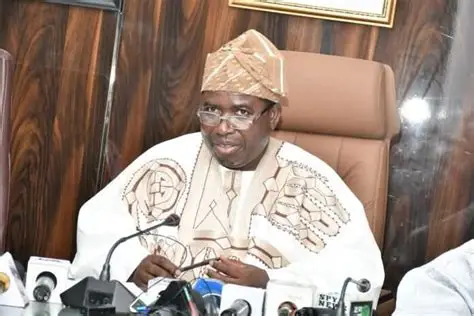
The Independent National Electoral Commission wants voting to begin at the same moment in every polling unit across Nigeria during the 2027 general elections, its chairman, Prof. Joash Amupitan, has said.
Amupitan set out the target on Monday in Abuja while delivering a keynote address at a strategic workshop for editors organised by the Nigerian Guild of Editors in partnership with the commission. He framed it as the standard INEC is holding itself to, rather than a settled guarantee.
“I want to see a general election where voting starts in all the polling units in Nigeria at the same instance,” he said. “That is what we are targeting, where logistics is well addressed, and where our technology works optimally.”
The ambition matters because delayed openings have been a recurring complaint in Nigerian elections. Late arrival of materials and officials has in past cycles pushed accreditation and voting into the evening at some units, and INEC has previously extended voting into a second day in affected areas. Amupitan said the commission was drawing lessons from recent off cycle elections to improve logistics, personnel and technology before the national polls.
On the ground, he said early procurement and distribution of non sensitive materials to state offices had already begun, and new operational pickup vehicles had been bought for state and local government offices to ease the movement of staff and materials. He added that zonal readiness assessments were under way, with physical audits and staff engagements completed in the South West and North West, aimed at identifying local weaknesses and testing contingency plans before election day.
Technology featured heavily in his account. Amupitan said INEC had acquired 57,000 new Bimodal Voter Accreditation System devices now undergoing software hardening, battery optimisation and biometric calibration, upgrades he said were meant to strengthen accreditation and guard against manipulation. He said an enhanced electronic result system would ensure polling unit result sheets were digitised, cryptographically authenticated and uploaded directly to the INEC Result Viewing Portal.
He identified the handling of results as a critical lesson from the problems that followed the 2023 general elections, when the pace and transparency of uploads to the viewing portal drew sustained public and legal scrutiny. The commission, he said, had resolved that results must be managed “effectively, optimally, and transparently,” with declarations made as soon as collation was complete, so citizens could follow the process rather than fill the gaps with suspicion.
Amupitan also pointed to measures aimed at easing access to the vote itself. He said an online registration portal introduced during the third phase of Continuous Voter Registration was designed to remove barriers of distance and time, and announced printable Permanent Voter Cards under Section 18(1) of the Electoral Act 2026 to cut the delays voters have long faced in collecting cards. The printable PVC system, he said, was tested during the Osun governorship election and used to let voters whose cards had been stolen still cast their ballots.
The remarks come with the clock running down. Amupitan put the commission 101 days from the presidential and National Assembly elections fixed for 16 January 2027, with governorship and state assembly polls set for 6 February. Those dates were brought forward from February and March under the Electoral Act 2026, which President Bola Tinubu signed in February this year. INEC has also published a final list of 18 presidential candidates.
He reported that eight of the 14 major statutory activities in the revised timetable had been executed, with the ninth in progress, though he did not itemise the completed milestones. INEC has said nationwide PVC collection is due to begin this week.
A substantial part of the address was directed at the editors themselves. Amupitan described them as “the bridge in an era of information chaos” and urged newsrooms to prioritise factual accuracy over sensational headlines, to contextualise field logistics rather than default to inflammatory speculation, and to verify before publishing. He cast that discipline as a public service that protects democracy against information disorder.
The President of the Nigerian Guild of Editors, Eze Anaba, echoed the point, arguing that the credibility of the media is itself part of the credibility of the electoral process. He said the Guild was committed to working with INEC and other stakeholders towards elections Nigerians can trust.
Anaba also raised the question of courts increasingly deciding electoral outcomes, warning against a system in which judges rather than voters have the final say. He expressed hope that in the coming cycle “citizens’ votes will speak,” adding that a strong electoral body was essential to democratic growth.
For now, uniform polling unit openings, flawless technology and prompt, transparent result management remain stated objectives rather than proven outcomes. Whether INEC meets them will only become clear across the 101 days ahead and on the two election dates themselves, when logistics, the new devices and the result upload system are tested at scale.