
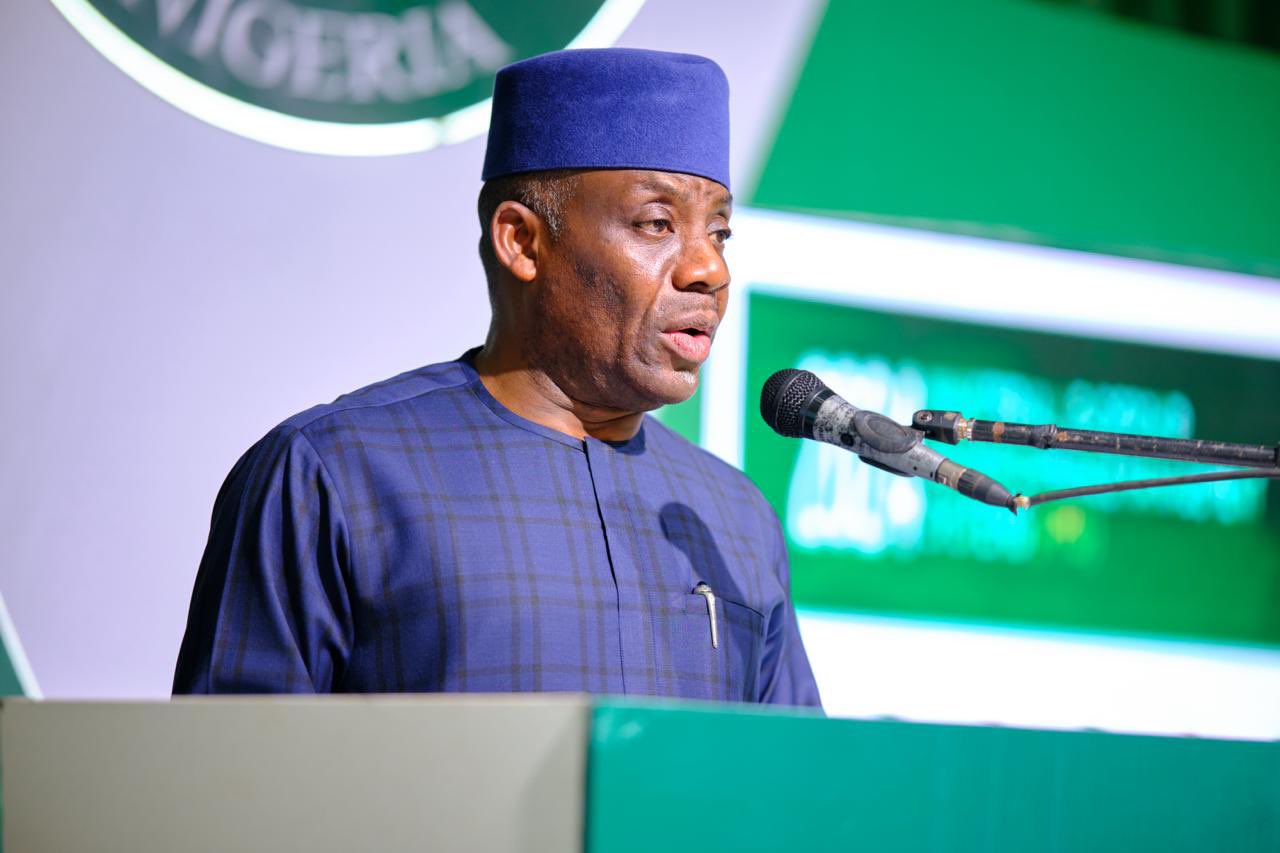
The Federal Government has said the growing use of artificial intelligence and other digital tools will not reduce the value of teachers, arguing that the judgement, encouragement and personal connection a teacher provides cannot be reproduced by machines.
The Minister of Education, Dr Tunji Alausa, made the point in Abuja on Monday while marking the 2026 World Teachers’ Day and the President’s Teachers’ and Schools’ Excellence Awards. He spoke on the theme “Protecting and Advancing the Status of the Teaching Profession in a Rapidly Changing World”.
According to Alausa, AI can widen access to knowledge and help teachers tailor lessons to individual learners, but the human qualities at the centre of teaching remain beyond its reach. “These tools can help teachers reach learners and tailor instruction, but the judgement, encouragement and human connection of a skilled teacher remain indispensable,” he said.
He called for educators to be equipped to use emerging technologies responsibly and with confidence, while protecting the integrity and professional identity of the profession. The task, in his words, was to ensure that technological change strengthens teaching rather than weakens it.
The minister described teachers as the foundation on which every other profession rests, saying no doctor, engineer, scientist, entrepreneur or public servant reaches success without them. “When we honour teachers, we honour the people who make every other profession possible,” he said. He added that recognition should move beyond ceremony to sustained investment in those who prepare the next generation.
Alausa said teachers deserved professional respect, continuous career development, adequate teaching resources, fair recognition and working conditions that allow them to perform. He said the Tinubu administration had placed teachers and learners at the centre of its reform agenda, with emphasis on improving learning environments, strengthening institutions, building skills for a changing economy, improving education data and enhancing teacher welfare.
He stressed that a child’s opportunity should not depend on geography, family income or circumstance, and that every teacher, whether in a city school or a remote community, should have the tools and institutional support to help pupils succeed. The government could not do this alone, he said, pointing to the roles of state governments, school leaders, professional bodies, organised labour, development partners, communities and parents.
The minister congratulated winners of the 2026 awards, which recognise outstanding teachers, administrators and schools for professionalism, innovation and leadership. Ahead of the event, the Federal Ministry of Education said 14 teachers, schools and education stakeholders would be honoured, and that the selection process had for the first time been digitalised to improve transparency and record keeping, with some awardees to receive laptops.
He urged winners to treat the recognition as a responsibility to raise standards rather than a personal prize, and reassured those who were not selected that their work still mattered. “Every lesson you prepare, every child you encourage and every young person whose confidence you build matters to Nigeria’s future,” he said.
Alausa’s message carried a familiar tension. The celebration honours teachers on a single day, yet the profession’s concerns run through the year. “Your service calls for more than words of thanks on one day each year,” he said. “It calls for sustained respect, investment and partnership through each day of the year.”
That gap between recognition and reward framed much of the wider commentary around the day. The National President of the Nigeria Union of Teachers, Audu Amba, represented by his deputy Kizito Kalu, said technology should strengthen rather than diminish the teacher’s role, and pressed for greater investment in training, welfare and professional development. The union’s position reflects long standing grievances over pay, workload, facilities and career progression that no amount of new technology addresses on its own.
The Nigerian conversation sits within a global one. World Teachers’ Day is observed every 5 October and the 2026 edition marks 60 years of the 1966 ILO and UNESCO Recommendation concerning the Status of Teachers, the first international instrument to set standards for the profession. UNESCO and the ILO are currently revising that framework to reflect developments, including AI, that were unimaginable when it was adopted. The global commemoration this year was held at UNESCO headquarters in Paris.
The debate the minister entered is not peculiar to Nigeria. Education systems worldwide are weighing how far AI can ease administrative burdens and personalise learning without eroding the relationships and professional judgement that make classrooms work. UNESCO has gone as far as publishing an AI competency framework for teachers, setting out skills educators need to use the technology while protecting human agency.
For Nigerian teachers, the practical questions remain closer to home. Whether the reforms Alausa outlined translate into better salaries, lighter workloads, functioning facilities and clearer career paths will determine how much Monday’s assurances mean once the awards are packed away and the classrooms fill again.
World Teachers’ Day, Tunji Alausa, education reform, artificial intelligence