
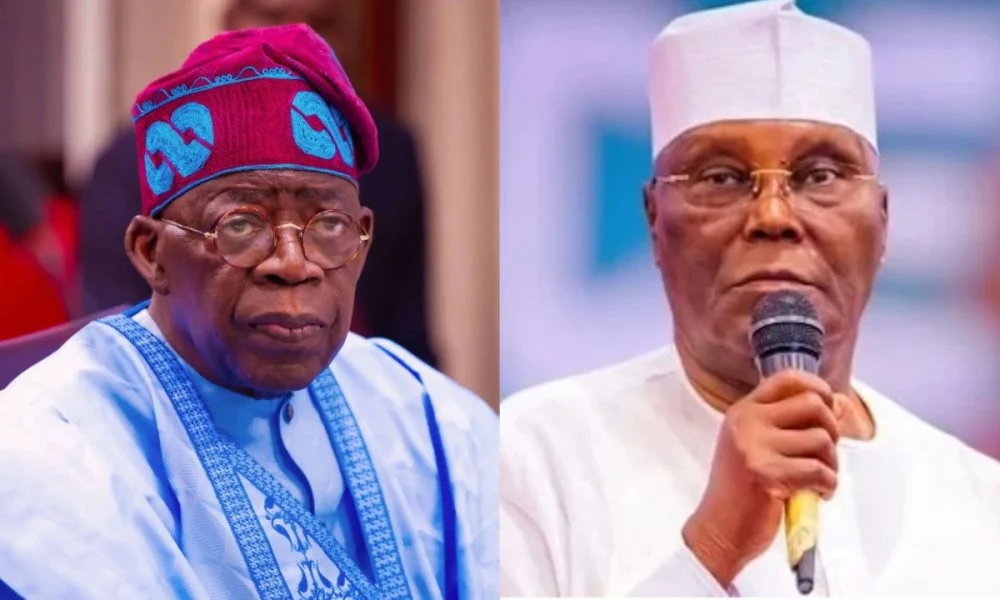
Atiku Abubakar has used this year’s World Teachers’ Day to criticise President Bola Tinubu over the welfare of Nigerian teachers, arguing that official tributes mean little while educators struggle with the cost of living.
The former vice president and African Democratic Congress presidential candidate made the remarks in a statement issued on Monday, 5 October 2026, by Phrank Shaibu, Director of Strategic Communication of the ADC Presidential Campaign Council. The intervention came as teachers across the country marked the day under the global theme “Standing with teachers: 60 years of protecting the profession, advancing its status and shaping our futures”.
Atiku opened with praise for the profession, saying he remained a product of the classrooms that shaped him. He said he could still recall the teachers in Jada who recognised his potential as a young orphan. “They taught me arithmetic and grammar, but they also gave me a future,” he said.
He then turned to the economic pressure on teachers, saying rising food, transport, rent and electricity costs had made it harder for them to provide for their families. According to Atiku, accounts of teachers trekking long distances to save on fares or buying food on credit illustrated the strain on the profession.
The sharpest part of the statement was personal. Atiku claimed Tinubu could not name a single teacher or classmate from his early schooling, describing the gap as revealing. “A leader who cannot remember those who laid the foundation of his own education has shown just how far removed he is from the classroom and from the daily struggles of those who keep it alive,” he said.
As of the time of filing, the Presidency had not issued a response to the specific claims in Atiku’s statement. Tinubu’s camp has previously dismissed Atiku’s economic criticisms as partisan, pointing to reforms it says were necessary to stabilise public finances.
Atiku, who founded the American University of Nigeria and often describes himself as an educationist, said his background in the sector gave him an understanding of what the job demands. He promised to pursue policies that bring down living costs, and framed teacher welfare as inseparable from the broader affordability question he has pressed since emerging as the ADC candidate. “A commemorative message cannot pay a teacher’s bills,” he said.
The welfare complaint he raised is not his alone. At the national Teachers’ Day event at Eagle Square in Abuja, the Nigeria Union of Teachers renewed its demand for the implementation of a special salary scale approved under the late President Muhammadu Buhari in 2022, which it says remains outstanding four years on.
Speaking for the union, its deputy national president, Kizito Kalu, said teachers needed pay that reflected economic realities, along with better housing, healthcare and pensions. He also pointed to overcrowded classrooms and inadequate instructional materials as conditions that undermine performance.
The government marked the day with its own measures. The Federal Ministry of Education adopted the national theme “Transforming the Teacher Profession for Africa’s Future” and announced awards for outstanding teachers, with the three best teachers to receive cars and the top Federal Unity College a bus.
First Lady Oluremi Tinubu also issued a Teachers’ Day message, calling on policymakers and society to protect the profession, improve welfare and raise the standing of teachers. Her statement did not address the political exchange.
The affordability backdrop is measurable. Figures from the National Bureau of Statistics put headline inflation at 15.43 per cent in July 2026, down from 15.91 per cent in June, but food inflation moved the other way, rising to 20.31 per cent from 17.52 per cent. For salaried workers such as teachers, whose spending leans heavily on food and transport, that divergence helps explain why relief in the headline figure has not been felt at home.
Petrol costs sit at the centre of the squeeze. The bureau’s most recent published petrol price watch, for May 2026, recorded a national average of about N1,596 per litre, more than six times the N238 it reported for May 2023, when the fuel subsidy was removed. That increase has driven transport fares and, by extension, the daily cost of getting to work.
The teachers’ question now feeds directly into the 2027 contest. Atiku and Tinubu are already locked in a wider argument over fuel pricing, subsidy and the cost of living, and the two camps remain in court over a suit challenging Tinubu’s eligibility, adjourned to 28 September and still pending.
What is confirmed is that teachers and their union have again asked for a long approved salary scale to be implemented, and that the government has responded so far with recognition rather than a new pay commitment. Whether the welfare pledges from either side translate into policy remains, for now, a matter of promise rather than record.