
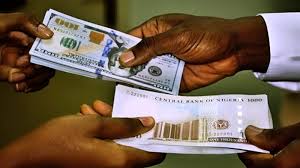
The Nigerian Naira recorded a modest depreciation against the United States Dollar in the early hours of Thursday, 23 April 2026, as sustained demand for the greenback continued to test currency stability across both the official and alternative foreign exchange segments.
Real-time data published by the FMDQ Securities Exchange showed that the Naira opened at an average of 1,351.59 NGN per 1 USD within the Nigerian Foreign Exchange Market (NFEM). This represents a slight softening compared to support levels observed near the 1,347 NGN mark earlier in the week, confirming the pressure on the local unit despite the Central Bank of Nigeria’s (CBN) ongoing policy of a managed float. On a day-to-day basis, official data from the Central Bank had earlier placed the rate at N1,350.74 on Tuesday, reflecting a N1.07 slide from the N1,349.67 quoted on Monday.
In the parallel market, where rates typically command a premium, the exchange gap remains significantly wider. Early morning reports gathered from Bureau De Change (BDC) operators in major commercial hubs—including Lagos (Ikeja and Broad Street), Abuja (Wuse Zone 4), and Kano—indicate that the Dollar is being exchanged at a range between 1,465 NGN and 1,480 NGN. This maintains an estimated spread of approximately 113 Naira between the official window and the informal segment, a disparity financial analysts attribute largely to the unmet foreign currency needs of small-scale importers and individuals seeking Personal Travel Allowances (PTA) who face stringent administrative hurdles in formal channels.
While global oil prices—Nigeria’s primary source of foreign exchange earnings—have experienced upward pressure in recent weeks due to geopolitical tensions, with Bonny Light crude trading near $113 per barrel, this windfall has been partially offset by domestic economic fundamentals. According to Central Bank data, Nigeria’s external reserves declined by 2.96 percent, settling at $48.54 billion as of 20 April 2026, down from $50.02 billion recorded on 11 March. The current pressure on the Naira is being driven by strong Dollar demand to fund international trade obligations and service foreign debt obligations.
Olayemi Cardoso, Governor of the Central Bank of Nigeria, has moved to calm market nerves regarding the reserve dip. In a recent address in Washington D.C., Cardoso maintained that Nigeria’s position remains comfortable, stating, “On the decline in reserves and whether there is any cause, the answer is there isn’t. It is normal”. He noted that the nation’s reserves sit well above the International Monetary Fund’s recommended minimum threshold and that the current market-driven system is more liquid and less reliant on direct Central Bank interventions than in previous years.
As the trading session advances, market participants expect the rate to stabilise, though any significant injection of liquidity or shift in policy by the apex bank could alter the closing figures for the day.