

From a viral danfo game to a million-player virtual Lagos and a Yoruba dating app, Nigerian developers are turning familiar experiences and cultural identity into digital products.
A yellow danfo weaving through Lagos traffic, a virtual resident trying to make a living in the city, and a dating app built around Yoruba culture may appear to have little in common. Yet each is part of a growing effort by Nigerian developers to turn familiar aspects of everyday life into digital experiences.
In recent months, locally created games and platforms have attracted attention by doing something that many technology products rarely attempt: they are reflecting the details of Nigerian life rather than simply adapting ideas created elsewhere.
The result is a different kind of digital experience, one where Lagos traffic, local transport, social relationships, work, money and cultural identity become part of the product itself.
When the danfo became a game
One of the clearest examples is Lagos Run, a browser-based game created by Nigerian developer Opeyemi Adeniran, who operates online under the name Eureka.
Launched in September 2026, the game places players behind the wheel of a danfo, the familiar yellow commercial buses that remain a defining feature of Lagos transport. Instead of navigating the city physically, players encounter a digital version of the experience, picking up passengers while dealing with traffic, roadblocks and other obstacles.
The game quickly attracted thousands of players after its release, with reports putting its audience at more than 90,000 within days.
Its appeal is partly rooted in recognition. The player does not need an explanation of what a danfo represents or why getting through Lagos traffic can become an achievement in itself. Those experiences already form part of everyday life for millions of people.
The game therefore turns something ordinary into entertainment without removing the local identity that makes it recognisable.
Then Lagos became a whole virtual world
The idea goes beyond a single journey through traffic.
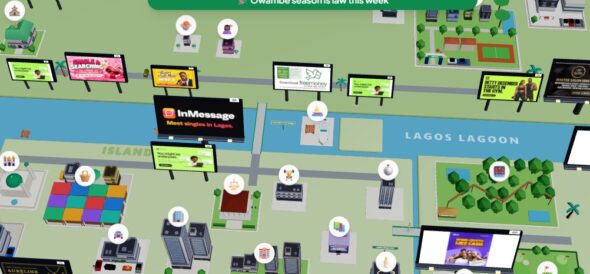
On October 1, 2026, another Nigerian developer, Shalom Rayhamen, also known as Shalom Mathew, launched Lagos Life, a browser-based simulation that allows users to create characters and live out a fictional existence in a digital version of Lagos.
Players can work, earn and spend money, socialise, rent or buy property and make choices that shape their virtual lives. Unlike a conventional mobile game that requires an installation, Lagos Life can be accessed through a browser.
Within days, the game reportedly attracted more than one million players, demonstrating how strongly audiences can respond when a digital product reflects an environment they already understand.
The game’s own disclaimer makes clear that its fictional Lagos is not intended to be an exact representation of reality. Prices, events and other elements can be simplified, exaggerated, altered or fictionalised for entertainment.
That distinction is important because the appeal of the game does not depend on reproducing Lagos perfectly. Instead, it creates a recognisable framework in which players can experiment with familiar aspects of urban life.
From playing Lagos to living in it
Taken together, Lagos Run and Lagos Life show two different ways developers can transform the same city into digital entertainment.
The first concentrates on a specific experience. The second creates a broader simulation in which transport is only one part of a much larger environment.
A player who has spent hours in Lagos traffic may understand the humour of a virtual danfo journey differently from someone who has never encountered the city’s transport system. Similarly, the appeal of a virtual economy, rent, work or social life can become more immediate when the setting resembles the city players know.
That familiarity can give locally produced digital products an advantage. Rather than asking audiences to enter an unfamiliar fictional world, they begin with places, situations and behaviours that already exist in their lives.

Culture is entering the dating space too
In June 2026, Nigerian entrepreneur Anjola Awofisoye launched Yetunde, a dating platform created specifically for Yoruba singles.
The app draws inspiration from the traditional Yoruba concept of the alarina, a person historically involved in facilitating introductions between potential partners. Its modern version combines matchmaking technology with questions of culture, values, family expectations and identity.
Users are required to be adults, while features such as identity verification, selfie checks and reporting tools are intended to provide additional safeguards.
The platform also takes into account Yoruba people living outside Nigeria, reflecting the way cultural identity can continue to shape relationships within the diaspora.
Rather than presenting dating simply as a matter of matching profiles, the platform places cultural background within the process of finding a partner.
What links a danfo to a dating app?
At first glance, a Lagos driving game and a Yoruba matchmaking platform seem to belong to completely different parts of the technology industry.
One is built around entertainment and transport. The other addresses personal relationships. Yet both demonstrate the commercial and creative possibilities of building products around experiences that already have meaning for a particular audience.
For developers, this can provide a starting point for product design. Instead of beginning with a generic concept and attempting to localise it later, the Nigerian experience becomes part of the original idea.
That approach can also create products that people understand quickly. A user may not need to learn what a danfo is before playing Lagos Run, just as a Yoruba user familiar with cultural expectations around marriage may immediately understand the reasoning behind Yetunde.
The opportunity goes beyond going viral
The attention surrounding these products also raises a broader question about the Nigerian technology ecosystem.
A viral launch can create visibility, but maintaining an audience requires more than familiarity. Games need compelling mechanics and continued engagement. Social platforms need reliable systems, moderation and user trust. Businesses must also find sustainable ways to generate revenue.
For products such as Lagos Life, advertising and virtual billboards provide part of the commercial model. Other locally developed platforms may rely on subscriptions, partnerships, transactions or other forms of monetisation.
The challenge is therefore not simply to make Nigerians recognise themselves in a product. Developers must also turn that recognition into a sustainable digital business.
When ordinary Nigerian life becomes digital
For years, technology in Nigeria has often been discussed through major sectors such as fintech, e-commerce, logistics and telecommunications. Those industries continue to shape the country’s digital economy, but a different layer is becoming increasingly visible.
Developers are beginning to explore culture, entertainment, relationships and ordinary routines as material for digital products.
A danfo ride can become a game. A city can become a simulation. Traditional ideas about matchmaking can become the foundation for an app.
None of these products makes everyday Nigerian life entirely new. Instead, they translate existing experiences into formats that people can interact with through a screen.
That may be the more significant development.
As Nigerian developers continue experimenting with locally rooted ideas, the country’s digital products may increasingly reflect the people and places from which they emerge. The next generation of Nigerian technology may not always ask users to adapt to an imported digital experience.
Sometimes, it may simply take something they already know and give them a new way to experience it.