
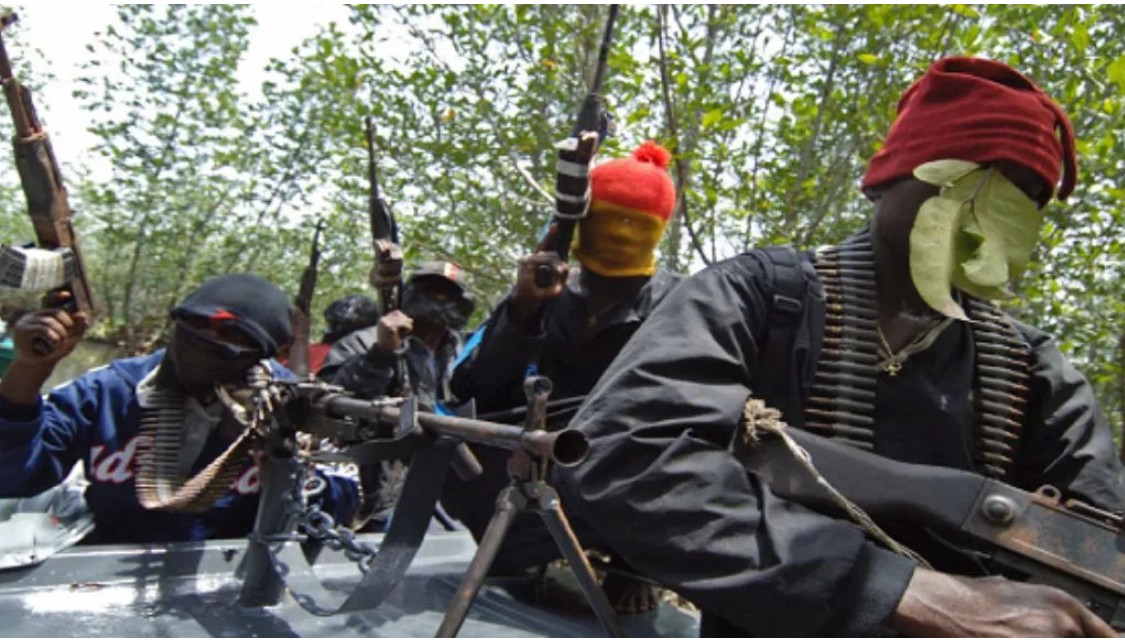
In a series of joint inter-agency tactical operations, Defence Headquarters recently announced the successful rescue of over three hundred kidnapped victims across Kwara, Niger, and Taraba states. The coordinated strikes, executed by combined elements of the Nigerian Army, Nigerian Air Force, and special intelligence units, dismantled several major non-state armed encampments across the North-Central theatre. From military headquarters in Abuja, these operations are presented as a major victory for national security forces, demonstrating improved operational coordination, rapid response capabilities, and tactical dominance in contested rural areas.
Yet, for rural communities living along these volatile axes, tactical rescue victories tell only half the story. While successful extraction operations bring immediate relief to affected families, they rarely dismantle the underlying structural conditions that allow non-state armed groups to operate in the first place. Time and again, military units clear forest corridors, hold press briefings showcasing rescued victims, and redeploy to the next crisis zone, only for criminal enclaves to reform weeks later in the very same geographical pockets. Tactical military triumphs yield diminishing returns unless accompanied by the permanent re-establishment of civil administration, robust rural policing, and sustained economic investment across liberated forest spaces.
Forest Corridors and Governing Voids
The persistent reformation of criminal enclaves along the intersecting borders of Kwara, Niger, Kebbi, and Taraba states is rooted in geography and civil governance deficits. These borderlands feature vast, contiguous forest reserves, such as the Kainji National Park axis and the expanse stretching toward the Kamuku forest, characterised by dense vegetation, difficult terrain, and an almost complete absence of formal state presence.
These border zones create ideal conditions for armed groups. Non-state actors take advantage of administrative boundaries between states, exploiting delays in cross-jurisdictional law enforcement coordination. When military pressure intensifies in southern Niger State, armed groups shift their camps across state lines into northern Kwara or eastern Kebbi, utilising unpoliced forest tracks to evade capture.
Furthermore, the complete breakdown of local government administration across rural districts leaves rural populations vulnerable. In many border communities, primary healthcare facilities are abandoned, schools are closed, and traditional dispute-resolution systems have been eroded by years of violence. Armed bandits exploit these governance vacuums, establishing shadow taxation systems, dictating agricultural harvest terms to local farmers, and positioning themselves as de facto local authorities. Military operations can flush bandits out of an encampment, but until civilian law enforcement, local government councils, and basic public services occupy these liberated zones permanently, the state merely creates a temporary vacuum that criminal networks inevitably refill.
Disrupting the Informant Networks and Supply Chain
Tactical raids against forest camps address the visible symptoms of criminality, but the longevity of these non-state armed groups depends entirely on their connection to settled civilian communities. Bandit networks do not exist in isolation within deep forests; they rely on a complex logistics network that supplies them with fuel, foodstuffs, motorcycles, medical supplies, weapons, and real-time operational intelligence.
Dismantling this logistics network requires moving beyond kinetic military sweeps toward deep, intelligence-led police work. Local informants, embedded within rural markets, transportation unions, and border settlements, provide bandits with details on troop movements, patrol routes, and wealthy targets for abduction. In exchange, these intermediaries receive cut-rate shares of ransom proceeds or protection from attacks on their own farms.
While military intelligence units have improved their intercept capabilities, law enforcement agencies face severe challenges in prosecuting these local supply chains. Rural police posts are notoriously under-resourced, under-staffed, and susceptible to local pressure or retaliation. When police forces arrest logistics suppliers, cases frequently collapse due to poor forensic evidence, intimidation of witnesses, or systemic delays within the judicial system. To permanently break these criminal networks, the security apparatus must prioritise counter-informant operations, enforce strict financial tracking of ransom flows through mobile money channels, and protect local witnesses who provide actionable intelligence on local collaborators.
Building Long-Term Frameworks for Rescued Children and Communities
Perhaps the most neglected dimension of the North-Central security strategy is the long-term socio-economic reintegration of rescued victims, particularly children who have endured prolonged captivity in insurgent and bandit camps. Mass rescue operations are frequently treated as the final objective of security missions, with military authorities handing freed victims over to state governments for brief medical evaluations and publicity photographs before returning them to their communities.
This approach fails to address the deep trauma, social dislocation, and economic disruption left in the wake of mass abductions. Children held in forest camps suffer severe physical abuse, psychological trauma, and, in many cases, forced indoctrination or exploitation by their captors. Returning these children to impoverished, insecure communities without structured psychological support, educational continuity, or long-term social monitoring leaves them vulnerable to lifelong trauma and social exclusion.
The Federal Ministry of Humanitarian Affairs, in direct coordination with state governments, must establish formal, funded reintegration protocols for rescued victims. These frameworks should include:
- Dedicated Rehabilitation Centres: Setting up specialised trauma recovery and psychiatric care facilities tailored for children and women recovering from extended captivity.
- Educational and Vocational Transition Programmes: Providing funded educational reintegration grants and vocational training to ensure rescued youth can rebuild productive lives.
- Community-Based Protection Schemes: Supporting local communities with targeted economic interventions to prevent the economic despair that makes rural youth susceptible to recruitment by criminal groups.
Without structured, long-term reintegration programmes, rescue operations merely return victims to the same fragile, insecure environments that enabled their abduction, doing little to break the cycle of rural violence.
From Kinetic Victories to Permanent Peace
The rescue of over three hundred citizens across Kwara, Niger, and Taraba states stands as a commendable testament to the bravery and tactical proficiency of Nigeria’s armed forces and joint security teams. However, military force alone cannot secure the nation’s vast rural hinterlands.
To turn tactical rescues into lasting regional stability, the national defence strategy must undergo a fundamental shift. Kinetic operations must be paired with immediate civil occupation, the restoration of local government authority, and the deployment of well-equipped, community-aligned rural police units along forest corridors. Concurrently, security agencies must systematically target the civilian supply chains and informant networks that sustain armed groups, while the state builds human-centred rehabilitation frameworks for rescued victims.
Only by replacing governance vacuums with functional public institutions, durable security infrastructure, and genuine socio-economic support can Nigeria protect its rural citizens, secure its forest corridors, and move from temporary hostage rescues to lasting community resilience.