
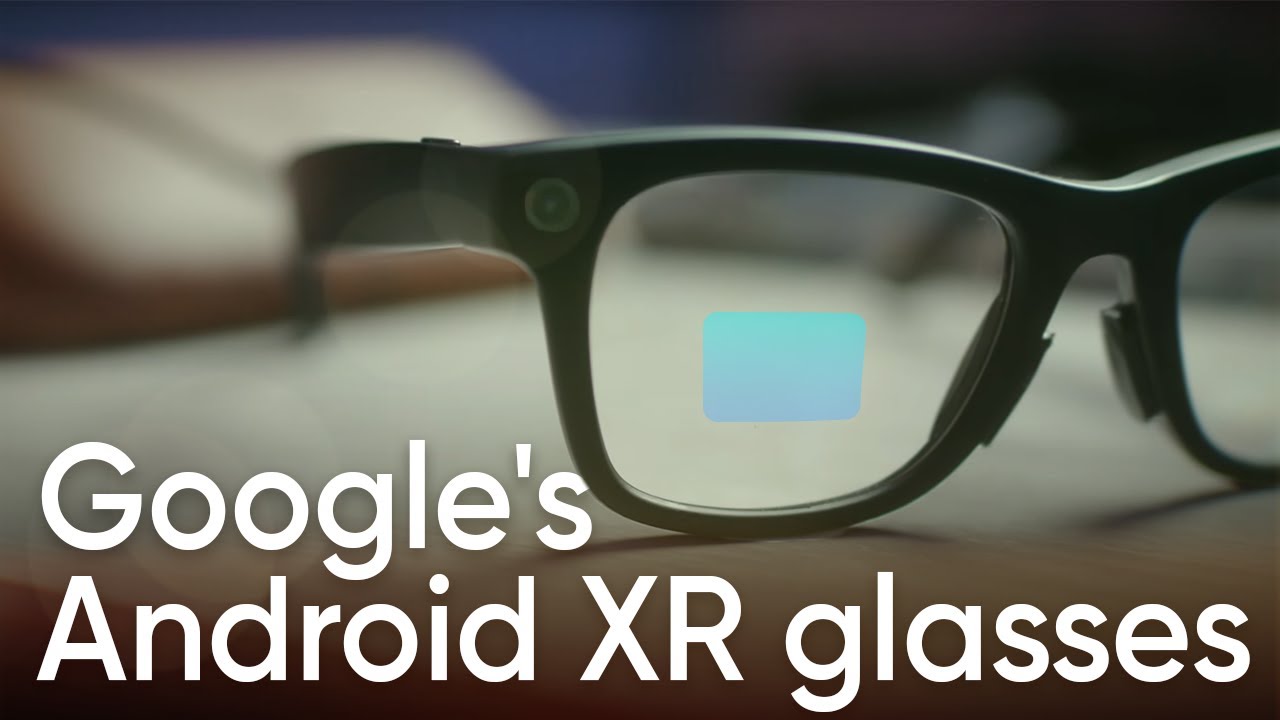
Google is back in the glasses business. And this time, the company is playing a much smarter game.
At Google I/O 2026, held on May 19, Google and Samsung officially previewed the first Android XR smart glasses, giving the public its clearest look yet at what these devices will do, who is making them, and when they will be available to buy.
If you follow Android, care about wearables, or simply want to know whether these are worth your attention, here is a full breakdown of what Google announced and what it still has not told us.
What Are Android XR Smart Glasses?
Android XR is Google’s extended reality platform, built in partnership with Samsung and Qualcomm. It already powers Samsung’s mixed reality headset, Project Moohan. Now it powers a new category: everyday smart glasses designed for all-day wear.
These are not augmented reality headsets. They are lightweight glasses equipped with cameras, microphones, and speakers, paired to your Android phone or iPhone via Bluetooth and Wi-Fi. The phone handles the heavy processing. The glasses handle the interaction, keeping your hands free and your eyes forward.
Google’s framing: Glasses that deliver help in the moment without taking you out of it.
The AI engine running everything is Gemini 2.5 Pro. It handles real-time translation, navigation, messaging, visual understanding, and context-aware suggestions, all through voice and, in some versions, a small in-lens display.
Two Types of Glasses, Two Very Different Experiences
Google confirmed two hardware tiers at I/O 2026, designed for different levels of information access.
Audio glasses
The first tier is audio-only. These glasses have cameras, microphones, and speakers built into the frames, but no display. Gemini communicates with you entirely through audio, answering questions, giving directions, reading messages, and translating speech, without any screen in your line of sight. The design philosophy prioritises comfort and all-day wearability.
Warby Parker and Gentle Monster are both producing audio glasses in this category. Warby Parker brings what the brand describes as refined and timeless designs, while Gentle Monster delivers frames the company characterises as disruptive yet refined aesthetics. Both collections run on the same Android XR software stack developed by Google and Samsung.
Display glasses
The second tier adds an in-lens display. This optional screen delivers contextual information privately, meaning only the wearer sees it. Navigation prompts, translation captions, and notification summaries appear directly in your field of view without projecting outward to people around you.
XREAL’s Project Aura sits at the far end of this spectrum. It features a 70-degree OLED field of view, full Android XR app support, and hand gesture controls, making it closer to a wearable computing device than a simple companion accessory. It requires a tethered battery pack and delivers around four hours of use, which positions it for shorter, focused sessions rather than all-day wear.
What Can These Glasses Actually Do?
The features confirmed at I/O 2026 cover a substantial range of everyday tasks.
- Navigation: Ask Gemini for directions by voice and receive turn-by-turn guidance without pulling out your phone. The glasses can also suggest nearby places on your route, such as a coffee shop or restaurant, and place an order for pickup on your behalf.
- Real-time translation: Gemini translates spoken conversations in real time, with audio that matches the original speaker’s voice. It also reads and translates text on menus, signs, and surfaces directly in your line of sight.
- Notification summaries: The glasses read out prioritised notifications so you catch what matters without constantly checking your screen.
- Calendar and messaging: Add events, respond to texts, and manage your schedule through voice commands.
- Photo and video capture: Built-in cameras capture first-person photos and video. Gemini can also edit images on the fly, demonstrated at MWC 2026 when Google showed a photo being photorealistically reimagined in front of a different backdrop within seconds of being taken.
- Contextual suggestions: Gemini reads your environment and offers relevant assistance based on what it sees, a more capable version of what Meta AI does in the Ray-Ban Meta glasses.
Importantly, all of these features work with the phone in your pocket. You do not need to take it out.
Who Is Building the Hardware?
Google is taking a platform-first approach. Rather than manufacturing glasses itself, Google provides the Android XR software and AI layer while hardware partners handle design and engineering.
The confirmed partner lineup as of Google I/O 2026 includes:
- Samsung: Leading hardware engineering across the glasses range, with Samsung’s first collection of intelligent eyewear confirmed for fall 2026.
- Warby Parker: Producing audio-first frames with a focus on everyday, all-day wearability. Warby Parker describes the glasses as lightweight and AI-enabled. The brand has opened an Intelligent Eyewear sign-up page for early buyers.
- Gentle Monster: Delivering bolder frame designs with the same core Android XR feature set. Gentle Monster has also launched an Intelligent Eyewear sign-up page.
- XREAL: Contributing Project Aura, the most capable display glasses in the lineup, featuring OLED optics, hand tracking, and full app support through Android XR.
- Qualcomm: Providing the chip architecture powering the platform.
This structure mirrors how Google handles Android on phones: one platform, many devices, across many price points and styles. It also means developers can build apps once and reach glasses from every partner in the ecosystem.
How Do These Compare to Meta Ray-Ban Glasses?
The comparison is direct. Google designed these glasses as a response to Meta’s Ray-Ban smart glasses, which have dominated the audio-glasses market through 2025.
Both product families use cameras, microphones, and speakers in everyday frames. Both rely on a paired phone for heavy processing. Both offer AI assistance through voice.
The difference is the AI model. Android XR uses Gemini 2.5 Pro, which is widely regarded as more capable than Meta AI for complex queries and multi-step tasks. Gemini also integrates more deeply with Android apps, giving it better access to personal context like your calendar, contacts, and Google Maps data.
The display tier, available through XREAL and Samsung, also goes further than anything Meta currently ships in glasses form, though at the cost of battery life and form factor.
Worth noting: Android XR glasses work with both Android phones and iPhones, widening the potential audience beyond the Android ecosystem.
Release Date and Pricing
Samsung has confirmed a fall 2026 launch window for the first Android XR glasses. Additional details on pricing and specific model names will follow, with Samsung’s annual foldables event in late July likely serving as the next major announcement opportunity.
Warby Parker and Gentle Monster have both launched sign-up pages so interested buyers can register ahead of launch. No pricing has been confirmed for any partner’s device. Given the Ray-Ban Meta glasses launched at around $300, and given Google’s intent to compete across price tiers, expect a range that starts in that territory for audio-only models.
XREAL’s Project Aura is expected to land above $1,000 given the added display hardware and tethered compute puck.
What Google Has Not Told Us Yet
The I/O preview was deliberately partial. Key details that remain unconfirmed include exact pricing across all tiers, battery life for audio glasses, final device weights, camera resolution specs, specific launch markets, and which partner ships first.
Google’s decision to preview hardware without full specs is a familiar move, designed to capture attention and gauge demand before locking in final configurations. The fall timeline means those details will likely surface over the summer.
The Bottom Line
Google has assembled the most coherent smart glasses strategy it has ever attempted: a capable AI model in Gemini, proven hardware partners in Samsung and Qualcomm, and consumer-facing frame designers in Warby Parker and Gentle Monster.
The glasses are not trying to replace your phone. They are trying to make your phone disappear into your pocket more often. That is a realistic goal, and the feature set announced at I/O 2026 supports it.
Fall 2026 is the window. The Android XR glasses era is starting now.