
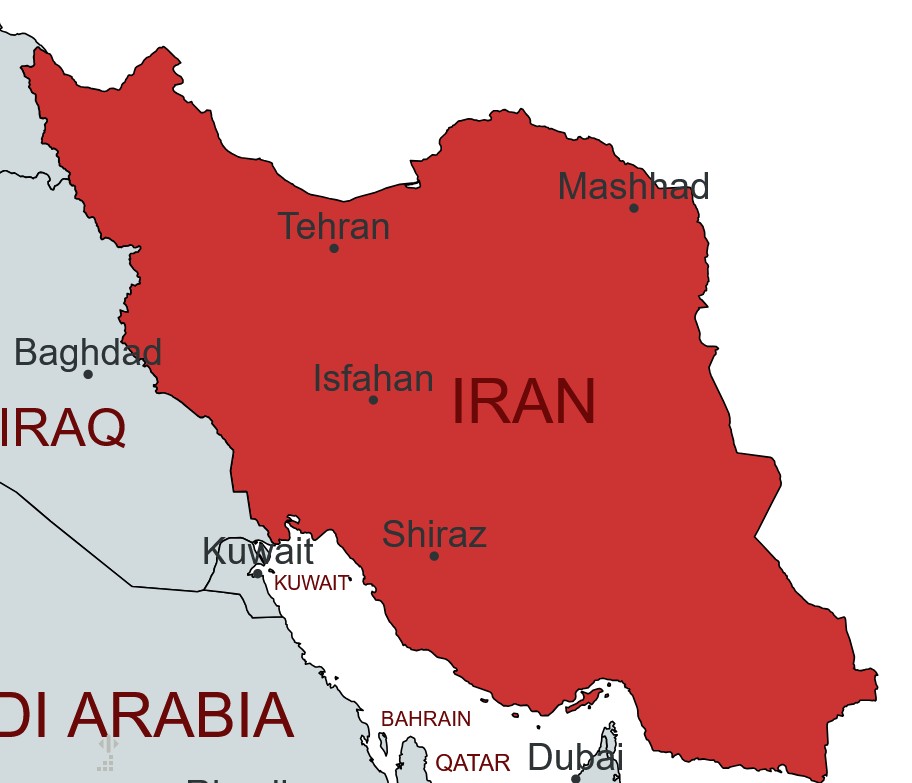
Iran launched a massive retaliatory wave of ballistic missiles and armed drones against United States military installations across the Middle East on Wednesday morning. The Islamic Revolutionary Guard Corps targeted American assets in Jordan, Kuwait, and Bahrain, including the strategic Fifth Fleet headquarters. This heavy bombardment came mere hours after American fighter jets struck nearly twenty military sites inside southern Iran. The rapid escalation thoroughly breaks a fragile regional ceasefire and threatens to drag Washington into a full-scale territorial war. Regional air defences were activated across multiple Gulf nations to intercept the incoming Iranian projectiles.
The intense exchange of firepower began after President Donald Trump ordered punitive airstrikes to avenge a downed American military helicopter. A US Army Apache helicopter crashed near the high-stakes Strait of Hormuz on Monday after colliding with an Iranian drone. President Trump quickly blamed Tehran for the destruction of the aircraft and directed Central Command to execute immediate counter-strikes. American forces subsequently targeted Iranian air defence systems, coastal radar stations, and ground control facilities on Qeshm Island. While Washington described its three-hour bombing campaign as a limited act of self-defence, Tehran viewed it as an explicit declaration of war.
The Iranian counter-strike targeted major hubs hosting American hardware and personnel throughout the Persian Gulf. Iranian state media claimed that the Revolutionary Guard successfully hit 21 separate targets during the multi-pronged morning assault. Long-range ballistic missiles targeted the Muwaffaq Salti Air Base in Jordan, an installation that houses advanced American F-35 fighter jets. Concurrently, waves of one-way attack drones swarmed the Ali Al-Salem base in Kuwait and naval facilities in Bahrain. Iranian Foreign Minister Abbas Araghchi warned that the armed forces will leave no American threat unanswered if Washington continues to test their determination.
Regional allies deployed their own defensive hardware to protect domestic airspace from the crossfire. The Jordanian Armed Forces confirmed that their air defence units successfully shot down five incoming Iranian missiles near Al-Azraq. Military authorities in Kuwait and Bahrain similarly triggered air raid sirens, urging residents to seek emergency shelter while repelling hostile aerial targets. Preliminary assessments from the Pentagon indicate that Western systems intercepted the vast majority of the incoming drones and missiles. American defense officials report no immediate casualties or significant structural damage to their regional installations despite the breadth of the attack.
This sudden outbreak of direct hostilities threatens to derail highly sensitive diplomatic negotiations between Washington and Tehran permanently. Before the helicopter incident, President Trump indicated that an interim peace treaty to end the months-long Gulf conflict was in its final throes. The proposed agreement aimed to lift the crippling American maritime blockade on Iranian ports in exchange for verifiable nuclear constraints. This latest kinetic escalation leaves those delicate multilateral talks in absolute tatters as both commands pivot back to military deterrence. International energy analysts expect the renewed instability around the Strait of Hormuz to trigger immediate chaos in global crude markets.
The immediate outlook for the region depends entirely on whether Washington chooses to launch a second wave of domestic strikes. President Trump told news reporters that the initial American response was powerful, necessary, and completely justified by Iranian aggression. However, congressional leaders are already urging the White House to exercise extreme restraint to prevent a catastrophic regional conflagration. For an administration navigating intense domestic pressure over soaring domestic fuel prices, a prolonged military campaign in the Middle East represents a severe political hazard. The coming hours will test whether secret diplomatic channels can restore the broken ceasefire before the escalation becomes irreversible.