
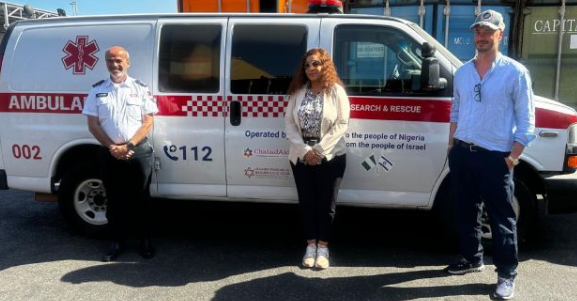
Israel handed over its first consignment of fully equipped ambulances, modern medical devices, and mobility aids to Nigeria at the Port of Ashdod on Wednesday, 26 August 2026. Nigerian Ambassador Agatha Ufochukwu received the cargo alongside representatives from Israel’s Ministry of Health and the national emergency service Magen David Adom. The shipment will head to Nigerian general hospitals and emergency clinics to support trauma management, disaster relief, and patient transit. Ambassador Ufochukwu praised the donation as a timely intervention that will bolster emergency response capacity in underserved rural districts. Both governments framed the delivery as a practical shift toward deeper bilateral ties in healthcare, innovation, and technical knowledge transfer. Yet a few dozen foreign vehicles cannot fix the chronic funding rot at the heart of Nigeria’s public health system. A functional state builds its own clinics rather than waiting for foreign charity. Foreign gifts provide good photo opportunities, but they rarely build sustainable medical institutions.
Nigeria’s emergency medical services operate in a near-total vacuum across secondary cities and farming belts. Road traffic accident victims and mothers in obstructed labour routinely bleed to death because local councils lack a single running ambulance. Desperate families must transport trauma patients on commercial motorbikes, open tricycles, or wheelbarrows to reach distant primary care clinics. Federal and state health ministries purchase luxury sport utility vehicles for senior political administrators while leaving emergency wards without oxygen cylinders and defibrillators. Even when state governments buy medical vehicles, poor maintenance practices sideline the fleets within eighteen months of commissioning. A lack of trained paramedics turns sophisticated mobile intensive care units into expensive delivery vans. Without trained crews, an ambulance is just a metal box with flashing lights.
The donation from Magen David Adom highlights the immense technical gap between Israeli emergency networks and Nigeria’s fragmented rescue desks. Israel runs one of the most efficient emergency dispatch systems in the world, combining mobile applications, volunteer first responders, and rapid motorcycle medics. In contrast, Nigeria’s National Emergency Medical Service and Ambulance System struggles with dead telephone lines and non-existent dispatch software. Calls to national emergency numbers often ring out without an answer from zonal communication desks. The few ambulances that respond to distress calls must navigate broken roads and gridlocked traffic without dedicated priority lanes. Nigerian emergency coordinators need technical training in rapid triage algorithms far more than occasional vehicle donations. Technology transfer requires structured institutional apprenticeships rather than casual gift-giving.
The delivery arrives as the Nigerian public health sector faces a devastating exodus of doctors, nurses, and laboratory scientists. Thousands of qualified healthcare professionals leave the country every year for higher pay and better working conditions in Europe, North America, and the Gulf. Federal university teaching hospitals operate with skeleton staff, forcing remaining doctors to work seventy-hour shifts without overtime compensation. This brain drain leaves public hospitals without the specialised anaesthetists and trauma surgeons required to run emergency triage wards. Donated diagnostic machines and monitors often sit in wooden packing crates because local biomedical technicians cannot calibrate the software. Medical hardware means very little without competent human hands to run it. Retaining local medical talent remains the true foundation of national health security.
Budget allocations to the health sector remain far below the fifteen per cent target set by the African Union in the 2001 Abuja Declaration. The federal government allocates less than five per cent of its annual spending plan to public health, spending far more on debt servicing and legislative perks. State governments spend even less, forcing public hospitals to demand upfront cash payments from accident victims before admitting them to emergency wards. This brutal cash-and-carry system denies emergency medical treatment to millions of poor citizens who lack private health insurance coverage. The Basic Health Care Provision Fund, intended to cushion rural primary clinics, suffers from irregular treasury disbursements and administrative diversion. Public healthcare cannot survive on loose change from the national budget. A nation that underfunds its clinics inevitably pays the price in early graves.
The diplomatic engagement in Ashdod also reflects Tel Aviv’s wider strategy to cultivate strategic security and economic partnerships across sub-Saharan Africa. Israeli officials routinely deploy humanitarian aid, agritech training, and water management projects to build political capital among African voting blocs at the United Nations. Nigeria remains a key diplomatic partner in West Africa, offering Israeli commercial firms access to a vast consumer market and expanding corporate investments. Abuja has consistently balanced its diplomatic ties in the Middle East, seeking technical cooperation while maintaining formal support for international peace frameworks. The federal government must ensure that bilateral partnerships yield practical benefits for domestic manufacturing and medical training. Diplomatic goodwill must translate into local industrial capacity rather than mere diplomatic pleasantries.
The Federal Ministry of Health must now establish transparent deployment guidelines to prevent these donated ambulances from disappearing into private political garages. In the past, foreign medical donations ended up serving as private transport for hospital directors and political godfathers. The ministry should attach every vehicle to a regional trauma centre and install GPS tracking units to monitor their daily emergency runs. State governments must allocate dedicated fuel budgets and contract certified mechanics to keep the vehicles in roadworthy condition. Health commissioners should also partner with local paramedic training schools to supply qualified crews for around-the-clock emergency shifts. Accountability must govern every stage of vehicle maintenance and deployment. If the state cannot maintain donated vehicles, it will never build a serious healthcare system of its own.