
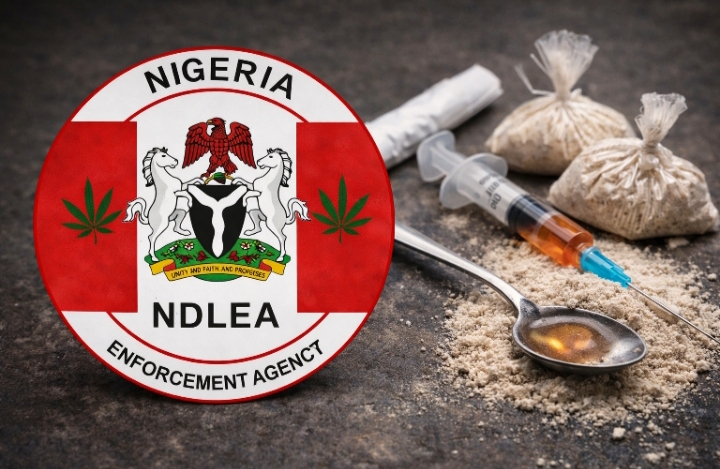
Officers of the National Drug Law Enforcement Agency have seized incoming shipments of synthetic cannabis from Britain and dismantled a distribution ring using music speakers and loaves of bread to hide narcotics. The operations yielded more than 2.3 tonnes of illicit drugs and led to multiple arrests across eight states, according to a statement released on Sunday by agency spokesman Femi Babafemi. At the import shed of Murtala Muhammed International Airport in Ikeja, officers intercepted a consolidated cargo originating from the United Kingdom containing 27 parcels of synthetic cannabis, locally called Colorado, weighing 32.20 kilograms. A real estate agent, Abideen Jide Salami, walked into the cargo terminal on Wednesday, 9 September, presenting a collection code sent by his brother in Britain to clear the luggage. Investigators took Salami into custody immediately. A linked follow-up sweep rounded up Nurudeen Abiodun Kadiri, 44, who received a separate 12.25-kilogram consignment of the same chemical compound from his own sibling abroad. The diaspora pipeline continues to pump synthetic misery into Nigerian streets. Kinship networks now double as commercial smuggling syndicates.
The seizure in Ikeja confirms a sharp shift in the direction of international narcotics traffic. West Africa once operated almost exclusively as a maritime transit springboard to haul South American cocaine to European capitals. Today, urban middle-class youth in Lagos buy synthetic cannabinoids concocted in clandestine European laboratories. Local distributors use commercial air cargo routes to bring these concentrated chemical compounds into the country with ease. The high price tag of the compound ensures handsome margins for dealers willing to gamble against airport scanners. Real estate agents and white-collar professionals run local logistics on behalf of relatives living comfortably in London. These respectable intermediaries assume their clean public profiles will ward off customs scrutiny. Family ties grease the wheels of cross-border trade.
The agency tracked similar consignments inside domestic transport parks, exposing the mechanics of regional redistribution. Operatives from the Directorate of Operations and General Investigation intercepted a music speaker rigged with three packs of synthetic cannabis at a transit park in Maza Maza. The cargo was heading towards Abidjan before its final destination in Liberia. A coordinated sting at a nearby eatery trapped travel agent Ifeanyi Obed Augustine, 41, and consignment owner Obasi Ugochukwu, 46. Meanwhile, officers at Iddo Motor Park arrested Ifeanyi Nwokolo Henry on Friday, 11 September, as he prepared to send 2.1 kilograms of the substance to Kano. Smugglers rely on mundane commercial bus services to move contraband past police checkpoints. Hollowed electrical appliances remain an old, reliable trick of the retail trade.
The geographic sweep of the crackdown extended deep into the provinces, where retail markets consume industrial volumes of pharmaceutical depressants. In Delta State, raids across Ughelli and Asaba netted ampoules of pentazocine, codeine syrup, tramadol, diazepam, flunitrazepam, and MDMA hidden inside sound systems, leading to the arrest of Emeka Oji and Chukwuebuka Anedi. In Kano, operatives raided Sabon Gari to apprehend Saidu Adamu, 20, who kept 785,000 capsules of pregabalin weighing 669.4 kilograms. A mobile patrol along the Zaria to Kano road intercepted 28-year-old Habibu Sabitu with 1,700 diazepam tablets baked into loaves of bread. In Jos, Plateau State, officers arrested 51-year-old Chinedu Uzor at Katako Market with 157,100 tramadol capsules. Northern cities are drowning under a tide of illicit prescription pills. Cheap sedatives dull the pain of economic ruin.
The raids struck domestic cannabis plantations alongside the urban pharmaceutical trade. Enforcement teams entered the forest reserves of Usen, Igwe-Oke, and Ogboha across southern and western Edo State to destroy 4,832 kilograms of skunk growing in open clearings. The raid led to the arrest of Sunday Segun, 39, who tended the forest acreage. In Ondo State, officers searched a residential house on Oke-Iya along Ijoka Road in Akure on Wednesday, recovering 186 kilograms of processed weed packed inside the boot of a Toyota Avalon car. The owner of the vehicle, Paul Ogbuwala, 58, intended to haul the cargo to Jos for regional retail distribution. In Kaduna, operatives seized 369.6 kilograms of weed from Hannah Michael in Gonin Gora. Forest reserves offer criminal gangs tax-free land and quiet seclusion. Agrarian crime thrives along the unpoliced forest frontier.
The illicit trade draws recruits across generations and genders, illustrating how deeply the enterprise penetrates local communities. In Ovom, near Yenagoa in Bayelsa State, anti-narcotics units seized 110 sacks of cannabis weighing 876 kilograms from a four-person ring. The suspects included Motombo Silver, Pere Andrew, Keme Andrew, and a 70-year-old matriarch named Godwoman Gboriye. Rural poverty and a total absence of social security drive senior citizens into the drug retail trade. Pensioners manage storage yards because security agents rarely view elderly grandmothers as cartel logistics chiefs. The domestic narcotics economy provides informal employment where the formal state apparatus provides nothing. Desperation dissolves ethical hesitation among old and young alike. Grandmothers store contraband when farming pays too little.
The scale of these provincial seizures exposes the hollow nature of domestic border and transport security. Nigeria bristles with police road barriers, customs checkpoints, and army outposts along every major federal highway. Yet tonnes of pressed weed and hundred-kilogram boxes of synthetic sedatives move unhindered from coastal forests to northern commercial centres. Transport unions and bus park drivers routinely turn a blind eye to sealed parcels if the freight fee lands in cash. Petty bribery ensures that private cars packed with narcotics pass through state borders without basic boot inspections. The agency arrests retail couriers while the transport syndicates continue to move merchandise for a fee. Tactical raids offer useful headlines, but they leave the distribution infrastructure intact. Road barriers serve extortion far better than interdiction.
Agency chairman Mohamed Buba Marwa commended the regional commands for their tactical diligence and demanded continuous pressure on distribution pipelines. Yet law enforcement alone cannot break a multi-billion-naira trade driven by domestic demand and deep social malaise. Millions of idle youths turn to synthetic cannabis and cheap opioids to escape unremitting poverty and joblessness. Seizing two tonnes of narcotics causes a brief blip in street inventory without altering retail street prices in the long run. As long as consumer demand remains voracious, criminal cartels will bake pills into bread and stuff speakers with synthetic weeds. Interdiction remains a necessary police exercise, but it treats the symptoms of a broken society. The supply line bends, but it never snaps.