
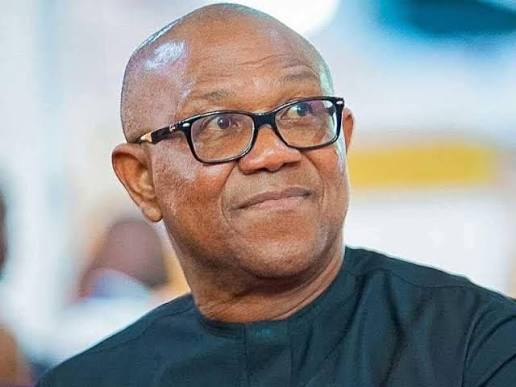
Peter Obi has returned to the most contested question of Nigeria’s last presidential election, alleging that the man who presided over it was not neutral.
Speaking in an interview with ARISE News, the presidential candidate of the Nigeria Democratic Congress said Mahmood Yakubu, who chaired the Independent National Electoral Commission through the February 2023 poll, had assured Nigerians and foreign observers that the commission would conduct a proper election while, in Obi’s words, working for his opponents. Obi framed the episode as a lesson in misplaced trust. “In 2023, we took things for granted. We believed INEC. We believed what they said they would do,” he said, adding that this time his camp would rely on its own vigilance rather than assurances.
Pressed on whether he had evidence, Obi’s answer was less firm than the allegation. In the exchange as monitored during the broadcast, he first answered no, then argued that proof was unnecessary because the conduct of the election spoke for itself, saying those who administered it knew what had been done. That distinction matters. The claim is an allegation by a candidate, not an established finding, and no evidentiary record has been placed in public to support it.
Yakubu has not responded publicly to the specific allegation, and he no longer holds the office. Appointed in 2015 by President Muhammadu Buhari and reappointed in 2020, he became the longest serving chairman in INEC’s history and stepped down in October 2025 at the expiry of his second term, handing over to national commissioner May Agbamuche Mbu in an acting capacity. President Bola Tinubu nominated Joash Ojo Amupitan, a professor of law from Kogi State, whose appointment was approved by the National Council of State on 10 October 2025, confirmed by the Senate on 16 October and sworn in on 23 October as the commission’s sixth substantive chairman. Any grievance Obi carries into 2027 therefore falls to a different set of hands.
The numbers behind the dispute are on the record and remain the reference point for the argument. INEC declared Tinubu of the All Progressives Congress the winner with 8,794,726 votes, or 36.61 per cent. Atiku Abubakar of the Peoples Democratic Party polled 6,984,520 votes, 29.07 per cent, and Obi, then on the Labour Party platform, took 6,101,533 votes, 25.40 per cent. Rabiu Kwankwaso of the New Nigeria Peoples Party finished fourth with 1,496,687 votes. Announcing the outcome, Yakubu put total votes cast at 24,966,218, of which 24,025,940 were valid and 939,278 rejected. Against a register of 93,469,008 voters, turnout came to 26.71 per cent, the lowest in Nigeria’s Fourth Republic and roughly eight percentage points below 2019.
By states, Tinubu and Atiku each carried 12, Obi carried 11 plus the Federal Capital Territory, and Kwankwaso carried Kano. Two of Obi’s results in particular have kept the argument alive. He won Lagos, Tinubu’s political base, by 582,454 votes to 572,606, and he took the FCT with 281,717 votes, 61.22 per cent, a result that later became central to a constitutional argument over whether a winner must secure 25 per cent of votes in Abuja.
The courts settled the legal side of the matter three years ago. On 6 September 2023, a panel of the Presidential Election Petitions Court led by Justice Haruna Tsammani dismissed the consolidated petitions of the Labour Party and Obi, the PDP and Atiku, and the Allied Peoples Movement, holding that the petitions lacked merit and affirming Tinubu’s return. Obi filed a notice of appeal on 51 grounds; Atiku filed on 35. On 26 October 2023, a seven member panel of the Supreme Court dismissed both appeals, rejecting arguments on qualification, non compliance with the Electoral Act, the FCT threshold and alleged malpractice. That judgment closed the litigation and remains the authoritative legal answer to what the petitioners alleged.
What was never fully resolved to the satisfaction of the parties was the administrative story: the failure of INEC’s result viewing portal to upload presidential results in real time on election night, even as senatorial and House results appeared. The commission attributed the failure to technical problems. Petitioners argued it deprived the process of the transparency the commission itself had promised. The courts found the argument insufficient to void the election. It is that gap between an institution’s public assurances and its performance on the day that Obi is now revisiting, and it is why the allegation continues to find an audience regardless of the judicial outcome.
The politics have shifted considerably since then. Obi left the Labour Party for the African Democratic Congress, then moved with Kwankwaso to the newly registered Nigeria Democratic Congress, which registered in February 2026 and named him its presidential candidate at a special convention in Abuja on 30 May 2026, with Seriake Dickson as national chairman. The 2027 contest is shaping into a rematch of the 2023 top three, with Tinubu seeking re election on the APC platform and Atiku now on the ADC ticket. In the same interview, Obi also maintained his position that he won in 2023 and said he would concede in 2027 only if the process is credible.
The calendar is tighter than many expect. President Tinubu signed the Electoral Act 2026 on 18 February 2026, repealing the 2022 law and revising statutory timelines. INEC first fixed the presidential and National Assembly elections for 20 February 2027 in a notice issued on 13 February 2026, then brought them forward on 26 February to 16 January 2027, with governorship and state assembly polls on 6 February 2027. Party primaries ran between 23 April and 30 May 2026, and presidential campaigning was scheduled to open on 19 August 2026. Amupitan, addressing commission staff in Lagos in January, said the 2027 vote must be free and fair and set an ambition for INEC to become the continent’s benchmark election body.
For voters, the practical question is narrower than the allegation. Nigeria’s electoral system now runs on the Bimodal Voter Accreditation System and the result viewing portal, and the credibility of January 2027 will rest on whether those tools function as advertised on the day rather than on assurances given beforehand. That is the standard Obi is invoking, and it is the standard against which the new commission will be judged.