
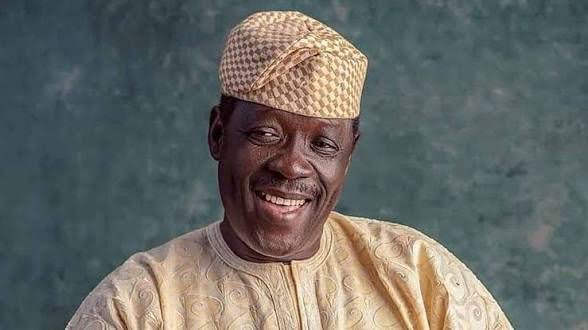
The death of veteran actor Taiwo Hassan, the Yoruba film star known to millions as Ogogo, has done more than plunge Nollywood into mourning. It has again exposed a pattern that Nigeria’s health authorities have struggled for years to break, with prominent citizens falling to cancers that are frequently detected too late to treat.
Hassan died on Sunday, 23 August 2026, at the age of 66. His daughter, Kira Taiwo, confirmed the death in an emotional Instagram broadcast, days after she and her sister appealed publicly for specialist care, disclosing that their father was battling stage four cancer. The family said it was not seeking money, only access to doctors and facilities able to manage his condition. The specific type of cancer was not made public.
Born in Ilaro, Ogun State, in 1959, Hassan worked as a mechanic before turning to acting in the early 1980s and built a career spanning more than four decades, with roles in Owo Blow, Omo Ghetto and Kunle Afolayan’s Anikulapo. His passing lands on an industry still grieving a string of recent losses.
Actor Alexx Ekubo died in May 2026 at the age of 40, his family citing complications from advanced metastatic kidney cancer, an illness he had kept largely private. Veteran actor Tom Njemanze died in July 2025 at 75 after a battle with prostate cancer, having received treatment as colleagues appealed for funds. Before them came Stella Ikwuegbu and Ethel Ekpe in 2024, and, in 2021 alone, Sadiq Daba (leukaemia and prostate cancer), Doris Chima (breast cancer), Karibi Fubara (kidney cancer) and Ify Onwuemene (stage four endometrial cancer). Yoruba actress Aisha Abimbola, popularly called Omoge Campus, died of breast cancer in Canada in 2018.
The recurrence is not a coincidence of celebrity. It mirrors a national burden that the numbers lay bare.
According to the Federal Ministry of Health’s National Cancer Control Programme, Nigeria records roughly 127,000 new cancer cases every year, with children accounting for about 7.2 per cent of them. Researchers drawing on GLOBOCAN data estimate that annual cancer deaths exceed 70,000. Breast and prostate cancers are the most common. GLOBOCAN 2022 figures show prostate cancer as the leading cause of cancer death among Nigerian men, with 18,019 new cases and 11,443 deaths recorded, while breast cancer remains the leading cancer killer of women.
What makes these cancers so lethal in Nigeria is less the disease than the timing of diagnosis. A systematic review of breast cancer cases between 2018 and 2023 found that the large majority of patients, around 82 per cent, presented at an advanced stage. Studies on prostate cancer report the same pattern, with most men reaching hospital only after the disease has spread. By the time many Nigerians, famous or not, learn they are ill, curative treatment is often no longer possible. The recurring phrase in celebrity death announcements, stage four, is the public face of this wider failure of early detection.
Treatment, where it is available, is scarce and costly. The Nigerian Cancer Society has put the number of oncologists in the country at fewer than 80 for a population above 200 million, a shortage worsened by the migration of health workers abroad. Radiotherapy capacity is thinner still. A multicentre assessment of Nigeria’s government funded radiotherapy centres found that of seven linear accelerators across the facilities studied, only three were functional, leaving many patients to travel long distances or across borders for care. For years, Nigerians sought radiotherapy in Ghana whenever no machine at home was working.
Cost compounds the crisis. Most patients pay out of their own pockets. A prospective study of breast cancer care at a tertiary hospital found that more than 70 per cent of patients suffered catastrophic health expenditure, with about two thirds holding no health insurance. Many families borrow money, sell assets or abandon treatment midway. It is why the appeals that accompanied Ogogo’s final days, and those of Njemanze and others before him, have become a grim ritual of Nigerian celebrity illness.
The government points to steps taken. The National Cancer Health Fund and the National Cancer Access Programme were established to subsidise medicines and treatment for breast, cervical and prostate cancer patients, and additional treatment centres have been approved across the six geopolitical zones. Health advocates counter that machines and funds mean little without trained specialists to run them, and that bureaucratic delays continue to interrupt drug supply.
For an industry that has now buried a succession of its stars, the lesson urged by oncologists is consistent and unglamorous. Breast, cervical and prostate cancers are among the most treatable when caught early, yet routine screening remains rare, awareness low and stigma high. The visibility of figures like Hassan, whose family chose openness in his final days, may prove more useful than any single appeal if it nudges ordinary Nigerians towards the check ups they have long avoided.
Ogogo’s death closes a career that shaped Yoruba cinema for two generations. The larger story it reopens, of a country where cancer is too often found too late and treated too little, will outlast the tributes.