
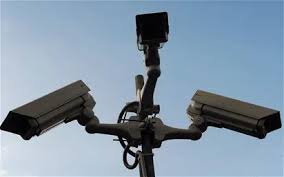
Three years after a court order and months into contempt proceedings, the Socio-Economic Rights and Accountability Project (SERAP) has issued a fresh 48-hour ultimatum to the Federal Ministry of Finance, demanding full disclosure of all Nigerian contractors, subcontractors, consultants, and vendors who received payments under the controversial $460 million Abuja CCTV project.
In a letter dated May 23, 2026 and signed by its Deputy Director, Kolawole Oluwadare, SERAP warned that failure to comply would trigger immediate contempt proceedings against the Ministry before the Federal High Court.
The demand follows a May 15, 2026 letter from the Ministry’s Permanent Secretary, R.O. Omachi, acknowledging that “while local subcontractors may have been engaged, there is an absence of detailed subcontracting records identifying specific local companies that received funds directly from the Chinese loan.” SERAP described that disclosure as insufficient.
“The details provided amount to only partial compliance with Justice Emeka Nwite’s judgment,” SERAP stated. “Key questions remain unanswered, and further clarification is needed to ensure full and effective compliance.”
The Federal High Court had on May 15, 2023 ordered the Ministry of Finance to disclose the total amount paid under the loan, the identities of both local and Chinese contractors, the project’s implementation status, and details concerning a N1.5 billion payment linked to the Code of Conduct Bureau headquarters. That judgment has gone substantially unimplemented for over three years, with the Ministry only releasing partial information after SERAP filed contempt proceedings and served a Notice to Show Cause in January 2026.
New disclosures from the Ministry confirm that the Federal Government received US$399.5 million from the Export-Import Bank of China for the National Public Security Communication System, drawn down across ten instalments between March 2011 and December 2013. The Federal Government also contributed US$70.5 million as counterpart funding, representing 15 percent of the total project cost of US$470 million. The naira equivalent of counterpart funding paid was N10.68 billion, calculated at an exchange rate of N150 to $1, including a one percent Central Bank of Nigeria commission.
The Ministry confirmed that ZTE Corporation of China served as the principal contractor, with payments routed through Bank of China’s Shenzhen Branch. Inventory records further show that only 61,970 units of expected equipment were delivered out of 68,005 anticipated, leaving 6,035 units unaccounted for.
SERAP said the Ministry has offered no explanation for the missing items. “It remains unclear whether the items were subsequently delivered, whether payment was made for them, whether the contractor defaulted, whether Nigeria suffered any financial loss, and whether any steps were taken to recover public funds,” the organisation stated.
Beyond the missing inventory, SERAP noted that the Ministry had failed to clarify how many cameras were actually installed, where they were deployed, and whether the surveillance infrastructure is currently operational.
The civic organisation tied the accountability demand directly to Nigeria’s worsening security environment. “Where hundreds of millions of dollars were borrowed in the name of public safety, transparency is essential,” SERAP argued, pointing to persistent insecurity across Abuja, Benue, Oyo, and other states as evidence that the public deserves to know whether the investment delivered any measurable security outcome.