
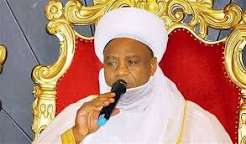
The Sokoto Sultanate Council has asked Muslims across Nigeria to watch for the new crescent moon of Jumada Assaniya 1448 after sunset on Monday, 9 November, setting off the quiet monthly exercise that keeps the Islamic calendar running for the country’s largest faith community.
The directive came in a statement dated 8 November and signed by Professor Sambo Wali Junaidu, the Waziri of Sokoto and chairman of the Advisory Committee on Religious Affairs of the Sultanate Council. The statement identified Monday as the 29th day of Jumada al-Ula, the point at which the council looks for the crescent that would open the next lunar month. Anyone who sees the moon has been asked to report to the nearest District or Village Head, who would pass the information on to the Sultan.
The council noted that the Sultan, Alhaji Muhammad Sa’ad Abubakar, remains the recognised authority for announcing the start of each Islamic month to Muslims nationwide. He holds that role as President-General of the Nigeria Supreme Council for Islamic Affairs, the umbrella body for the country’s Muslim organisations.
The call carries added weight this year because it falls barely a week after the Sultan marked two decades on the throne. A retired brigadier general, Sa’ad Abubakar was named the 20th Sultan of Sokoto on 2 November 2006, following the death of his elder brother, Muhammadu Maccido, in the ADC Airlines crash of October that year. Over 20 years he has grown into one of Nigeria’s most visible religious figures, and the Sultanate’s word on moon sighting now reaches tens of millions.
The scale is considerable. The Pew Research Center estimates that Muslims made up about 56 per cent of Nigeria’s population in 2020, or roughly 120 million people, giving the country the largest Muslim population in Africa and the fifth largest in the world. With the national population now put at more than 220 million, the number is almost certainly higher today, though precise shares remain contested because Nigeria has not asked about religion in a census since 1963.
Behind Monday’s routine announcement sits a system built to prevent confusion. The Sultanate’s Advisory Committee on Religious Affairs works with the National Moon Sighting Committee, which gathers reports from observers across the states before a date is declared. That structure was strengthened from 2009, after the previous year saw Muslims in different parts of the country observe Eid on three separate days, an episode that hardened the case for central coordination.
Even so, the harmony is not complete. For ordinary months such as Jumada Assaniya the process rarely draws attention, but around Ramadan and the two Eid celebrations it often fractures. A Sokoto-based cleric, Sheikh Musa Lukuwa, has for several years held Eid prayers a day ahead of the Sultan’s date, usually pointing to a crescent sighting in neighbouring Niger Republic, and some followers of the Qadiriyya order in Kano have at times done the same. In March this year the Sultan fixed Eid al-Fitr for Friday, 20 March, while Lukuwa and his congregation prayed on the Thursday.
The disagreements rest on an old question in Islamic law: whether a new month should begin only with a physical sighting of the crescent, or whether astronomical calculation can be accepted. The Sultanate has stayed with physical sighting, backed by its committees and, in recent years, by observatory points and communication technology meant to speed up verified reports. Scholars who favour calculation argue that Nigeria could fix its calendar years ahead, as several other Muslim-majority countries do.
For now, the position is straightforward. If the crescent is seen on Monday evening, Tuesday, 10 November, becomes the first day of Jumada Assaniya 1448. If it is not, Jumada al-Ula will run a full 30 days and the new month will begin on Wednesday. Either way, the Sultan is expected to make the formal announcement once the reports are in, with Muslims urged to join the search carefully and sincerely.