
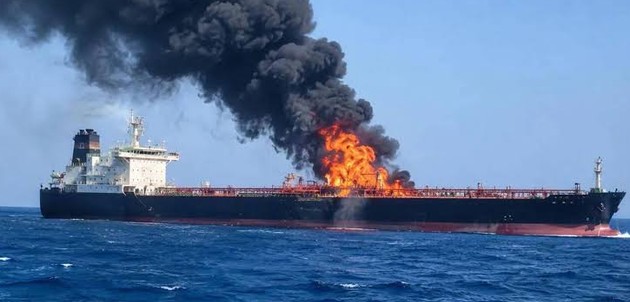
Iranian parliamentary speaker Mohammad Bagher Ghalibaf warned Washington on Thursday, 15 October, that Tehran will fight until the United States accepts its terms, as two commercial vessels sank near the Strait of Hormuz. One vessel sank after a projectile strike, while a drifting naval mine destroyed the second ship in the narrow sea lane. Iranian mines choke the Persian Gulf. This maritime warfare proves that the Islamic Republic intends to strangle global energy trade rather than endure an unequal economic war of attrition under American sanctions.
Global oil traders reacted swiftly to the sinkings by pushing crude prices sharply higher, compounding market fears after Houthi missile barrages struck Saudi Aramco facilities in eastern Saudi Arabia. Higher energy costs punish Western consumers. Tehran recognises that high oil bills create severe political pain for the White House ahead of the American mid-term elections. By transforming the narrow waterway into a ship graveyard, Iranian strategists exploit the economic pain of their adversaries to force concessions that conventional military power could never secure.
Commercial insurers have raised maritime war-risk premiums to astronomical levels, forcing international shipping syndicates to anchor hundreds of crude carriers outside the Persian Gulf. High transport insurance stops private merchant fleets. United Nations officials warn that the maritime blockade also halts critical regional fertiliser exports, threatening farm harvests and global food supplies across import-dependent developing nations. Western naval convoys offer very little comfort to merchant crews when cheap sea mines and hidden coastal missiles can destroy a commercial cargo vessel within minutes.
Regional diplomacy offers few clear escape routes, even as Egyptian foreign minister Badr Abdelatty and Pakistani foreign minister Ishaq Dar held emergency talks to press for regional de-escalation. Paper diplomatic appeals stop no incoming missiles. Tehran views its maritime chokehold as its premier geopolitical weapon, while Washington refuses to abandon its regional military campaign without securing sweeping nuclear and regional security concessions from the Iranian clergy. The impasse leaves world markets hostage to an escalating battle of wills where neither power can afford to blink.
The crisis demonstrates the utter fragility of world sea trade when asymmetric naval warfare collides with vital international waterways. Submarines and sea mines render modern naval escorts ineffective across shallow coastal straits, allowing a regional power to disrupt international supply chains with basic low-cost ordnance. Geography gives weak nations immense leverage. Until the combatants negotiate an exit from this widening war, the Strait of Hormuz will remain a dangerous passage that threatens to pull the global economy into deep recession.