


Tinubu Sends State Police Bill to Reps
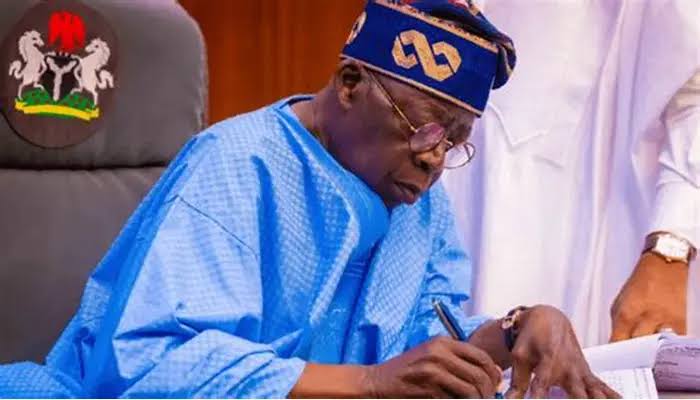
President Bola Tinubu has formally moved the battle to establish state police to the doorstep of the House of Representatives, transmitting the Constitution of the Federal Republic of Nigeria (Alteration) (State Police) Bill, 2026, in a bid to secure the constitutional backing that would end more than two decades of debate over how Nigeria polices itself.
The President’s letter, addressed to Speaker Tajudeen Abbas and read on the floor of the House on Tuesday, asks lawmakers to amend the 1999 Constitution and create what he described as a “constitutional pathway for the establishment of State Police Services.” Tinubu framed the proposal as central to his administration’s security agenda, urging the House to move quickly. “The proposed legislation is a critical component of our administration’s strategy to reorganise Nigeria’s security architecture to better protect our citizens, and I am confident that the House of Representatives will act quickly to consider and pass this Bill,” he wrote.
The transmission does not stand alone. It arrives barely two weeks after the Senate, on a Thursday sitting, passed its own version of the constitutional amendment after securing the two-thirds majority required to alter the 1999 Constitution. Senate Leader Opeyemi Bamidele, who led that debate, called the measure “one of the most significant constitutional reforms in our nation’s democratic evolution,” noting that it would empower the National Assembly to set national minimum standards on recruitment, training, vetting, discipline and the use of firearms so that state formations remain professional and accountable. In the same sitting, senators raised the allocation to the Nigeria Police Trust Fund from the Consolidated Revenue Fund from 0.5 per cent to one per cent, a signal that funding worries have not been lost on the lawmakers.
The machinery behind implementation is already turning. On July 7, Tinubu, represented by his Chief of Staff, Femi Gbajabiamila, inaugurated a Presidential Working Group tasked with producing what officials called a “technically robust, implementation-ready draft National Policing Bill” so that the operational law is ready the moment the constitutional amendment clears. Deputy Speaker Benjamin Kalu has also confirmed that a bicameral conference committee was set up to reconcile the Senate and House versions before final passage.
The urgency is rooted in hard numbers. Nigeria runs one of the most stretched police-to-population ratios in the world, with roughly 371,800 officers serving a population that has crossed 237 million, far below the United Nations benchmark of one officer to 450 citizens. A November 2025 assessment cited by the EU Agency for Asylum found that more than 100,000 of those officers were tied down on VIP and political protection duties, thinning frontline coverage even further. It was against this backdrop that Tinubu declared a nationwide security emergency on November 26, 2025, and ordered the recruitment of 50,000 constables, the first tranche of a longer plan to grow the force toward 650,000 personnel.
The officers themselves have become casualties of the crisis. Figures released by SBM Intelligence recorded 312 attacks on police facilities and personnel between January 2023 and April 2026, leaving 180 officers dead, with Katsina, Zamfara, Benue, Imo and Enugu among the worst hit. Inspector-General of Police Olatunji Disu, speaking in Enugu in June, admitted the Force was overstretched. “I will not come here and tell you that I have enough men. We do not have enough personnel,” he said.
The state police idea has travelled a long road. It has surfaced in successive constitutional review efforts since the return to democracy in 1999, championed at various points by governors and civil society groups who argued that a centralised force cannot police a federation of 36 states and widely varying threats, from banditry in the North-West and insurgency in the North-East to kidnapping in the Middle Belt and cultism in the South. Successive attempts stalled over fears that governors could weaponise local police against opponents, a concern Senate President Godswill Akpabio has said the current bill is designed to address through built-in accountability safeguards.
For now, the reform still faces a long procedural climb. Beyond concurrence by the House, the amendment must win the approval of at least two-thirds of the 36 State Houses of Assembly before it returns to the President for assent. Governors, through the Nigeria Governors’ Forum committee chaired by Ogun State’s Dapo Abiodun, have pressed for substantial control over appointments and operations, while the Attorney-General of the Federation, Lateef Fagbemi, has appealed to state assemblies to ratify quickly. “There is no denying the fact that we are in a critical moment security-wise, and all hands must be on deck,” Fagbemi said at the July inauguration.
Whether the House matches the Senate’s pace will determine how soon Nigeria takes what would be its most sweeping change to policing since 1999. The political will, for once, appears to be aligning across the executive, both chambers and the governors. What remains is the harder work of turning constitutional language into a functioning, accountable system on the ground.