
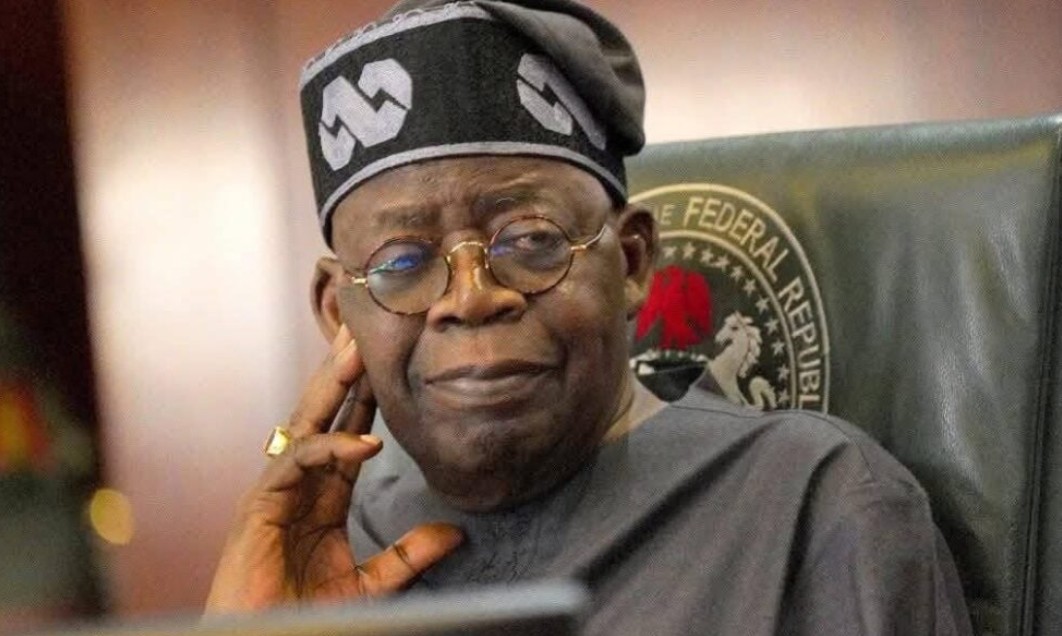
President Bola Ahmed Tinubu’s administration can point to a substantial list of economic, infrastructure and social-policy initiatives since May 2023. Fuel-subsidy removal, foreign-exchange reform, tax changes, higher revenues, infrastructure spending, student loans, a new minimum wage and expanded social intervention programmes have fundamentally altered the policy direction of the Nigerian economy.
But another, difficult question is: how much of these changes can Nigerians actually feel in their standard of living?
That distinction is important. A government can improve its fiscal position, increase foreign reserves or record a large trade surplus without an immediate improvement in the purchasing power of the average household. Indeed, Nigeria’s experience since 2023 illustrates the difference between macroeconomic stabilisation and household welfare.
The World Bank says Nigeria’s economy grew by 3.9 per cent year-on-year in the first half of 2025, compared with 3.5 per cent in the corresponding period of 2024. It also reports substantial improvement in the country’s external position, while cautioning that inflation, poverty and food insecurity continue to constrain living standards.
The biggest change: removing the fuel subsidy
The most consequential decision was the petrol subsidy removal in May 2023.
Economically, the argument was straightforward: the subsidy consumed resources that could otherwise have been utilised for infrastructure, education, healthcare and social programmes. The reform also removed a major distortion from the petroleum market.
The IMF described subsidy removal and the unification of official foreign-exchange windows as important structural reforms, while also noting the immediate inflationary consequences.
For households, however, the effect was painful. Petrol prices rose sharply, transportation costs increased, and higher logistics costs fed into food and other consumer prices. The World Bank warned that without adequate compensation, higher petrol prices could push households into poverty and force them to cut spending on necessities such as education and healthcare.
This is therefore an area where the government’s fiscal achievement and household experience have diverged. Saving public money is not itself an improvement in living standards. The real test is whether the resources saved eventually produce cheaper transport, better infrastructure, more reliable electricity, improved healthcare and productive employment.
FX reform: a necessary correction, but not a painless one
The administration also dismantled the multiple official foreign-exchange windows and moved towards a more market-driven system.
The reform addressed longstanding distortions and arbitrage opportunities. The CBN reported that the spread between the official market and Bureau de Change rates narrowed dramatically between May 2023 and December 2025, while remittances and foreign-capital inflows increased. External reserves were estimated at $45.01 billion at the end of 2025, compared with $40.19 billion at the end of 2024.
However, there is an important qualification. FX reform initially produced a sharp naira adjustment, which increased the domestic-currency cost of imports. That fed into inflation and reduced purchasing power.
The long-term benefit is greater efficiency and a more credible market. But for an importer buying machinery, medicine or raw materials, and for a consumer buying imported goods, the immediate experience can be considerably less comfortable.
Government finances have improved.
Another important part of the scorecard is revenue.
The World Bank reported that consolidated Federation revenues increased from about ₦16.8 trillion in 2023 to an estimated ₦31.9 trillion in 2024, while the fiscal deficit narrowed from 5.4 per cent of GDP to 3 per cent.
The administration also says the debt-service-to-revenue ratio has fallen from an extremely high level of 97 per cent to below 50 per cent. That figure should be interpreted carefully because debt-service ratios can change with revenue growth, expenditure patterns, exchange rates and the composition and timing of debt payments. Nevertheless, reducing the proportion of government revenue absorbed by debt service would create more fiscal space if sustained.
Tax reform is another part of this effort. The government says the tax-to-GDP ratio has risen from below 10 per cent to 13.5 per cent. The new tax framework, which took effect in 2026, consolidates major tax legislation and is intended to simplify administration and broaden the tax base.
For ordinary Nigerians, however, the benefit depends on how the government utilises the additional revenue. Higher collections only improve living standards when they translate into productive public expenditure.
Trade is showing some encouraging signs.
Nigeria’s trade statistics provide another striking number.
The country recorded a ₦7.46 trillion trade surplus in the second quarter of 2025, according to figures cited from the NBS trade statistics. Manufactured exports rose from ₦294.4 billion in Q1 2025 to ₦803.8 billion in Q2, a 173 per cent quarterly increase. Compared with Q2 2024, however, the increase was 67.2 per cent.
That distinction matters.
A 173 per cent increase sounds extraordinary, but it was calculated from a relatively low first-quarter base. It nevertheless represents a meaningful increase in manufactured exports.
The broader trade picture also improved, with total merchandise exports exceeding imports in the quarter. But it would be premature to conclude that Nigeria has permanently escaped its dependence on oil. In Q2 2025, crude oil still accounted for 52.6 per cent of total exports, while non-crude exports accounted for 47.4 per cent.
The achievement, therefore, is better understood as evidence of diversification rather than proof that Nigeria has become a post-oil economy.
The stock market tells another story.
The NGX All-Share Index is the most dramatic numerical success in the scorecard.
The index crossed 250,000 points in May 2026, compared with roughly 53,000 points at the inauguration of the administration. NGX reported a close of 250,485.54 points on May 11, 2026 and a year-to-date return of 60.97 per cent at that point.
But a rising stock market should not automatically be equated with improved living standards.
Millions of Nigerians do not own significant quantities of quoted shares. Moreover, part of the increase reflects inflation, currency effects, corporate earnings, sector concentration and investor expectations.
For pension funds, institutional investors and shareholders, however, the market’s performance can translate into increased asset values. The economic question is whether that capital-market strength eventually feeds investment and employment in the wider economy.
Infrastructure is where long-term benefits could become more visible.
The administration’s infrastructure programme covers roads, bridges, ports, rail and electricity.
The Second Niger Bridge access roads, Abuja urban projects, the Lagos-Calabar Coastal Highway, rehabilitation of interstate roads and modernisation of major ports represent investments whose benefits are likely to emerge gradually through lower transport costs, shorter journey times and improved movement of goods.
The Nigerian Ports Authority reported revenue of ₦894.86 billion in 2024, compared with about ₦424 billion in 2023, alongside modernisation and digitalisation of port operations.
In electricity, the Zungeru hydroelectric project has a nominal capacity of 700MW, and the Federal Ministry of Power reported that the capacity has been added to the national grid.
The key word is capacity. Additional generating capacity does not automatically mean that every household receives more electricity. Transmission constraints, distribution losses, gas availability, payment systems and network reliability all determine how much electricity ultimately reaches consumers.
Education and social investment provide more direct household benefits.
One measurable intervention is the Nigerian Education Loan Fund.
By August 2026, NELFUND reported more than ₦322 billion in disbursements and more than 1.6 million student beneficiaries/applications under the scheme.
Unlike an abstract macroeconomic indicator, an education loan can affect a household directly: it can enable a student to remain in university when the family cannot afford fees and living costs.
The minimum wage is another direct intervention. The statutory federal minimum wage was raised from ₦30,000 to ₦70,000, an increase of 133 per cent in nominal terms.
But nominal wage growth should not be confused with real income growth. What matters to workers is how much ₦70,000 can buy after food, transport, rent, electricity and other prices have risen.
That is the central problem running through the entire reform story.
The standard-of-living test remains unfinished.
Nigeria’s latest inflation picture is considerably better than the extreme rates recorded during the earlier phase of the reforms. The NBS currently displays headline inflation of 15.39 per cent and food inflation of 19.57 per cent.
But falling inflation does not mean falling prices. It means prices are increasing more slowly.
This distinction is crucial. If a bag of rice rose from ₦30,000 to ₦60,000 and inflation subsequently falls sharply, the rice does not return automatically to ₦30,000. The household is still paying the higher price.
The World Bank’s assessment is particularly relevant. It reported that the cost of a basic food basket had risen fivefold between 2019 and 2024 and estimated that poverty increased further during the adjustment period. Its 2025 assessment said macroeconomic stabilisation had not yet substantially translated into improved livelihoods.
The NBS’s last comprehensive multidimensional poverty survey found that 63 per cent of Nigerians—about 133 million people—were multidimensionally poor. That survey predates the Tinubu administration, so it cannot be used as a current measure of its performance. Nevertheless, it is a useful baseline for understanding the scale of the problem the administration faces.
The balance sheet
The evidence suggests that the Tinubu administration has produced substantial policy and macroeconomic changes. Fiscal revenues have risen, the FX regime has been substantially adjusted, trade has strengthened, the capital market has expanded dramatically, infrastructure projects have advanced, and programmes such as NELFUND provide measurable assistance to specific groups.
At the same time, these achievements have not yet produced a proportionate improvement in living standards for the average Nigerian.
The strongest evidence of this gap is the contrast between improving macroeconomic indicators and continuing household pressure from food, housing, transportation and other essential costs.
That does not make the reforms either inherently successful or unsuccessful. It means the next stage matters as much as the first.
The ultimate test is whether increased government revenue produces better public services; whether infrastructure reduces the cost of doing business; whether electricity becomes more reliable; whether agricultural output brings down food prices; whether private investment creates productive jobs; and whether wages rise faster than the cost of living.
For Nigerians, the most meaningful scorecard will therefore not be the number of reforms announced or the size of the government’s revenue gains.
It will be much simpler:
Can an average Nigerian afford more food, better housing, reliable electricity, easier transportation, quality healthcare, education and a decent livelihood than before?
That is the point at which the impressive numbers on the macroeconomic scorecard will finally become improvements in the standard of living.